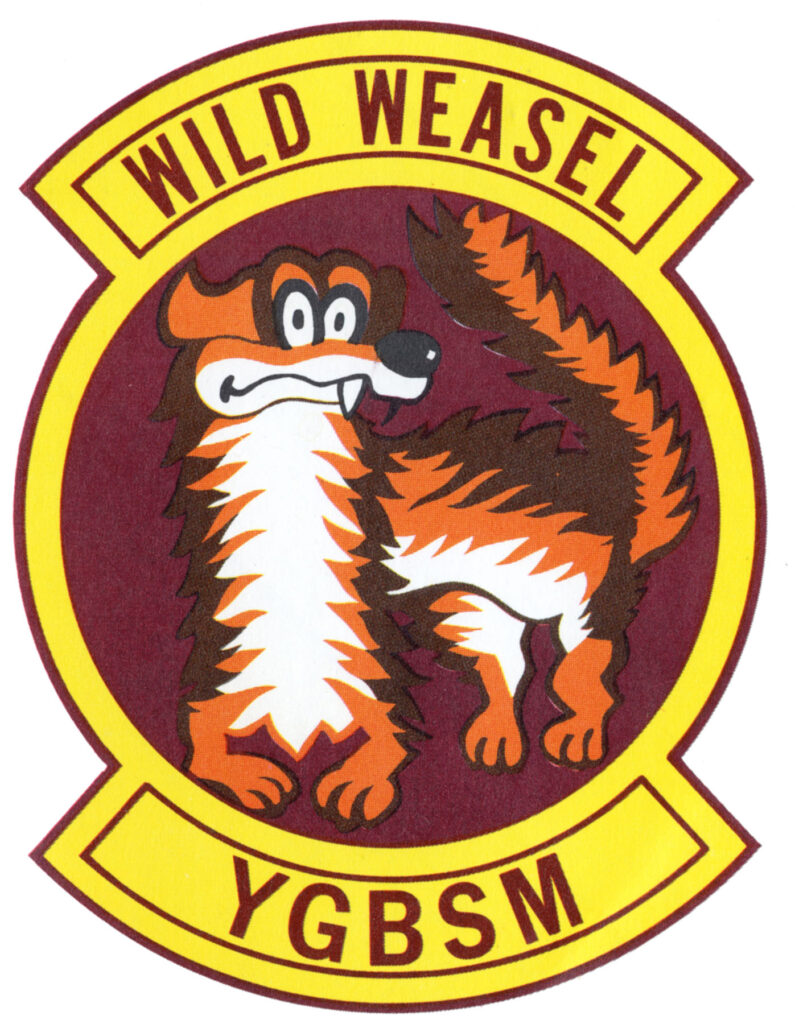
YGBSM: The Origin of he Wild Weasel Battlecry
A great motto of the Wild Weasel crews is YGBSM: “You Gotta Be Shitting Me.” It was B-52 Electronic Warfare Officer (EWO) veteran Jack Donovan’s natural response when he was introduced to the tactics and mission details as part of the first Weasels. His exact reply was: “you want me to fly in the back of a little tiny fighter aircraft with a crazy fighter pilot who thinks he’s invincible, home in on a SAM site in North Vietnam, and shoot it before it shoots me, you gotta be sh-tting me!” His vernacular stuck and YGBSM is prominently displayed on the patch of some squadrons, adding to the legend of the Wild Weasel.
By any measure, it was one of the most dangerous missions ever devised—but it changed air warfare forever.
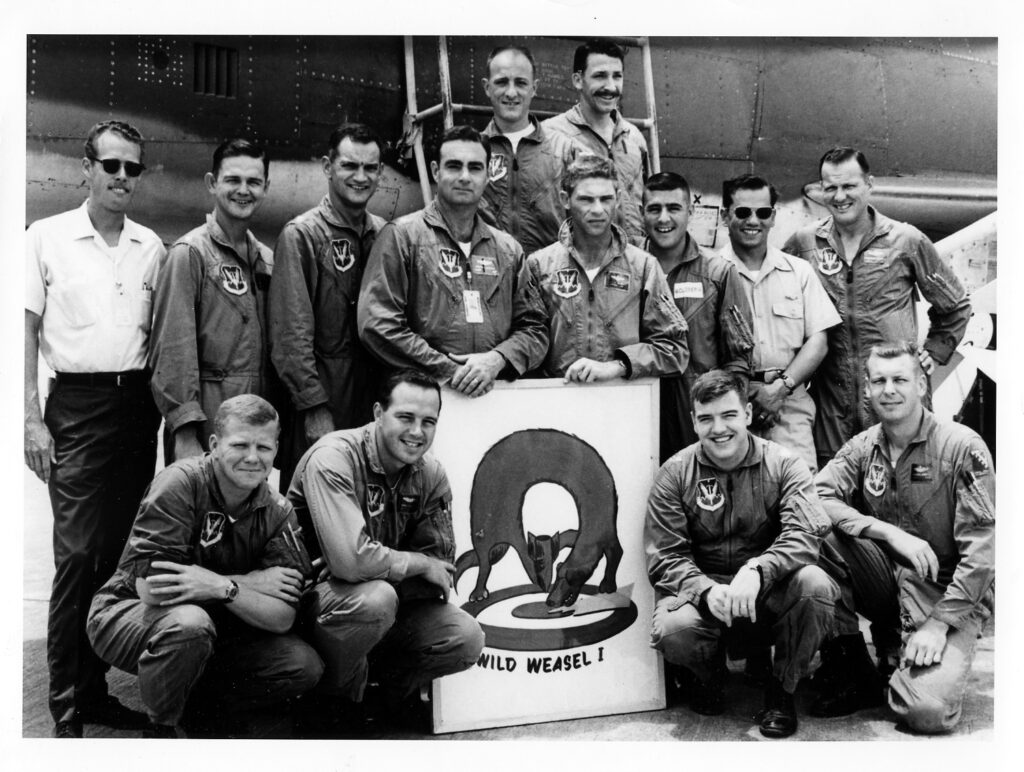
In the summer of 1965, American aircrews over North Vietnam were confronted with a terrifying new threat. Soviet‑supplied SA‑2 Guideline surface‑to‑air missiles began knocking U.S. aircraft out of the sky during Operation Rolling Thunder, rendering traditional strike tactics suddenly obsolete. The U.S. Air Force needed an answer and fast. That answer became Wild Weasel I.
Wild Weasel I was not just a new aircraft variant it was an entirely new way of fighting. Officially part of Project Wild Weasel, the program set out to do the unthinkable: send aircraft deliberately into the heart of enemy air defenses, provoke hostile radar emissions, then use those signals to hunt down and destroy the very systems trying to kill them.
The platform selected for this dangerous experiment was the North American F‑100F Super Sabre, a two‑seat version of the famed “Hun.” In the front cockpit sat the pilot; in the rear, an Electronic Warfare Officer (EWO) whose job was to interpret radar signals and guide the attack.
The motto—never officially sanctioned but widely embraced—said it all: “First In, Last Out.”
Time pressure forced innovation at breakneck speed. F‑100Fs were hastily modified with Radar Homing and Warning (RHAW) systems, some derived from classified reconnaissance projects, allowing crews to detect and track enemy SAM radars. Instead of heavy bomb loads, Wild Weasel I aircraft typically carried white‑phosphorous rockets to visually mark SAM sites for strike aircraft following behind.
In December 1965, Wild Weasel crews scored history’s first successful SAM suppression kills when Captains Allen Lamb and Jack Donovan destroyed a North Vietnamese missile site—proving the concept worked under combat conditions.
Success came at a steep price.
The F‑100F, though pioneering, was fundamentally ill‑suited to sustained operations over heavily defended territory. It lacked the speed, altitude performance, and survivability needed in a rapidly escalating threat environment. Losses mounted quickly. After just weeks of combat operations. The first Wild Weasel I F-100F (58-1231, call sign “Apple 05”) was shot down by 100-mm AAA on its third mission on December 20, 1965, while leading a strike near Kep Airfield. Captain John Pitchford was captured (POW), while EWO Captain Robert Trier was killed.