The 8th Tactical Fighter Wing in the Skies Over Vietnam
Few U.S. Air Force units emerged from the Vietnam War with a reputation as formidable as the 8th Tactical Fighter Wing (8th TFW). Known as the “Wolfpack,” the wing became synonymous with aggressive air combat, tactical innovation, and the mastery of the McDonnell F‑4 Phantom II. From its base at Ubon Royal Thai Air Force Base, the 8th TFW played a central role in the air war over North Vietnam and earned a permanent place in fighter aviation history.
Arrival in Southeast Asia
The 8th TFW’s Vietnam story began in 1965, after the wing transitioned from Japan and briefly from the continental United States to Southeast Asia. Previously redesignated as a tactical fighter wing, it arrived in Thailand equipped with the F‑4 Phantom II, a powerful but initially misunderstood aircraft that would define USAF fighter operations in the conflict. Based at Ubon RTAFB, the wing was tasked with a demanding mission mix: air superiority, bomber escort, strike missions, and interdiction deep into heavily defended North Vietnamese airspace.
By the late 1960s, the Wolfpack consisted of four tactical fighter squadrons flying the Phantom, forming one of the most potent concentrations of F‑4s in theater. Operating against dense surface‑to‑air missile belts, intense anti‑aircraft artillery, and an increasingly capable MiG force, aircrews faced one of the most challenging air combat environments since World War II.
Leadership and a Change in Fortune
A defining moment in the Wolfpack’s Vietnam experience came in 1966, when Colonel Robin Olds assumed command of the 8th TFW. A World War II ace and charismatic leader, Olds arrived at a time when U.S. fighter losses were mounting and morale was strained.
Under his leadership, the wing underwent a transformation. Olds emphasized aggressive tactics, disciplined formations, and mutual support, challenging then‑prevailing assumptions about missile‑armed air combat. His approach reshaped how the F‑4 Phantom was employed in combat and restored confidence within the ranks. During this period, the wing formally embraced the name “Wolfpack,” reflecting both tactical unity and predatory intent.
Operation Bolo: A Tactical Masterpiece
The Wolfpack achieved lasting fame with Operation Bolo on 2 January 1967, one of the most celebrated air combat operations of the war. Designed by Colonel Olds, the mission used deception as its primary weapon. F‑4 Phantoms from the 8th TFW flew profiles and radio calls identical to vulnerable F‑105 strike formations, enticing North Vietnamese MiG‑21s into battle.
The result was decisive. In a single engagement, Wolfpack pilots destroyed multiple MiG‑21s without suffering losses—a major setback for North Vietnam’s fighter force and a turning point in morale for U.S. aircrews. Operation Bolo showcased not only tactical creativity but also the adaptability of the F‑4 when flown with aggression and teamwork.
Combat Operations and Daily Attrition
Major John R. Pardo & 1st Lt. Stephen A. Wayne
While returning from a strike over North Vietnam in March 1967, these Wolfpack aircrew members found themselves in one of the war’s most extraordinary emergencies. After battle damage left one F‑4 critically short of fuel, Pardo used his own Phantom to physically push the other aircraft toward safer airspace, allowing both crews to survive. The incident, later known as “Pardo’s Push,” became one of the most famous acts of aerial ingenuity in aviation history.
Wolfpack Aircrews at Large
Beyond individual names, the Wolfpack was defined by collective professionalism. Its pilots became known as “MiG killers” for their air‑to‑air successes and “bridge busters” for relentless strike missions. Together, they helped redefine how the F‑4 Phantom II was flown in combat
Aircraft, Markings, and Identity
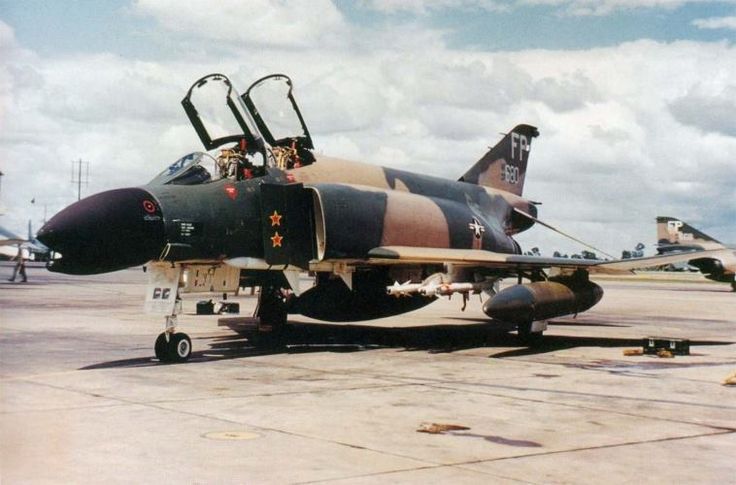
The Phantoms of the 8th TFW became some of the most visually distinctive USAF aircraft of the Vietnam era. Squadron‑colored canopy rails, nose art, and unit emblems were widely applied, creating a strong visual identity for the Wolfpack. Individual aircraft names and artwork reflected the bond between aircrew and machine, while reinforcing squadron pride during sustained combat operations.
By the early 1970s, as U.S. involvement in Vietnam declined and regulations tightened, many of these markings disappeared but their legacy remains iconic among aviation historians and enthusiasts.
Legacy of the Wolfpack in Vietnam
The Vietnam War cemented the 8th Tactical Fighter Wing as one of the most influential fighter units in U.S. Air Force history. Through innovative leadership, hard‑won experience, and tactical excellence, the Wolfpack helped redefine modern air combat and validated the F‑4 Phantom II as a capable and adaptable fighter.
Decorated with numerous unit awards and remembered for its contributions to air superiority doctrine, the 8th TFW’s performance over Vietnam remains a benchmark for fighter wings to this day—a testament to the men who flew and fought under the Wolfpack insignia