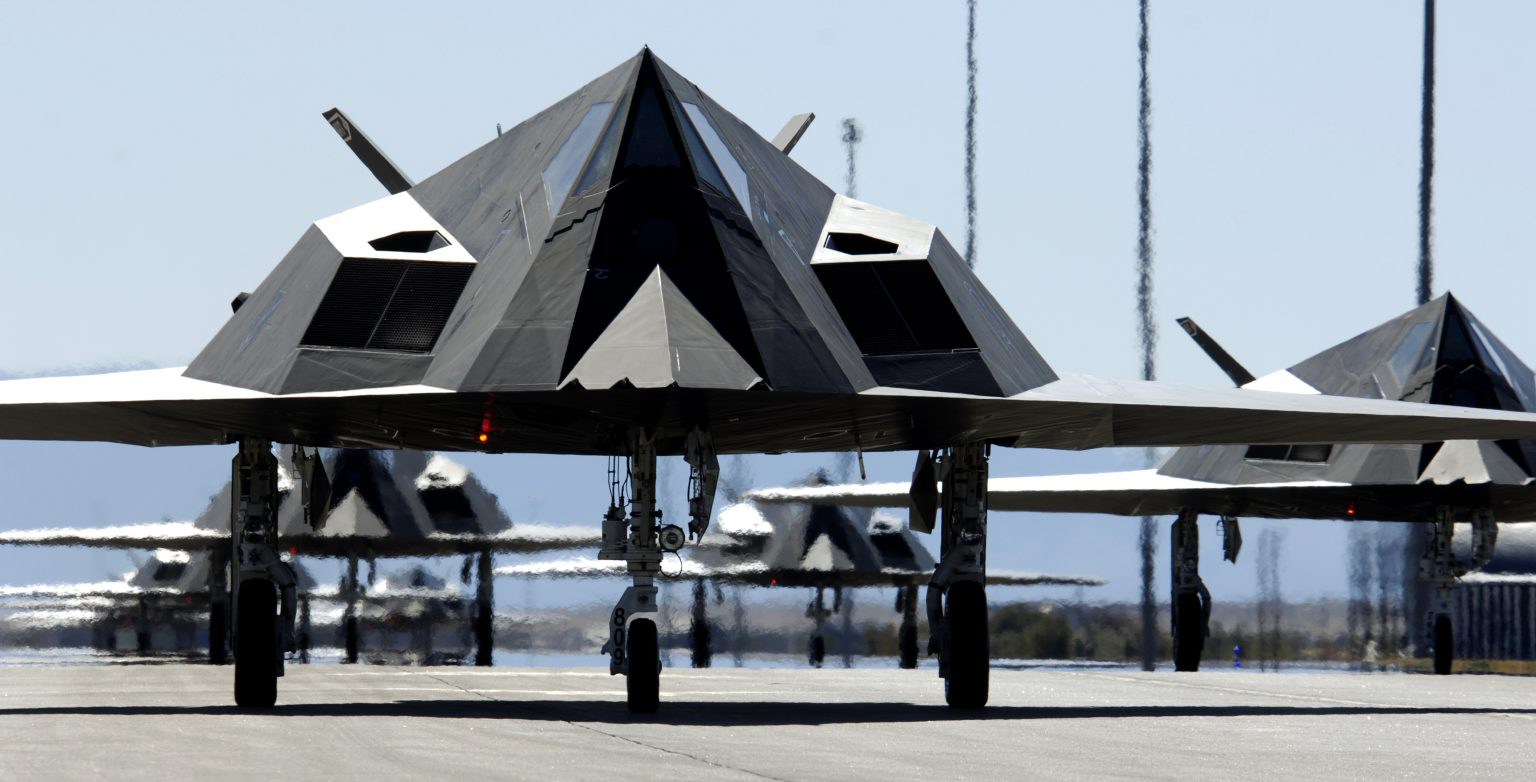
The Lockheed F-117 Nighthawk is an subsonic, twin-engined stealth attack aircraft developed by Lockheed’s secretive Skunk Works division and operated by the United States Air Force (USAF). It was the first operational aircraft to be designed with stealth technology. The F-117 was conceived after the Vietnam War, where increasingly sophisticated Soviet surface-to-air missiles (SAMs) had downed heavy bombers. The heavy losses inflicted by Soviet-made SAMs upon the Israeli Air Force in the 1973 Yom Kippur War also contributed to a 1974 Defense Science Board assessment that in case of a conflict in Central Europe, air defenses would likely prevent NATO air strikes on targets in Eastern Europe.
It was a black project, remaining an ultrasecret program for much of its life. The project began in 1975 with a model called the “Hopeless Diamond”. The following year, the Defense Advanced Research Projects Agency (DARPA) issued Lockheed Skunk Works a contract to build and test two Stealth Strike Fighters, under the code name “Have Blue”. These subscale aircraft incorporated jet engines of the Northrop T-38A, fly-by-wire systems of the F-16, landing gear of the A-10, and environmental systems of the C-130.By bringing together existing technology and components, Lockheed built two demonstrators under budget, at $35 million for both aircraft, and in record time. Undersecretary of Defense for Research and Engineering William J. Perry was instrumental in shepherding the project.
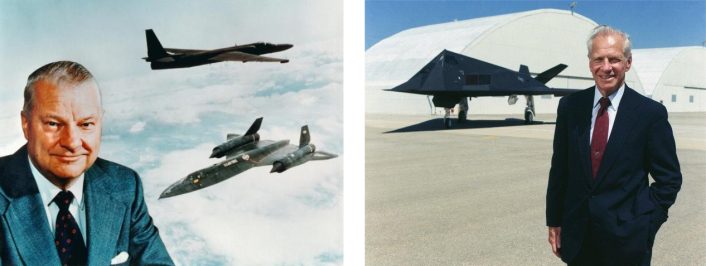
When the USAF first approached Lockheed with the stealth concept, Skunk Works Director Kelly Johnson proposed a rounded design. He believed smoothly blended shapes offered the best combination of speed and stealth. However, his assistant, Ben Rich, showed that faceted-angle surfaces would provide a significant reduction in radar signature, and the necessary aerodynamic control could be provided with computer units. A May 1975 Skunk Works report, “Progress Report No. 2, High Stealth Conceptual Studies”, showed the rounded concept that was rejected in favor of the flat-sided approach. The resulting unusual design surprised and puzzled experienced pilots; a Royal Air Force pilot who flew it as an exchange officer stated that when he first saw a photograph of the still-secret F-117, he “promptly giggled and thought to himself ‘this clearly can’t fly'”.
The single-seat F-117 is powered by two nonafterburning General Electric F404 turbofan engines. They were extensively modified to suit a stealth aircraft, such as to have a cooler operational temperature, and somewhat resembled a turbojet, instead. The engine was redesigned to produce a minimum of mass thrust, which eased the task of designing a suitable inlet and nozzle. To obscure the engine from enemy radar, a conductive metal mesh grill was installed in the intake, while the exhaust gases were intentionally mixed with cool air to lower the thermal signature.
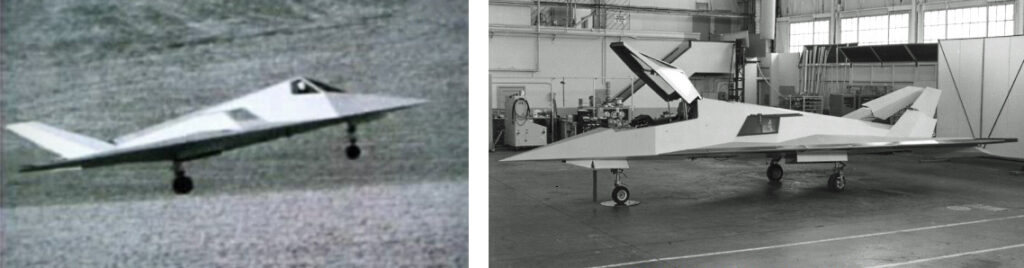
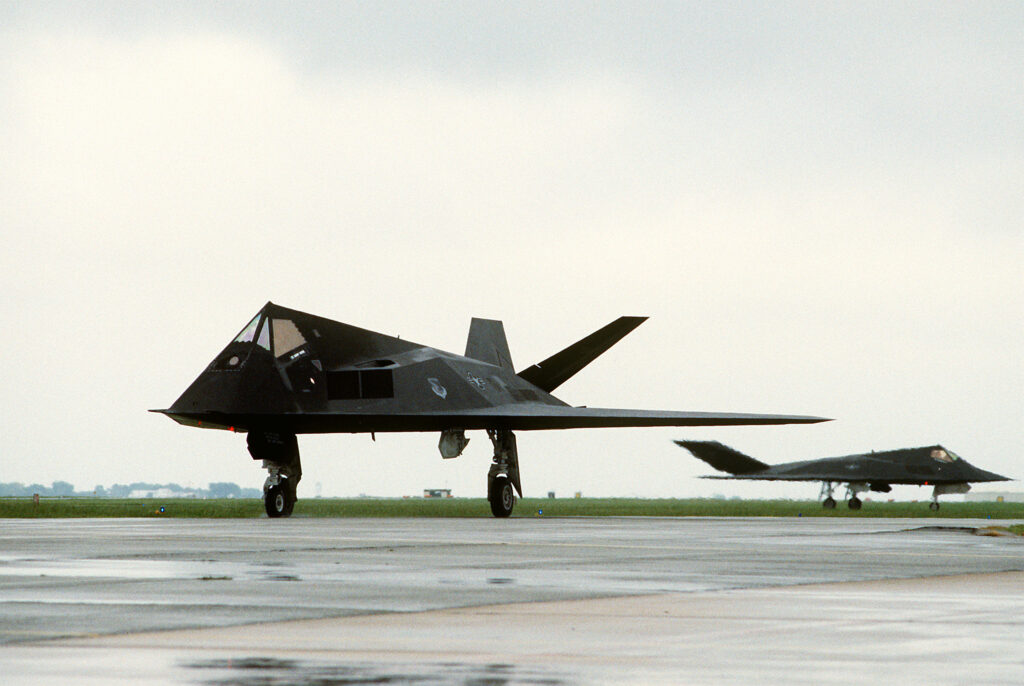
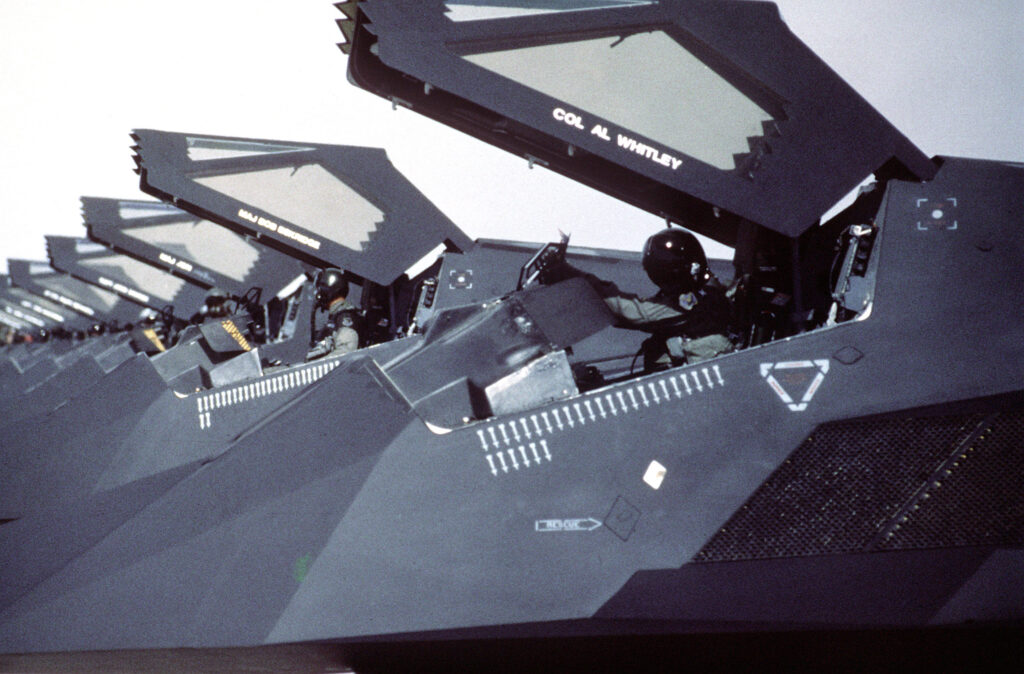
The aircraft is air refuelable and features a V-tail. The maximum speed is 623 mph (1,003 km/h; 541 kn) at high altitude, the maximum rate of climb is 2,820 feet (860 m) per minute, and the service ceiling is 43,000 to 45,000 feet (13,000 to 14,000 m).The cockpit was quite spacious, with ergonomic displays and controls, but the field of view was somewhat obstructed with a large blind spot to the rear.
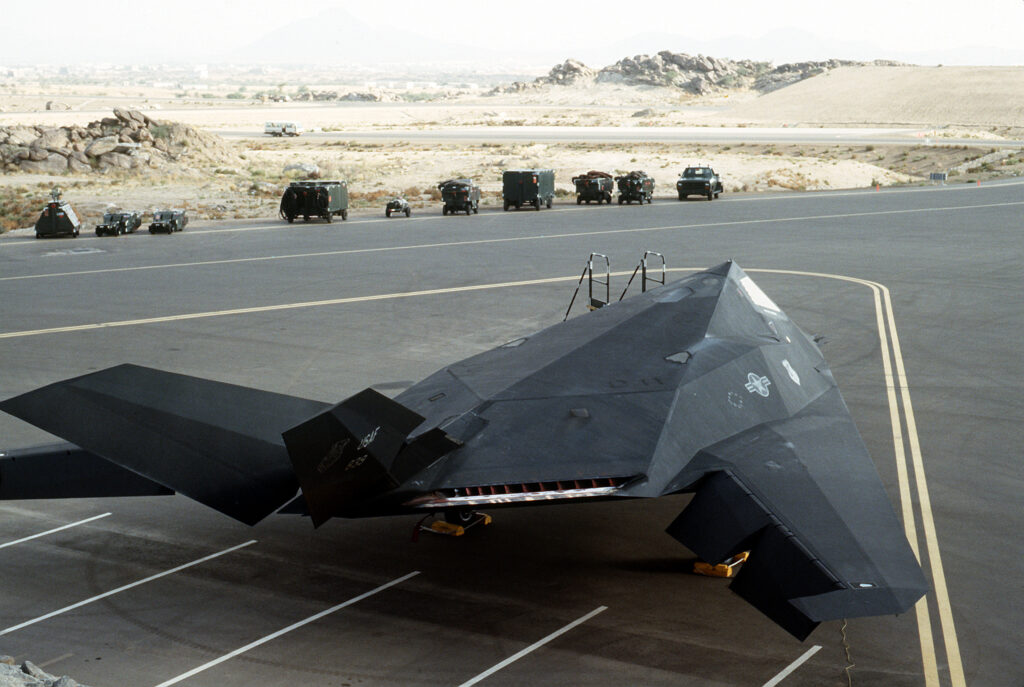
The F-117 has an RCS around 0.001 m2 (0.0108 sq ft). Among the penalties for stealth are subsonic speeds to prevent frame heating, heat on the engine inlet and outlet prevent certain thrusting maneuvers, a very low wing aspect ratio, and a high sweep angle (50°), needed to deflect incoming radar waves to the sides. With these design considerations and no afterburner, the F-117 is limited to subsonic speeds. Additionally, to maintain its low observability, the F-117 was not equipped with radar; not only would an active radar be detectable through its emissions, but also an inactive radar antenna would also act as a reflector of radar energy. Whether it carries any radar detection equipment remained classified as of 2008.
Its faceted shape (made from two-dimensional flat surfaces) resulted from the limitations of the 1970s-era computer technology used to calculate its RCS. Later supercomputers made subsequent aircraft like the B-2 bomber made using curved surfaces while maintaining stealth possible, through the use of far more computational resources to perform the additional calculations. The radio-wave absorbing materials covering the F-117 weighed almost one ton and were held in place by glue. The gaps between the sheets are filled with a kind of putty material called “butter”.
An exhaust plume contributes a significant infrared (IR) signature. The F-117 reduces IR signature with a noncircular tail pipe (a slit shape) to minimize the exhaust cross-section and maximize the mixing of hot exhaust with cool, ambient air. The F-117 lacks afterburners, because the hot exhaust would increase the infrared signature, breaking the sound barrier would produce an obvious sonic boom, and surface heating of the aircraft skin would also increase the IR footprint. As a result, its performance in air combat maneuvering required in a dogfight would never match that of a dedicated fighter aircraft; this was unimportant in the case of the F-117, since it was a dedicated attack aircraft. Passive (multistatic) radar, bistatic radar, and especially multistatic radar systems detect some stealth aircraft better than conventional monostatic radars, since first-generation stealth technology (such as the F-117) reflects energy away from the transmitter’s line of sight, effectively increasing the RCS in other directions, which the passive radars monitor.
The maiden flight of the demonstrators occurred on 1 December 1977.Although both aircraft crashed during the demonstration program, test data gathered proved positive. The success of Have Blue led the government to increase funding for stealth technology. Much of that increase was allocated towards the production of an operational stealth aircraft, the Lockheed F-117, under the program code name Senior Trend.
Senior Trend
The decision to produce the F-117 was made on 1 November 1978, and a contract was awarded to Lockheed Advanced Development Projects, popularly known as the Skunk Works, in Burbank, California. The program was led by Ben Rich, with Alan Brown as manager of the project. Rich called on Bill Schroeder, a Lockheed mathematician, and Overholser, a mathematician and radar specialist, to exploit Ufimtsev’s work. The three designed a computer program called “Echo”, which made possible the design of an airplane with flat panels, called facets, which were arranged so as to scatter over 99% of a radar’s signal energy “painting” the aircraft.
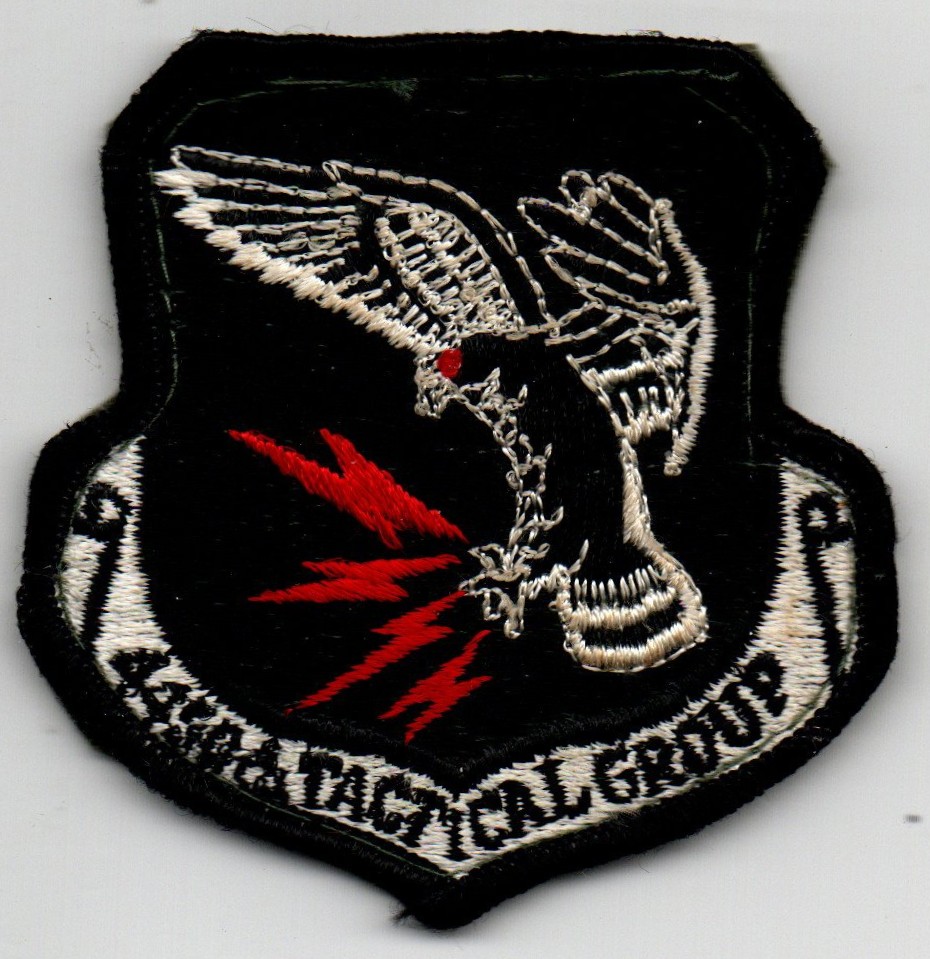
The first YF-117A, serial number 79-10780, made its maiden flight from Groom Lake (Area 51), Nevada, on 18 June 1981,only 31 months after the full-scale development decision. The first production F-117A was delivered in 1982, and operational capability was achieved in October 1983. The 4450th Tactical Group stationed at Nellis Air Force Base, Nevada, was tasked with the operational development of the early F-117, and between 1981 (prior to the arrival of the first models) and 1989, the group used LTV A-7 Corsair IIs for training, to bring all pilots to a common flight-training baseline and later as chase planes for F-117A tests
The F-117 was secret for much of the 1980s. Many news articles discussed what they called an “F-19” stealth fighter, and the Testor Corporation produced a very inaccurate scale model. When an F-117 crashed in Sequoia National Forest in July 1986, killing the pilot and starting a fire, the USAF established restricted airspace. Armed guards prohibited entry, including firefighters, and a helicopter gunship circled the site. All F-117 debris was replaced with remains of a F-101A Voodoo crash stored at Area 51. When another fatal crash in October 1987 occurred inside Nellis, the military again provided little information to the press.
The USAF denied the existence of the aircraft until 10 November 1988, when Assistant Secretary of Defense J. Daniel Howard displayed a grainy photograph at a Pentagon press conference, disproving the many inaccurate rumors about the shape of the “F-19”.After the announcement, pilots could fly the F-117 during daytime and no longer needed to be associated with the A-7, flying the T-38 supersonic trainer for travel and training, instead. In April 1990, two F-117s flew to Nellis, arriving during daylight and publicly displayed to a crowd of tens of thousands.
Five full-scale development aircraft were built, designated “YF-117A”.The last of 59 production F-117s were delivered on 3 July 1990.As the USAF has stated, “Streamlined management by Aeronautical Systems Center, Wright-Patterson AFB, Ohio, combined breakthrough stealth technology with concurrent development and production to rapidly field the aircraft.
Operational life
During the program’s early years, from 1984 to mid-1992, the F-117 fleet was based at Tonopah Test Range Airport, Nevada, where it served under the 4450th Tactical Group; Air Combat Command’s only F-117A unit. The unit was headquartered at Nellis Air Force Base. A-7 Corsair II aircraft were used for training. Most personnel and their families lived in Las Vegas. This required commercial air and trucking to transport personnel between Las Vegas and Tonopah each week. The 4450th was absorbed by the 37th Tactical Fighter Wing in 1989. In 1992, the entire fleet was transferred to Holloman Air Force Base, New Mexico, under the command of the 49th Fighter Wing.
The F-117 reached initial operating capability status in 1983. The Nighthawk’s pilots called themselves “Bandits”. Each of the 558 Air Force pilots who have flown the F-117 has a Bandit number, such as “Bandit 52”, that indicates the sequential order of their first flight in the F-117. Pilots told friends and families that they flew the Northrop F-5 in aggressor squadrons against Tactical Air Command.
The F-117 has been used several times in war.
Operation Just Cause
December 1989 saw the first combat operations by the F-117 during Operation Just Cause and the United States involvement in Panama. Six Nighthawks flew from their secretive base at Tonopah Test Range Airport, Nevada to Panama. A pair of F-117’s dropped bombs on Rio Hato airfield. Panamanian radar was woefully inadequate to begin with, so the Nighthawk would have to wait for a better opportunity to make an impression. That opportunity would come soon over one of the most heavily defended cities in the world.
Operation Desert Shield / Desert Storm
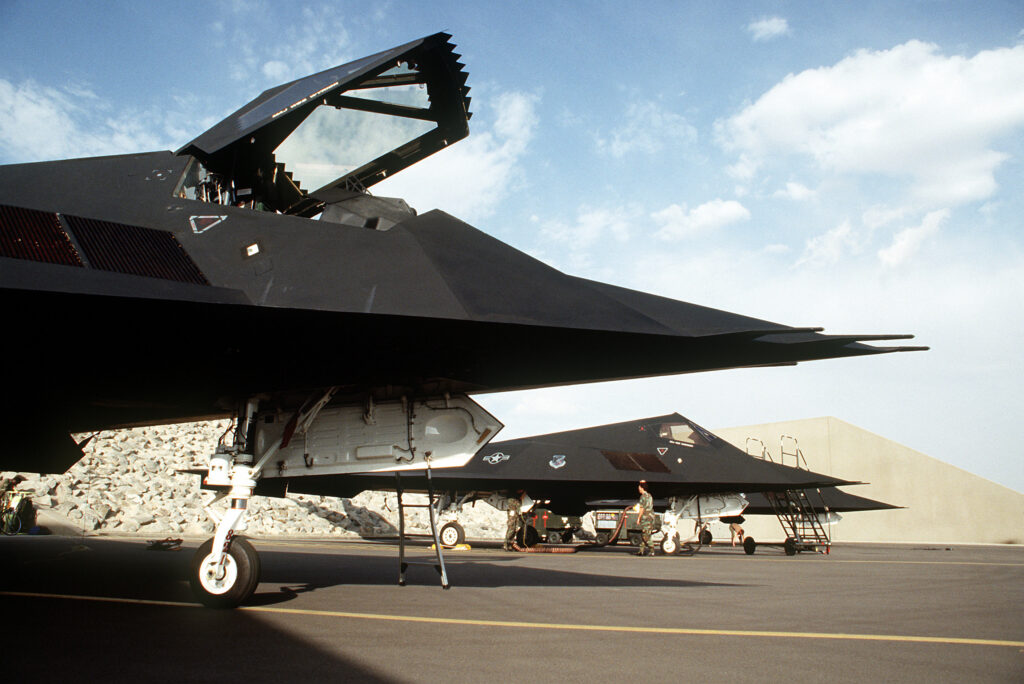
Six short months after Operation Just Cause, three squadrons of F-117s from the 37th Tactical Fighter Wing (TFW) found themselves on their first overseas deployment, at Khamis Mushayt, Saudi Arabia. Iraqi forces under Saddam Hussein had invaded the tiny neighboring country of Kuwait in August of 1990, and Operation Desert Shield was a buildup in the region in response by a coalition of forces. More F-117s would follow.
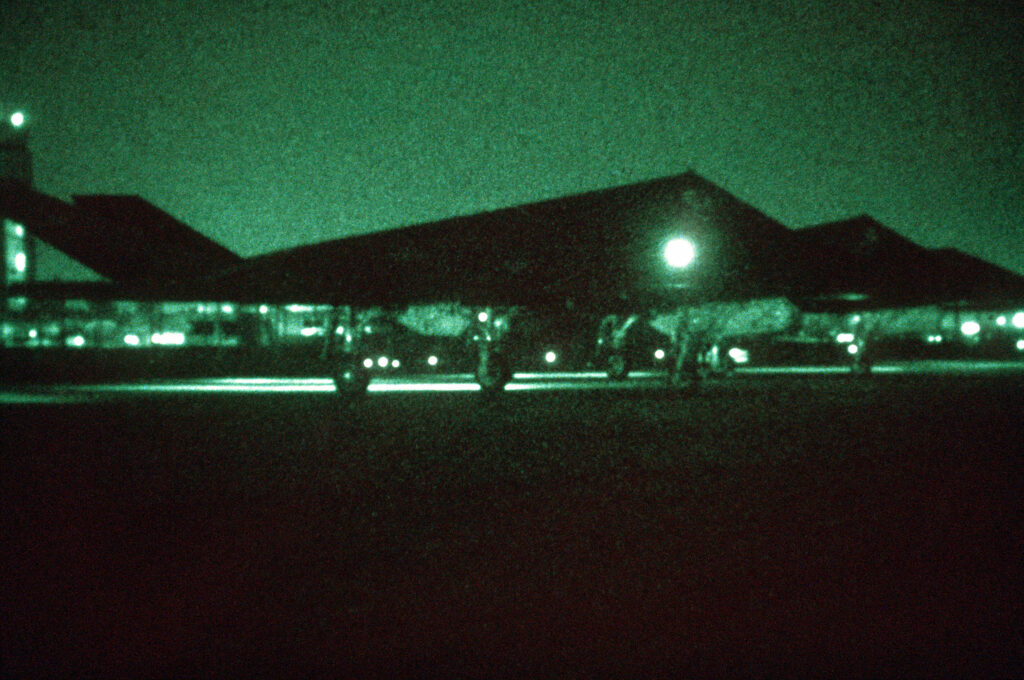
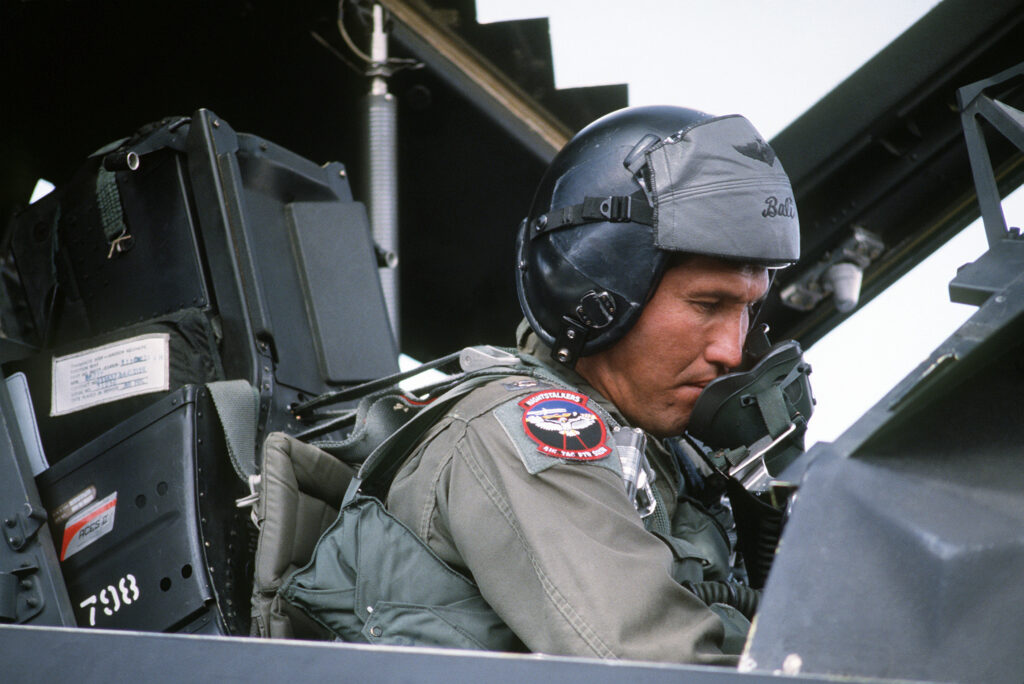
The first 22 Nighthawks flew to Langley AFB, Virginia, on Aug. 19, and then on to Saudi Arabia, and belonged to the 415th Tactical Fighter Squadron (TFS) also known as the ‘Nightstalkers’, with 18 more aircraft arriving from the 416th TFS, the ‘Ghostriders’. A small number of F-117s arrived later from the 417th Tactical Fighter Training Squadron (TFTS). Khamis Mushayt became known as ‘Tonopah East’ due to the similar desert climate and abundance of F-117s. Several months of preparation and war gaming would prepare the crews and aircraft for the dangerous missions to come.
Baghdad, Iraq was heavily defended with some of the most advanced radar systems, Surface-to-Air Missile (SAM) systems, and anti-aircraft defenses on earth. Initial aircraft losses, even those involving the F-117, were predicted to be high. Baghdad was also the hub of the Iraqi war machine with several high priority targets that needed neutralized in the early hours of the coming war.
In the hours of darkness of the morning of Jan. 17, 1991, explosions began to rock the Baghdad area, as the air campaign began and Operation Desert Shield became Operation Desert Storm. Iraqi air defenses, blind and confused, began sweeping the skies with random undirected anti-aircraft fire, producing some of the most spectacular footage of the war for television newscasts, but not finding any aerial targets. The Iraqis knew the planes were there, but their radar was not tracking them. The manned aircraft over Baghdad were F-117s of the 37th TFW and Lockheed’s stealth technology was working to perfection.
These were not the first bombs dropped in Iraq by an F-117 however. USAF Major Gregory Feest and nine other Nighthawk pilots would lift off from Khamis Mushayt at precisely timed intervals for assigned targets. Maj. Feest’s first target was far to the southwest of Baghdad. In conjunction with Army and Air Force helicopters, F-117s were to open a gap in Iraqi air defenses to make way for other airstrikes. Moments after the helicopters struck their targets, Maj. Feest dropped the first bomb of the war, a laser-guided 2,000 lb GBU-27, hitting a hardened Iraqi Air Force Radar Intercept Operations Center. Continuing his mission, he flew through air space saturated with flak and tracers, dropping his second bomb and like the others, returned safely. Maj. Feest also has the distinction of dropping the first bombs in Operation Just Cause earlier. He would continue to fly 39 combat missions during Operation Desert Storm.
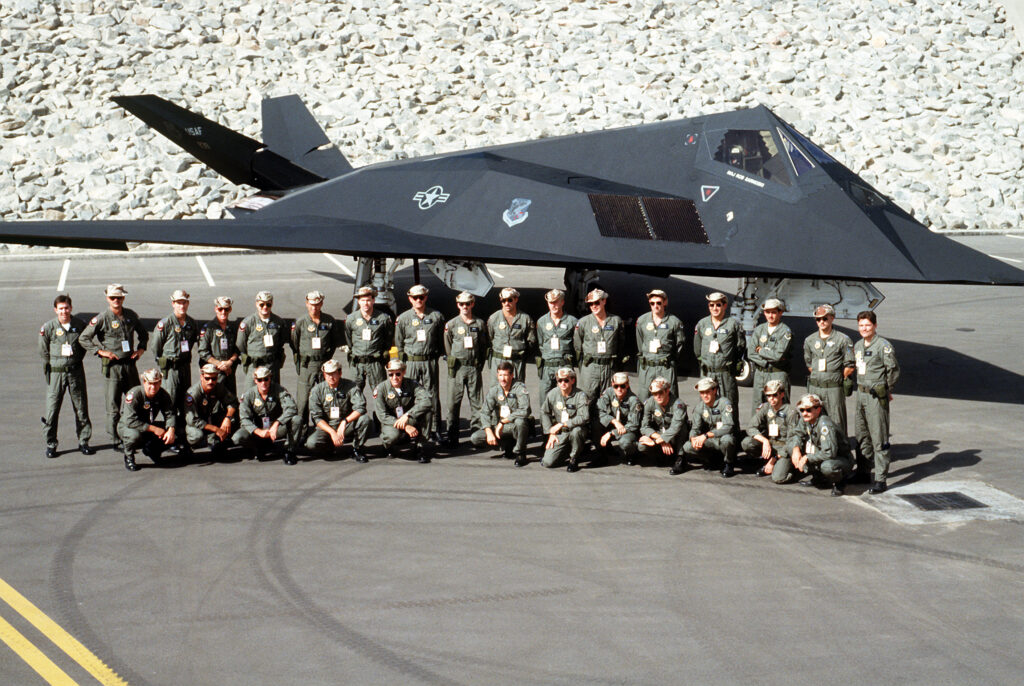
During the first night of bombing, over 1,000 sorties were flown against targets in Kuwait and Iraq. High priority targets included the headquarters of the Iraqi Air Force, power stations, communication, infrastructure, missile and ammunition bunkers and storage facilities, command and control facilities, Iraqi air defense facilities, SCUD missile bunkers, and other facilities and resources that would facilitate retaliatory actions by the Iraqi military. Approximately sixty 2,000 lb precision guided bombs were dropped in the darkness of early morning January 17 by F-117s on these targets.
Video of the precision strikes was released to the media, and the world watched in awe as targets were obliterated before their eyes on news outlets. One attack showed a curser locked on a main air duct of a SCUD missile facility. The duct, approximately one meter in diameter, would soon receive a 2,000 lb laser-guided bomb resulting in a devastating explosion filling the screen.
Other spectacular examples of video footage of the F-117s effectiveness included the destruction of the Iraqi high-priority targets such as communication centers in and around Baghdad. Leaflets were dropped on Iraqi troops showing F-117 hitting ground targets and encouraging them to surrender or flee. F-117s were also used to target airfields and hardened hangers along with other facilities.
The GBU-27s were laser-guided and could penetrate several feet of concrete, making them excellent choices for hardened targets. At one point, so many GBU-27s had been dropped, a shortage occurred. So the Air Force switched to the lighter GBU-10s. One Iraqi air base labeled H2 was attacked with the lighter bombs, which bounced off the roofs of hardened aircraft hangers. The Iraqis thinking they had finally won at something crammed the hangers full of aircraft, only to have the F-117s return a few nights later with GBU-27s and obliterate all the aircraft jammed into the hardened hangers.
Colonel Barry Horne reported while deployed with F-117s in Saudi Arabia that visual evidence stealth technology worked was provided by dead bats. The bats would feed at night on insects around the aircraft, and being guided by a form of sonar; the bats would not ‘see’ the aircraft and collide with them, killing themselves. His belief in the technology was reinforced when on the first night piloting the F-117 on a mission over Baghdad carrying two GBU-27s, he detected French-built Iraqi Mirage F-1s and Soviet-built MiG-29s in the skies around him, but the Iraqi planes apparently never saw the Nighthawks.
Major Miles Pound suffered a jammed weapons bay door after dropping his bombs from his F-117 over Iraq. Open weapons bay doors or landing gear doors lit the planes up on enemy radar. Maj. Pound knew he had been detected and then saw a SAM rising towards him. Fighting to manually close the stuck-open door with one hand and the other hand gripping the eject lever, the door finally shut with the missile closing in. Once the door was closed, the missile lost its homing and turned away from the aircraft.
As the air campaign progressed, the F-117 would be used to attack other targets such as airfields and bridges, with the type being responsible for the destruction of 39 of the 43 bridges over the Tigris-Euphrates River.
During Operation Desert Storm, also known as the Gulf War, the F-117 flew approximately 1,300 sorties in 6,900 hours and hit 1,600 high-value targets. 42 Nighthawks dropped 2,077 bombs during the campaign, mostly GBU-10s and GBU-27s. Despite predictions to the contrary at the outset of the war, no F-117s were lost, and the aircraft would continue on to fight in other conflicts. The ‘Black Jet’ or ‘Stealth Fighter’ and its deadly cargo of ‘smart bombs’ operating with seeming impunity over enemy territory had become the symbol of American power and ingenuity. And it all began with a single idea using technology ignored by the Soviets and a ‘Hopeless Diamond’
Enduring Freedom
The F-117 was used during Operation Enduring Freedom in 2001.The Taliban lacked a modern Air Force. After the initial bombing campaign in October, targets justifying F-117 usage were limited as was the use of the F-117.
The first bombs dropped in the 2003 Operation Iraqi Freedom were from two F-117 on the Dora Farms in an attempt to assassinate Saddam Hussein. The F-117 was chosen to deliver a bunker buster payload because nearby Baghdad was heavily fortified with antiaircraft weapons, and US intelligence indicated Saddam Hussein’s bunker was too reinforced for missiles. The EGBU-27 Advanced Paveway III bunker buster is an unusual payload for the F-117. Post facto intelligence showed that Saddam Hussein had been at Dora Farms, but left several hours prior to the bombing. During this time, the Air Force estimated the operational cost as $35,000 per JDAM-style bomb delivered by the F-117.
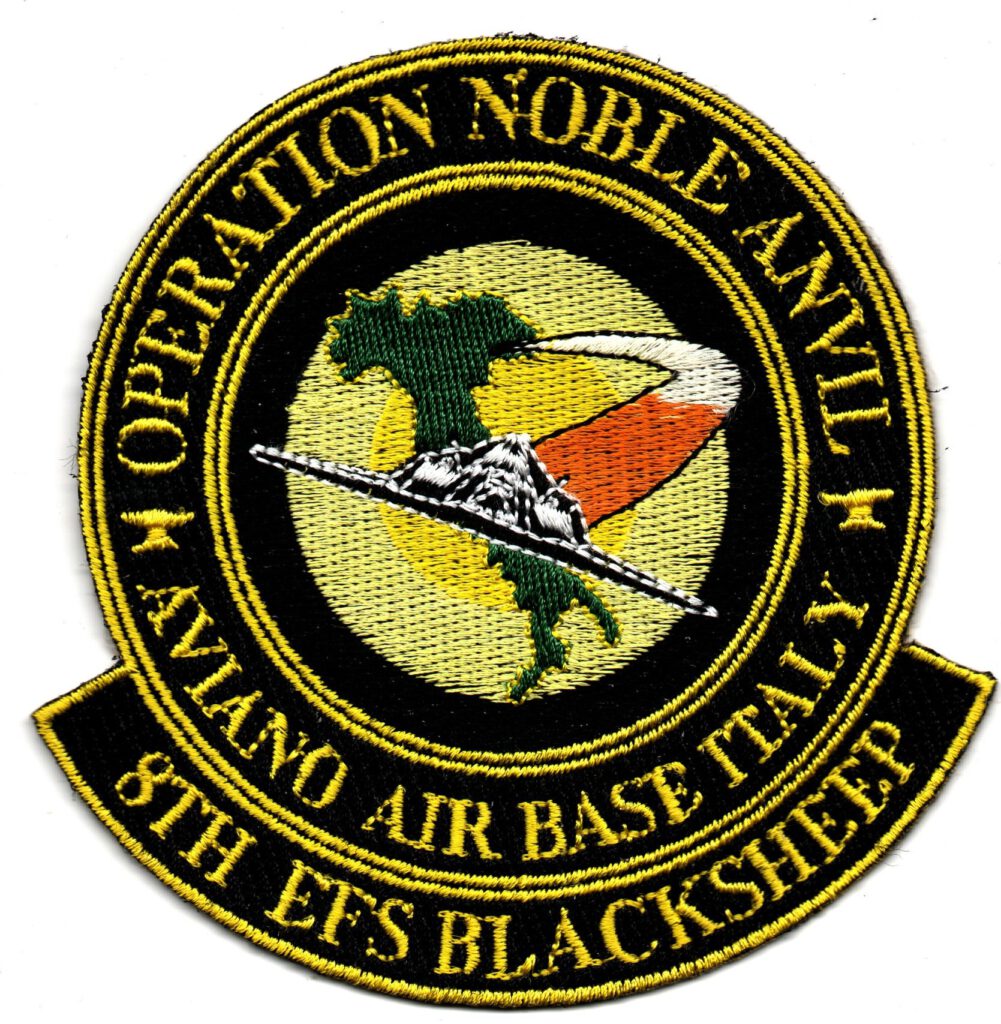
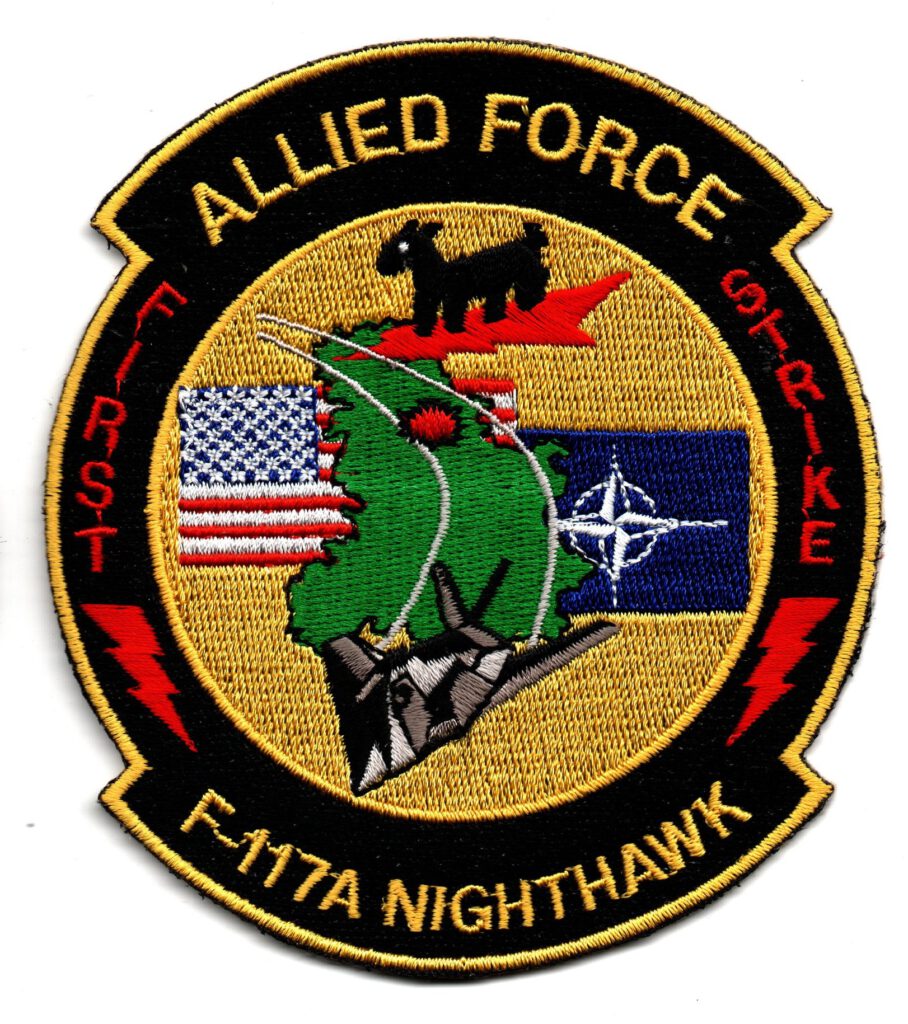
Operation Allied Force
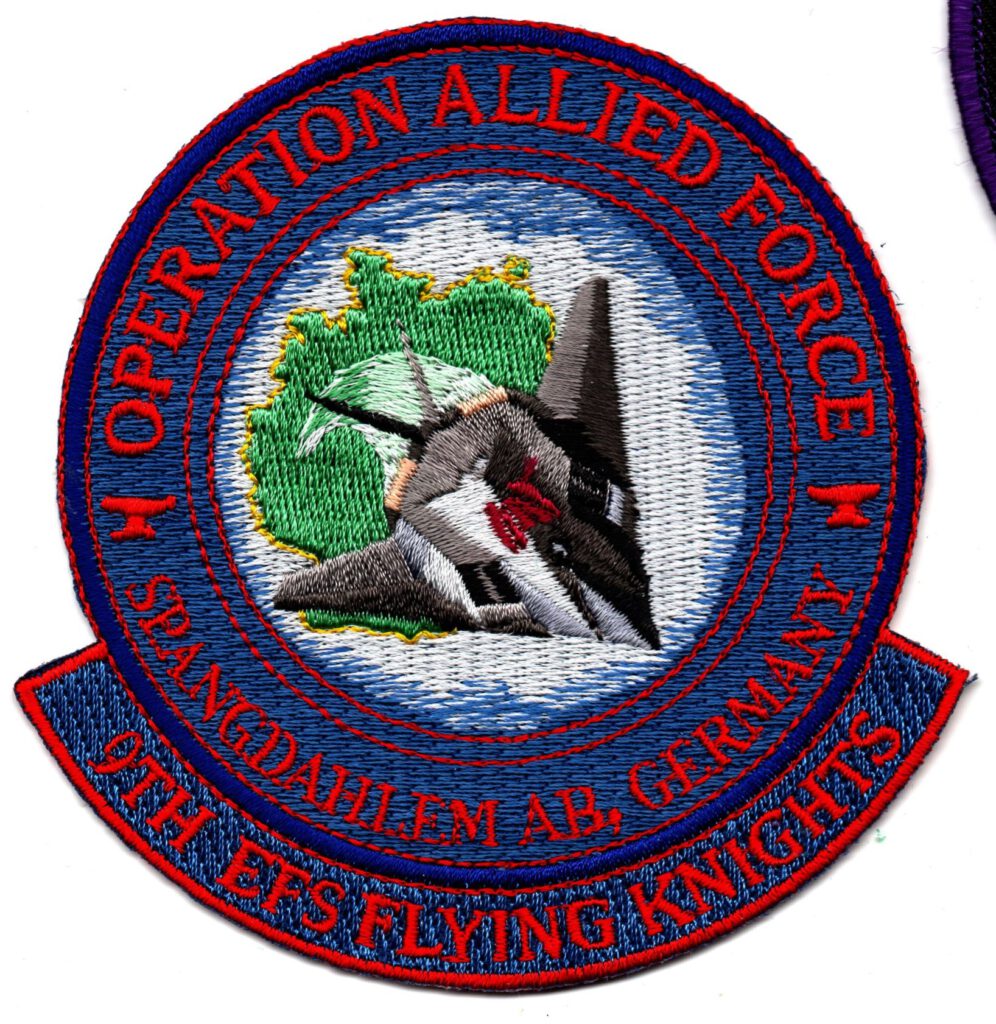
One F-117 (AF ser. no. 82-0806) was lost to enemy action. It was downed during an Operation Allied Force mission against the Army of Yugoslavia on 27 March 1999. The aircraft was acquired by a fire-control radar at a distance of 8.1 mi (13 km) and an altitude of 26,000 ft (8 km). SA-3s were then launched by a Yugoslav version of the Soviet Isayev S-125 “Neva” (NATO name SA-3 “Goa”) anti-aircraft missile system. The launcher was run by the 3rd Battalion of the 250th Air Defence Missile Brigade under the command of Colonel Zoltán Dani. After the explosion, the aircraft became uncontrollable, forcing the pilot to eject. The pilot was recovered six hours later by a United States Air Force Pararescue team. The stealth technology from the downed F-117 has reportedly been studied by Russia, and possibly China. The U.S. did not attempt to destroy the wreckage; senior Pentagon officials claimed that its technology was already dated and no longer important to protect. American sources state that a second F-117 was targeted and damaged during the campaign, allegedly on 30 April 1999. The aircraft returned to Spangdahlem Air Base, but it supposedly never flew again.
Program closeout
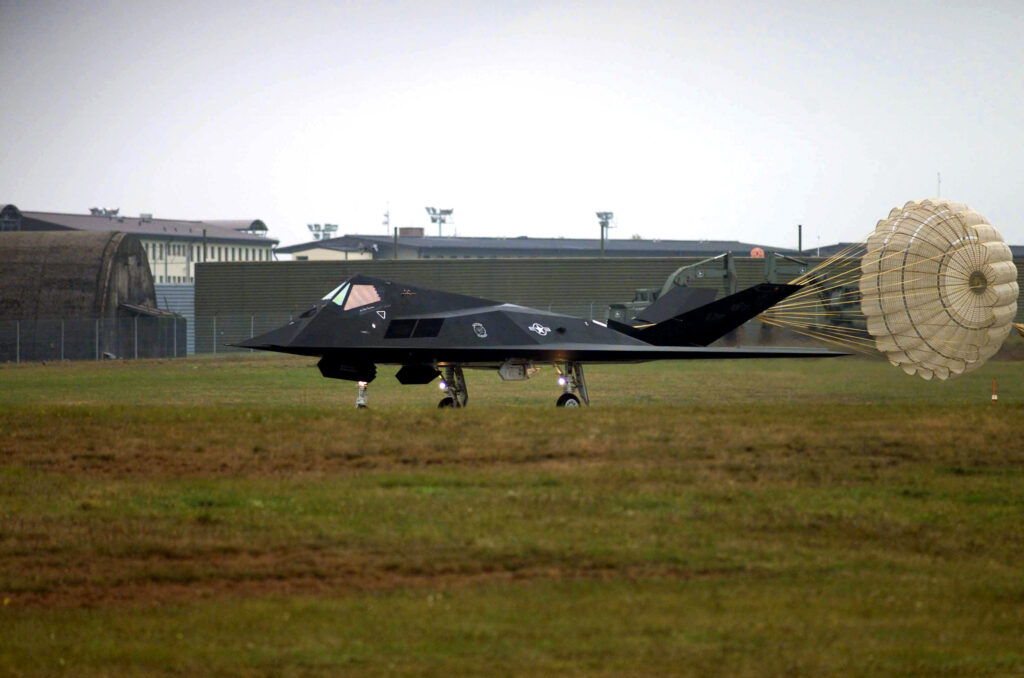
The loss of an F-117 in Serbia caused the USAF to create a subsection of their existing weapons school to improve tactics. More training was done with other units, and the F-117 began to participate in Red Flag exercises. Though advanced for its time, the F-117’s stealthy faceted airframe required a large amount of maintenance and was eventually superseded by streamlined shapes produced with computer-aided design. Other weapons systems began to take on the F-117’s roles, such as the F-22 Raptor gaining the ability to drop guided bombs. By 2005, the aircraft was used only for certain missions, such as if a pilot needed to verify that the correct target had been hit, or when minimal collateral damage was vital.
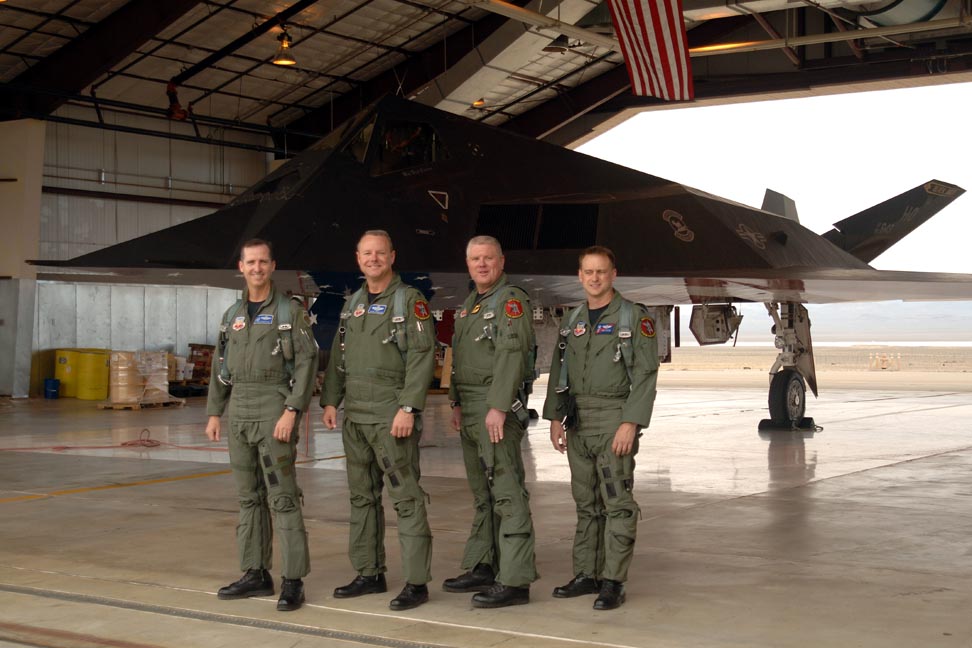
In late 2006, the USAF closed the F-117 formal training unit, and announced the retirement of the F-117. The first six aircraft to be retired took their last flight on 12 March 2007 after a ceremony at Holloman AFB to commemorate the aircraft’s career. Brigadier General David L. Goldfein, commander of the 49th Fighter Wing, said at the ceremony, “With the launch of these great aircraft today, the circle comes to a close—their service to our nation’s defense fulfilled, their mission accomplished, and a job well done. We send them today to their final resting place—a home they are intimately familiar with—their first, and only, home outside of Holloman.
A pair of specially painted F-117s sporting a United States flag theme on their bellies fly off from their last refueling by the Ohio Air National Guard’s 121st Air Refueling Wing.
Unlike most other USAF aircraft that are retired to Davis-Monthan AFB for scrapping, or dispersal to museums, most of the F-117s were placed in “Type 1000” storage in their original hangars at the Tonopah Test Range Airport. At Tonopah, their wings were removed and the aircraft are stored in their original climate-controlled hangars. The decommissioning occurred in eight phases, with the operational aircraft retired to Tonopah in seven waves from 13 March 2007 until the last wave’s arrival on 22 April 2008. Four aircraft were kept flying beyond April by the 410th Flight Test Squadron at Palmdale for flight test. By August, two were remaining. The last F-117 (AF Serial No. 86-0831) left Palmdale to fly to Tonopah on 11 August 2008. With the last aircraft retired, the 410th was inactivated in a ceremony on 1 August 2008.
Congress had ordered that all F-117s mothballed from 30 September 2006 onwards were to be maintained “in a condition that would allow recall of that aircraft to future service” as part of the 2007 National Defense Authorization Act. As of 2022, USAF plans to demilitarize three F-117s each year until 2034, when they should all be demilitarized.
Post-retirement service
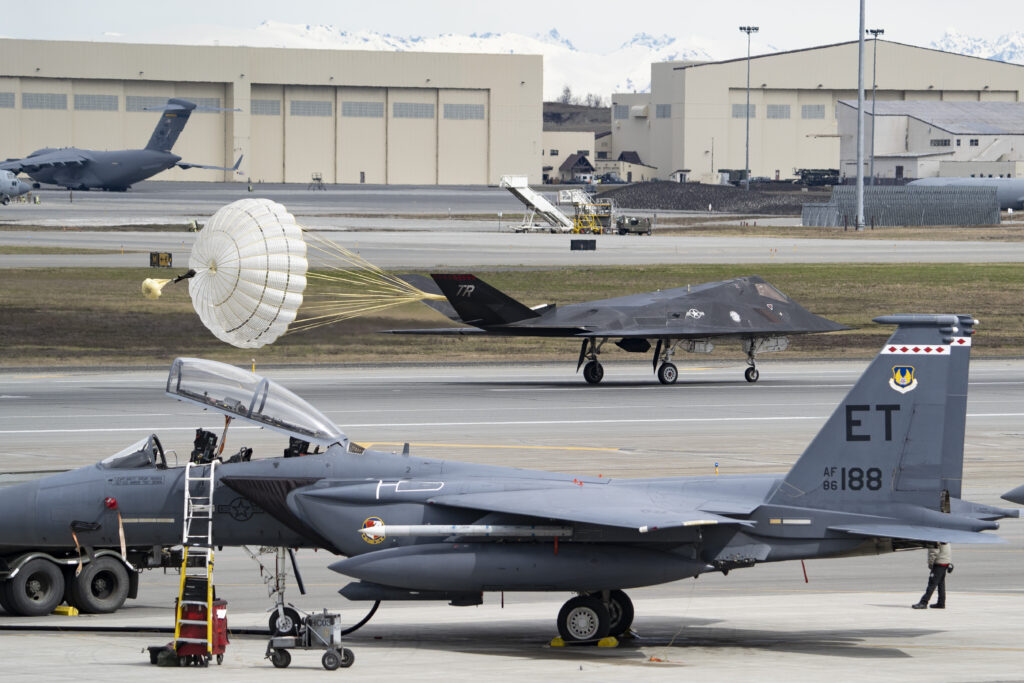
The USAF is currently using the aircraft in aggressor squadron and cruise missile training, and research and development. USAF has also slowed the retirement of its current inventory of about 45 F-117s to two to three units a year. This plan should extend the lifetime of the F-117 program to 2034. In March 2019, four F-117s reportedly had been secretly deployed to the Middle East in 2016, and that one had to make an emergency landing at Ali Al Salem, Kuwait sometime late that year.
On 13 September 2021, a pair of F-117s landed at Fresno Yosemite International Airport in California. They were scheduled to train with the California Air National Guard F-15C/D Eagles of the 144th Fighter Wing over the next few days. One aircraft had red letters on its tail, and the other had white letters. One of the two was observed to not be fitted with radar reflectors. That year, USAF published photographs on DVIDS, the first acknowledgement by the service that the aircraft continued to fly after its official retirement.
In January 2022, two F-117s were observed in flight in the Saline Military Operating Area. One had portions of its exterior covered in a “mirror-like coating” believed to be an experimental treatment to reduce the aircraft’s infrared signature.
In May 2022, an F-117 participated in exercise Savannah Sentry at the Air Dominance Center in Savannah, Georgia. It was a joint exercise with both active USAF and Air National Guard units. In a video documenting the exercise, an off-screen crew member stated that about 48 flyable F-117s are in USAF inventory. They stated that the F-117 is sometimes used in aggressor-type training roles and was brought to Savannah Sentry to participate in an “unclassified capacity”.
In May 2023, two F-117s participated in exercise Northern Edge 23-1, marking the first time they were officially spotted operating outside of the continental US after their retirement. On 1 February 2024, two F-117s were seen at testing range R-2508 in the Mojave Desert.
F-117 Units
The following units operated the F-117
4450th Tactical Group – Tonopah Test Range, Nevada
- 4450th Tactical Squadron (1981–1989)
- 4451st Tactical Squadron (1981–1989)
- 4453rd Test and Evaluation Squadron (1985–1989)
37th Tactical Fighter Wing/Fighter Wing – Tonopah Test Range
- 415th Tactical Fighter Squadron (1989–1992)
- 416th Tactical Fighter Squadron (1989–1992)
- 417th Tactical Fighter Training Squadron (1989–1992)
49th Fighter Wing – Holloman AFB, New Mexico
- 7th Fighter Squadron (1992–2006)
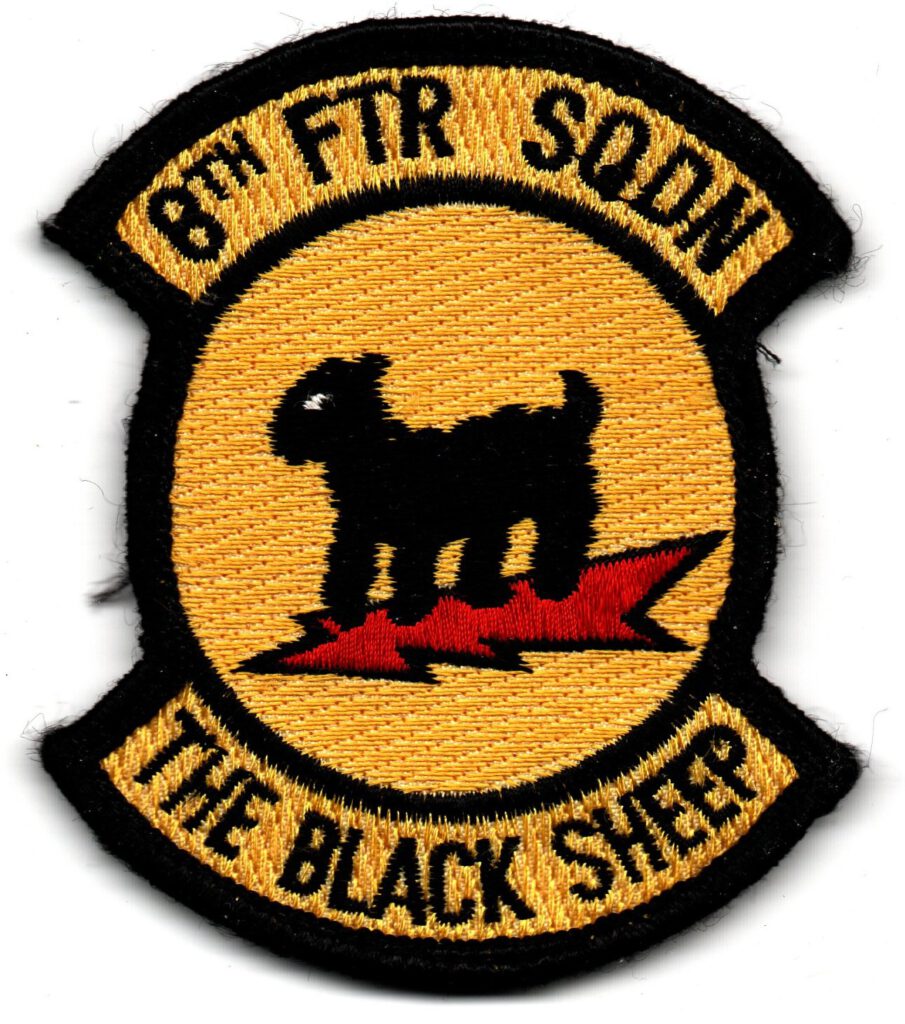
- 8th Fighter Squadron (1992–2008)
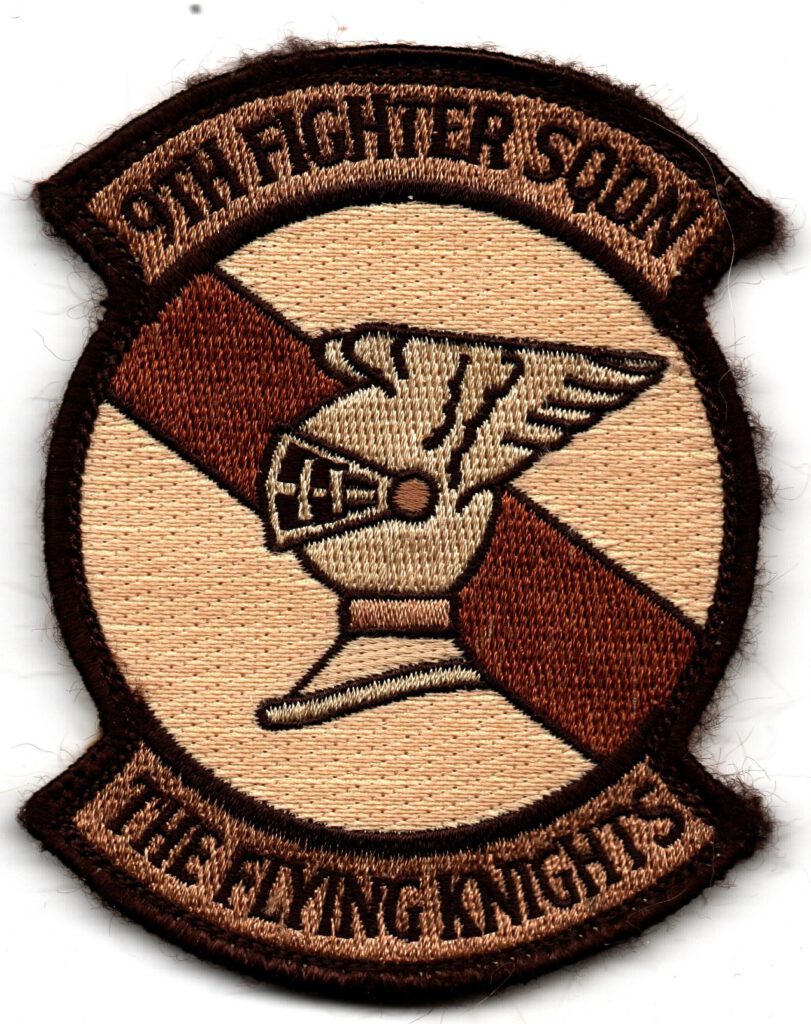
- 9th Fighter Squadron (1993–2008)
412th Test Wing – Edwards AFB, California
- 410th Flight Test Squadron (1993–2008)
F-117 Photos
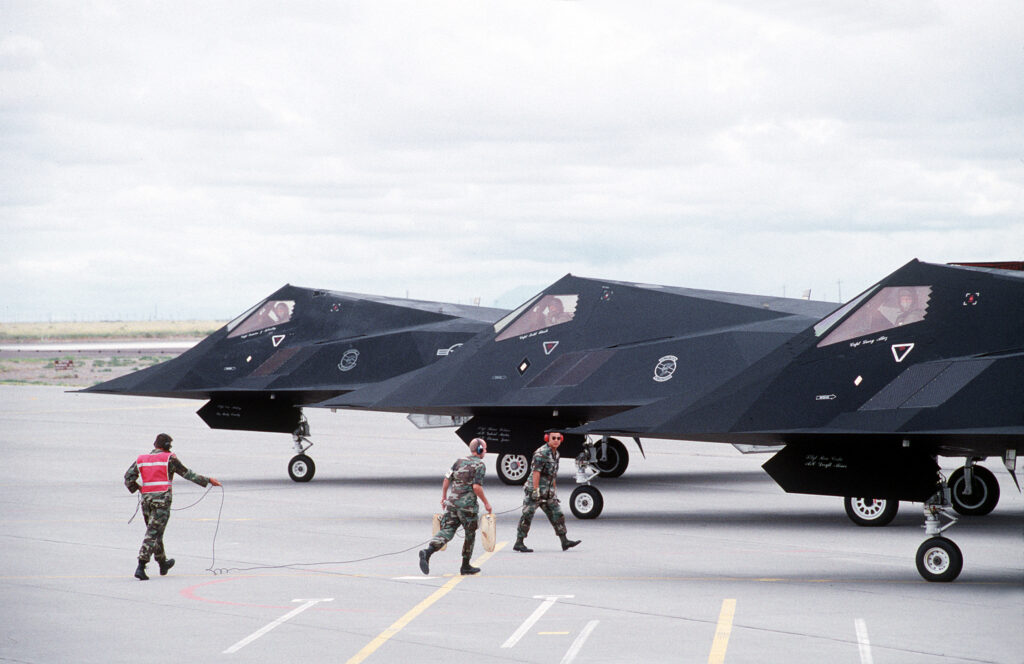
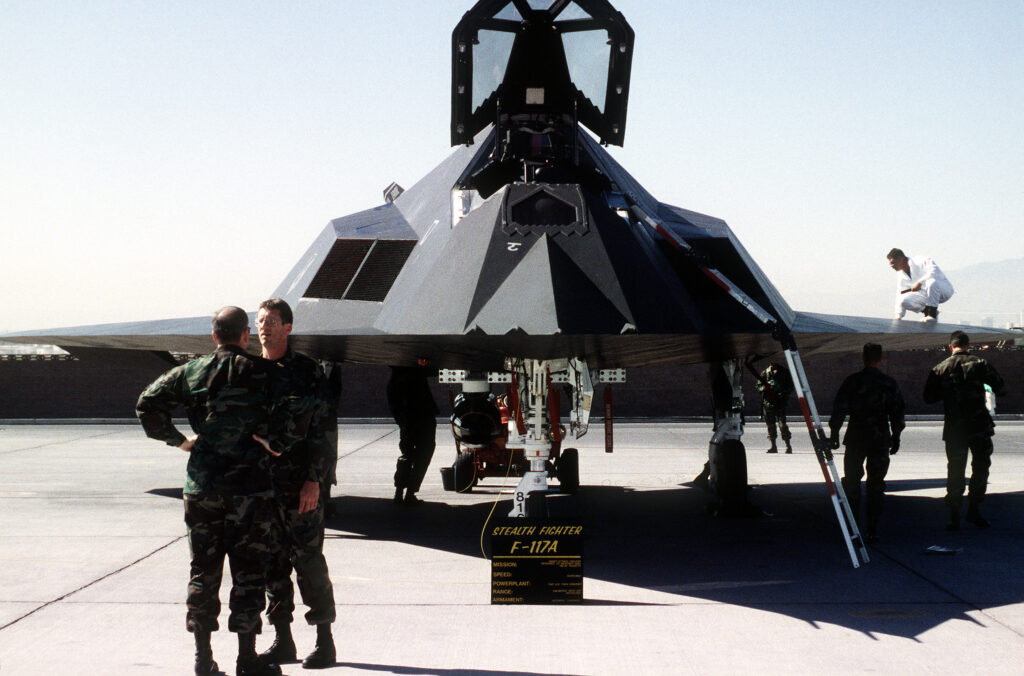
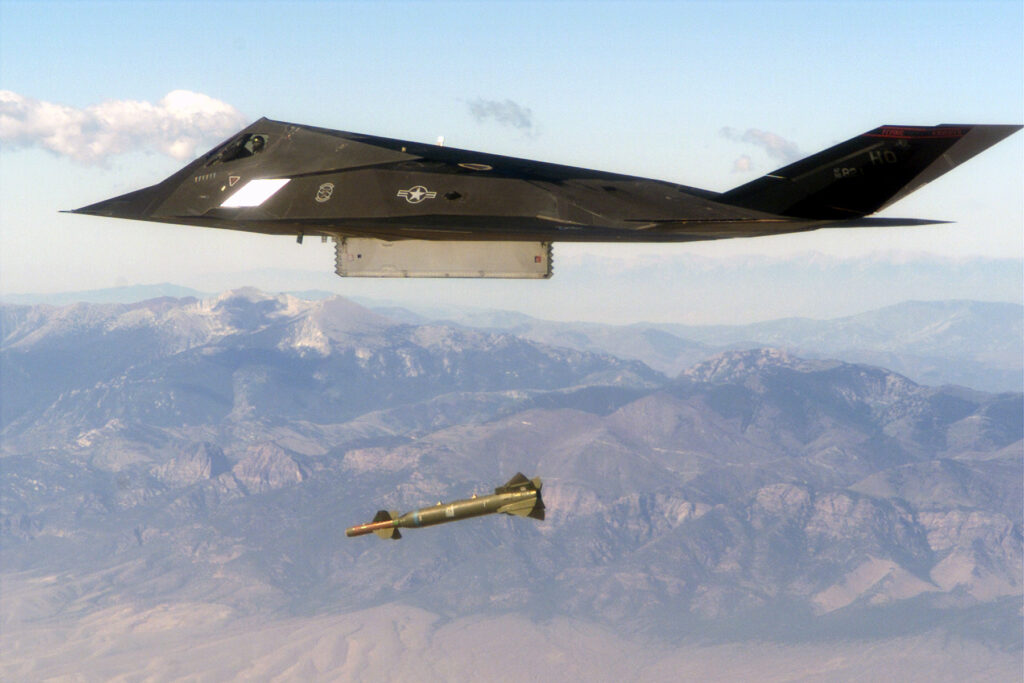
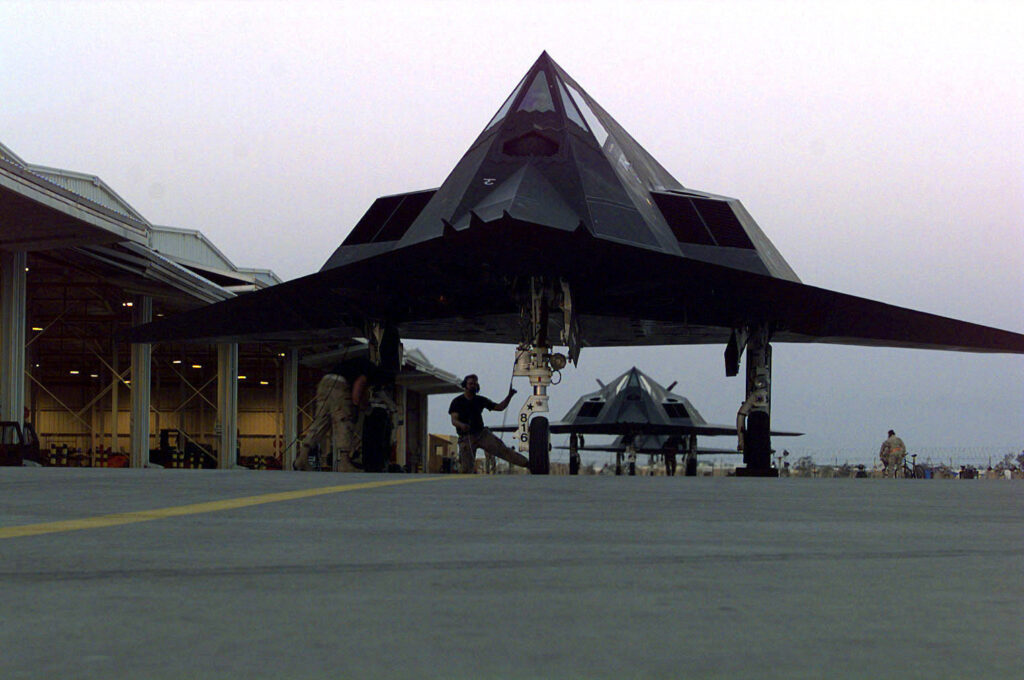

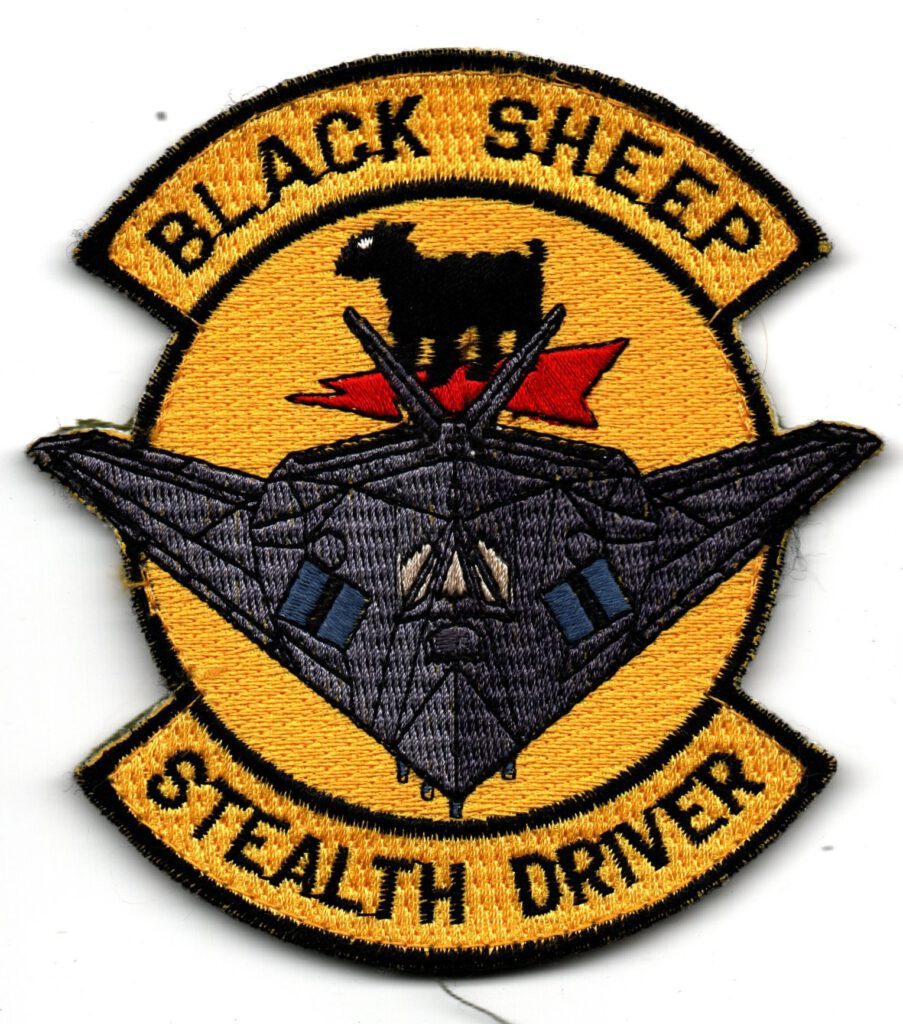
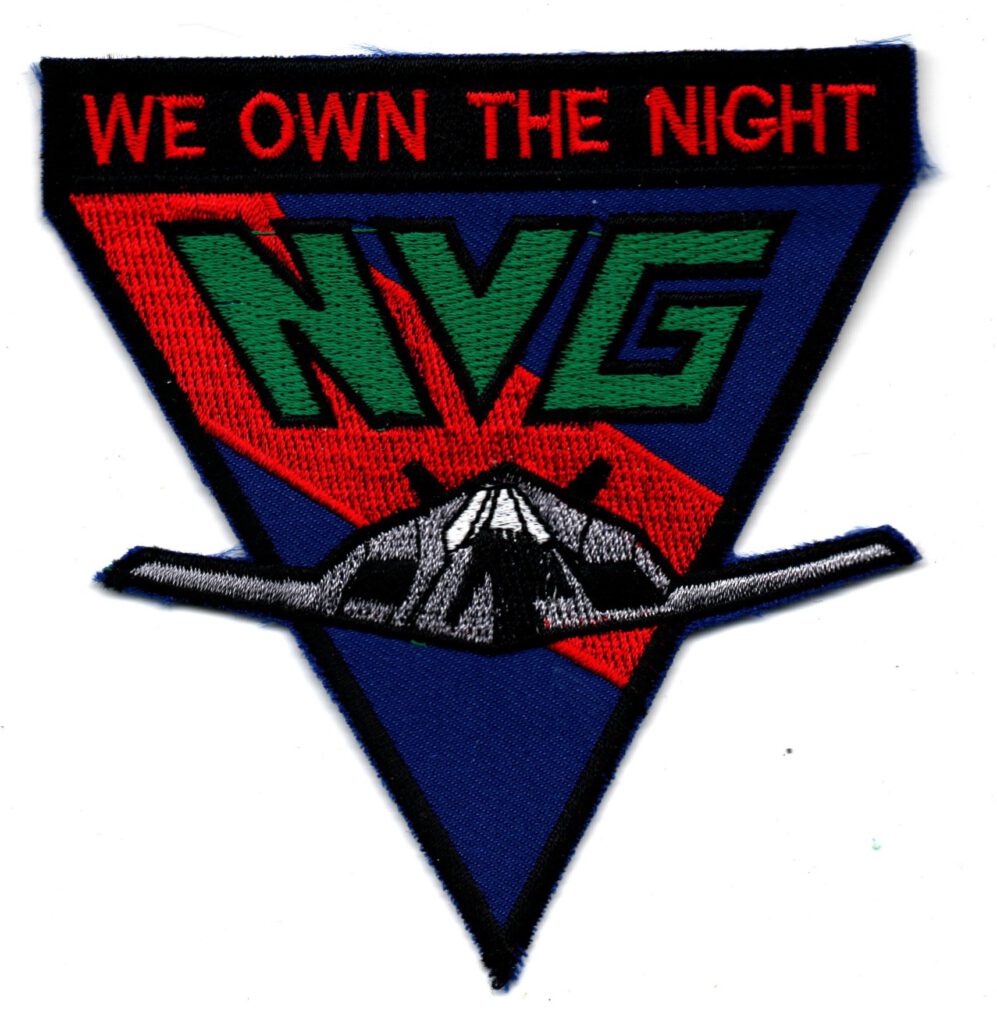
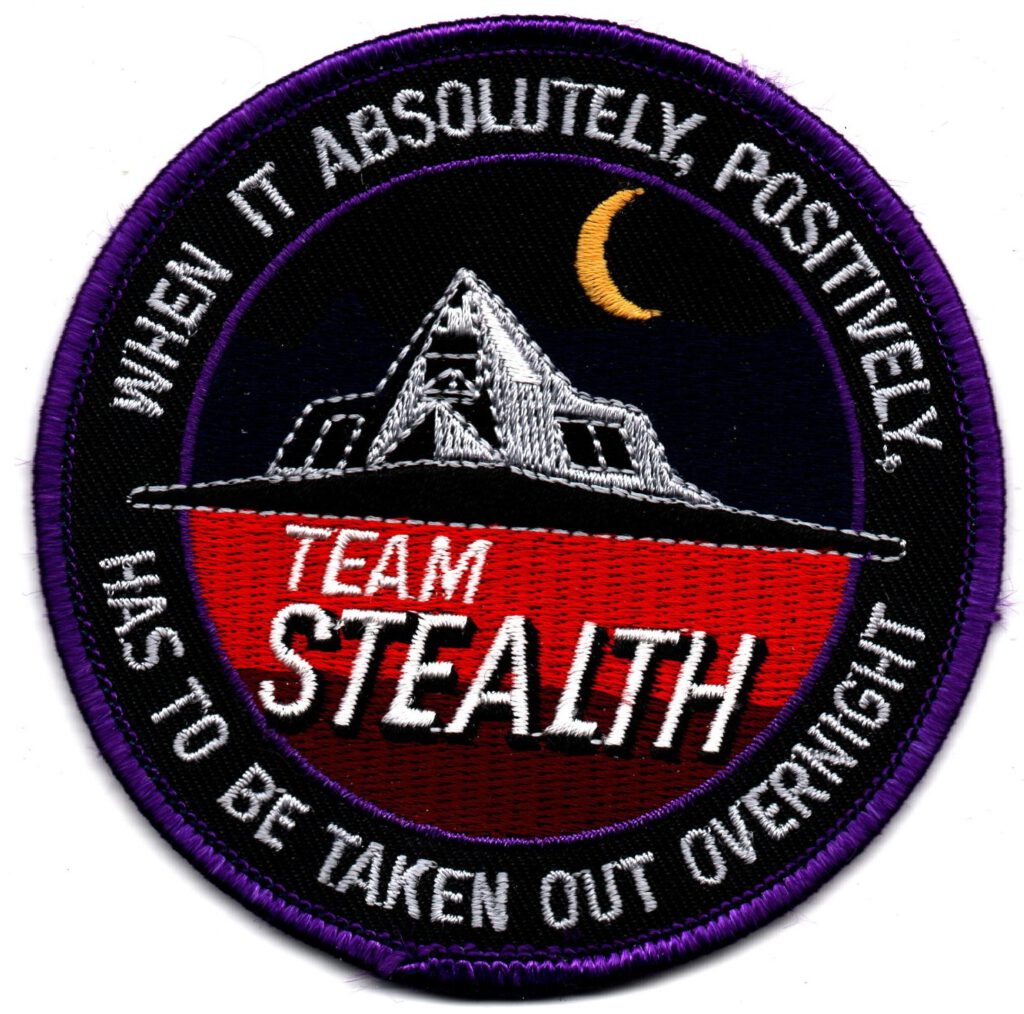
F-117 patches
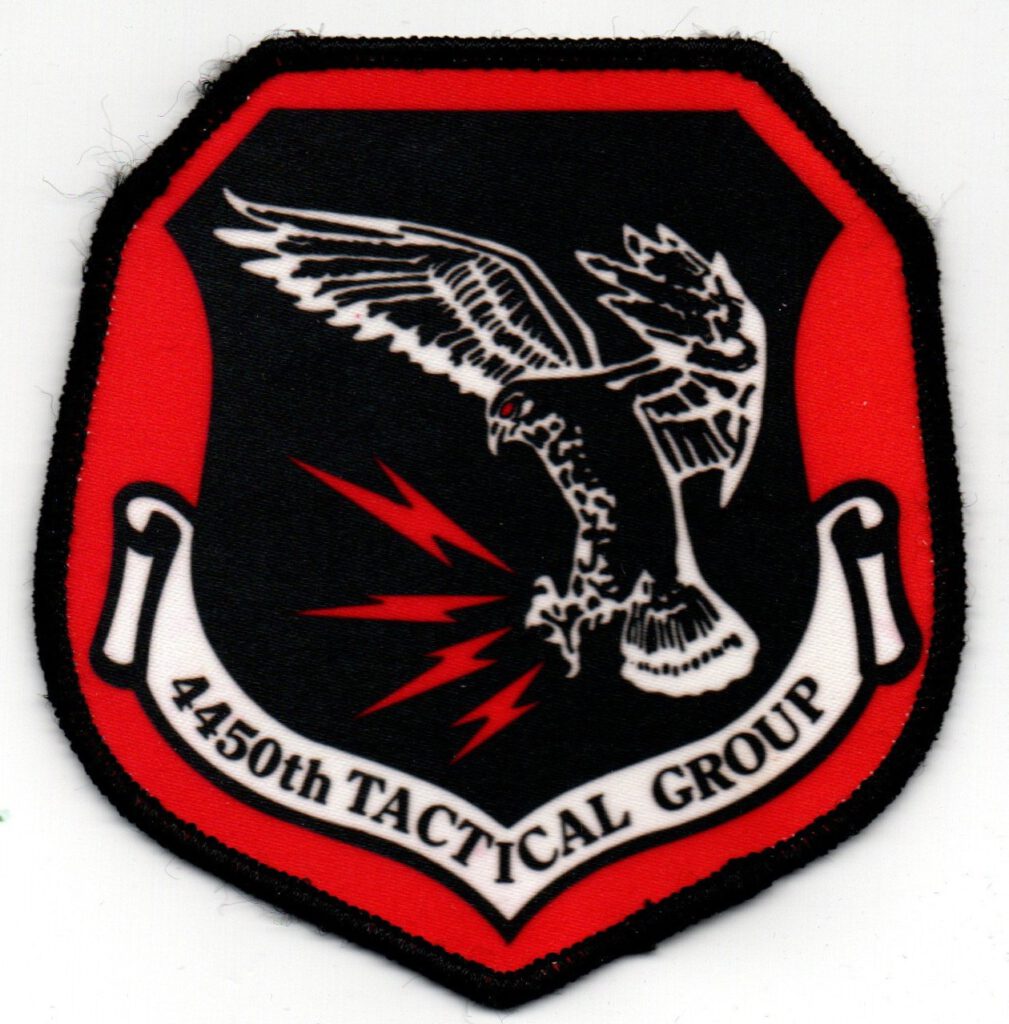
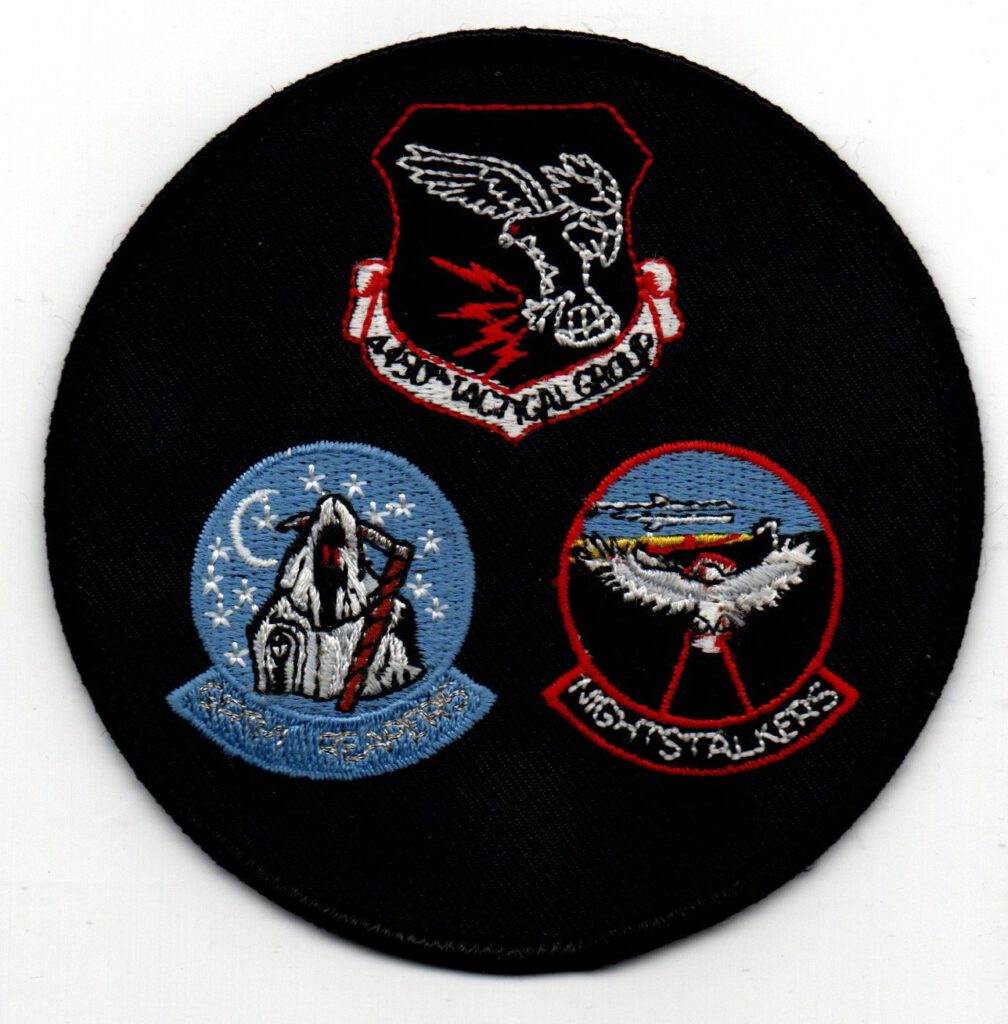
Gaggle: 4450th Tactical Group, 4451st Test Squadron & 4452d Test Squadron.
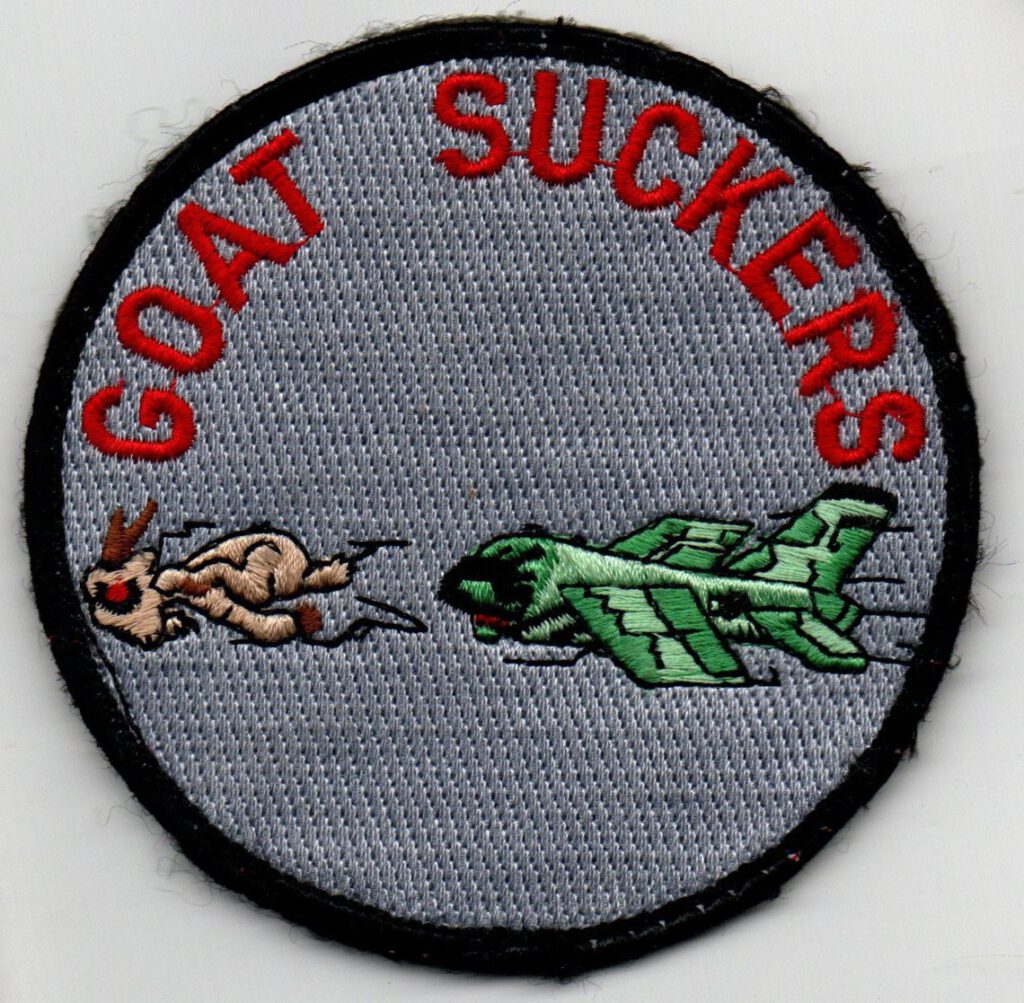
Goat Suckers is a nickname for a nighthawk, which was what the F-117 came to be called. The A-7D/K was a cover for the F-117 training program. The A-7 was replaced by the T-38 in 1989 after the program was made public. Original version, late 1980s era
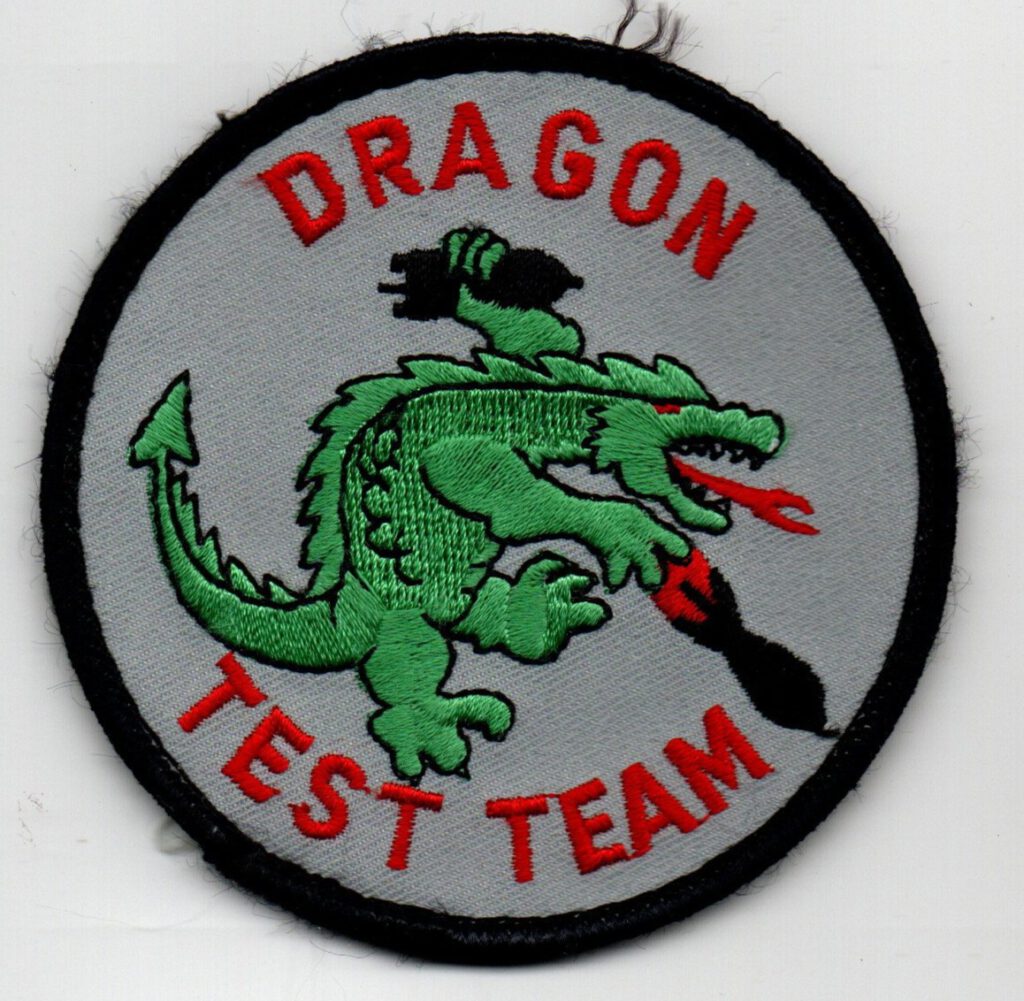
One F-117A was the Dragon test aircraft. SN 787 was used first, and later replaced by SN 807. Patch used by USAF Det 2 during black ops era from 86-89, and later various incarnations of the 57 Wing, 79 TEG and 53 TEG with some changes. Older US made.
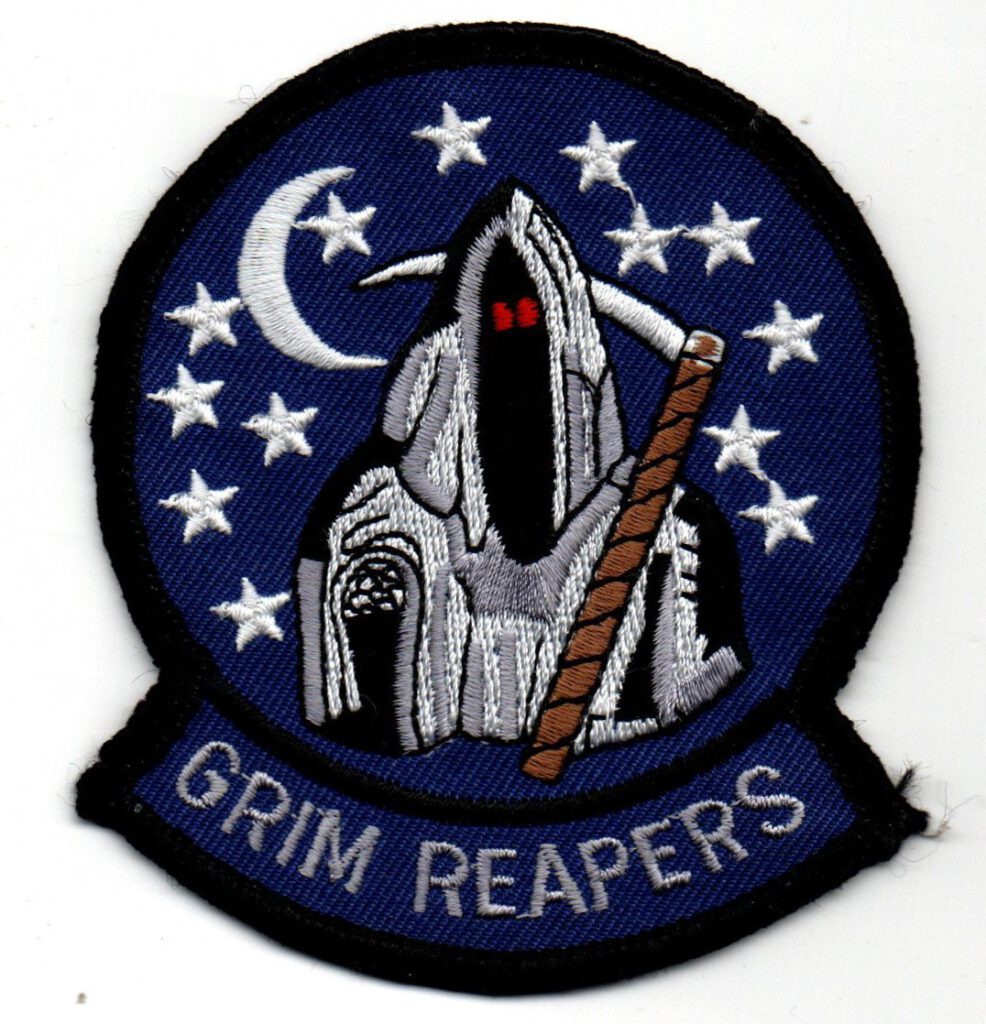


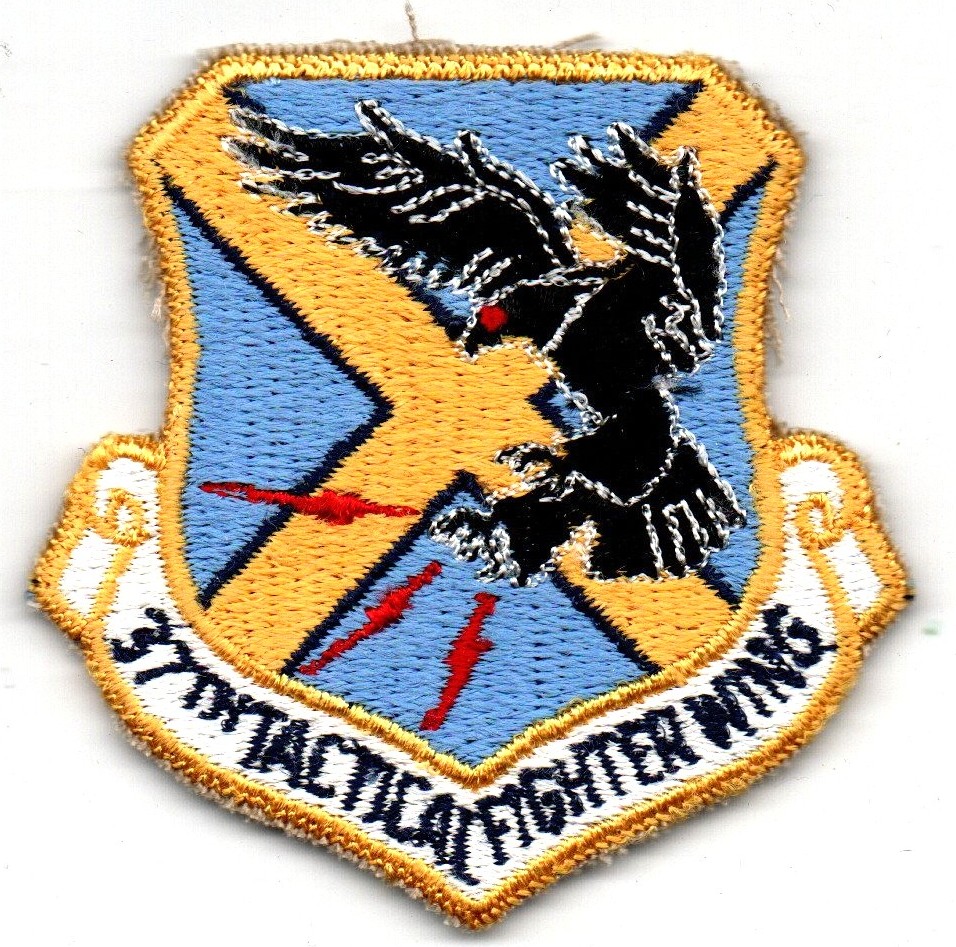
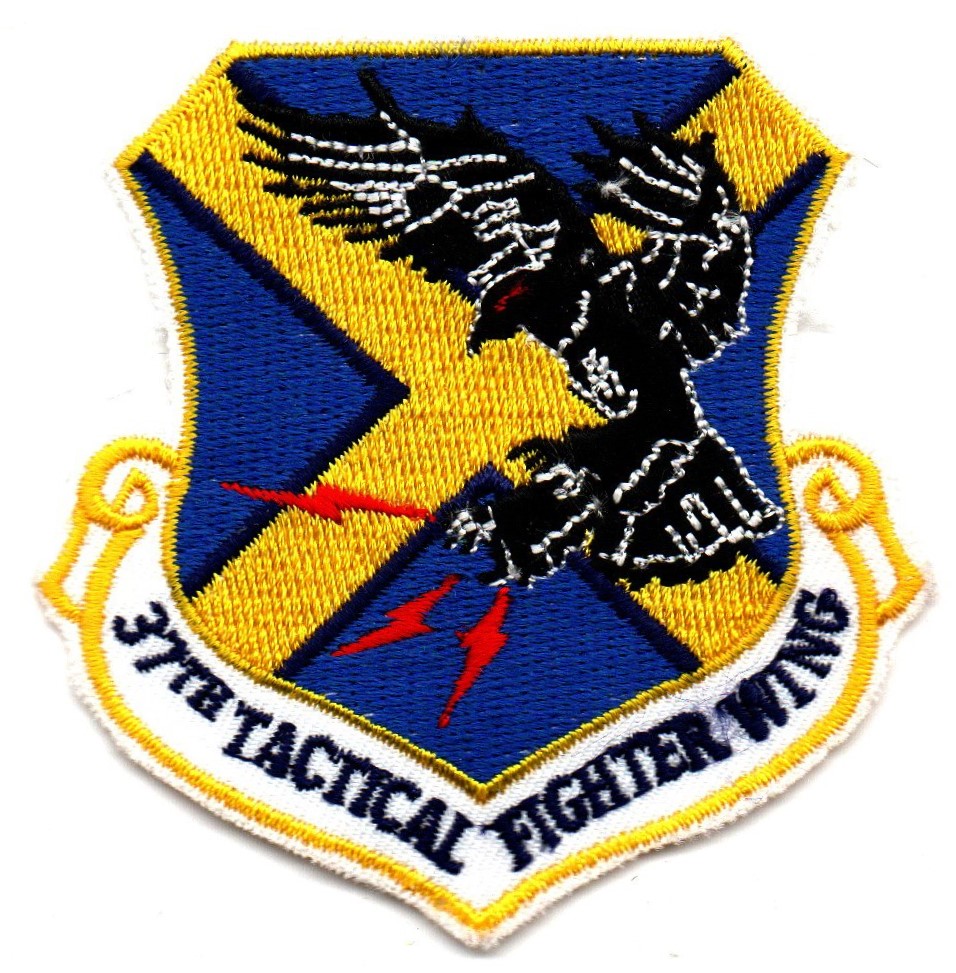
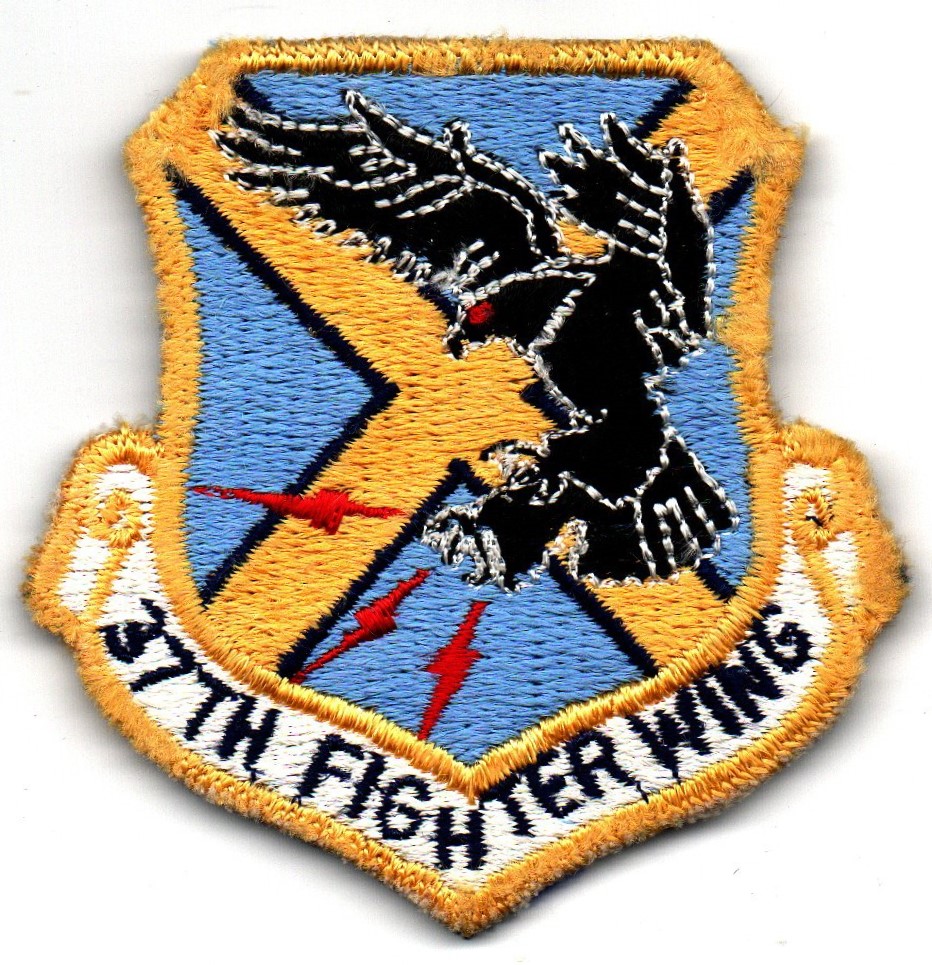
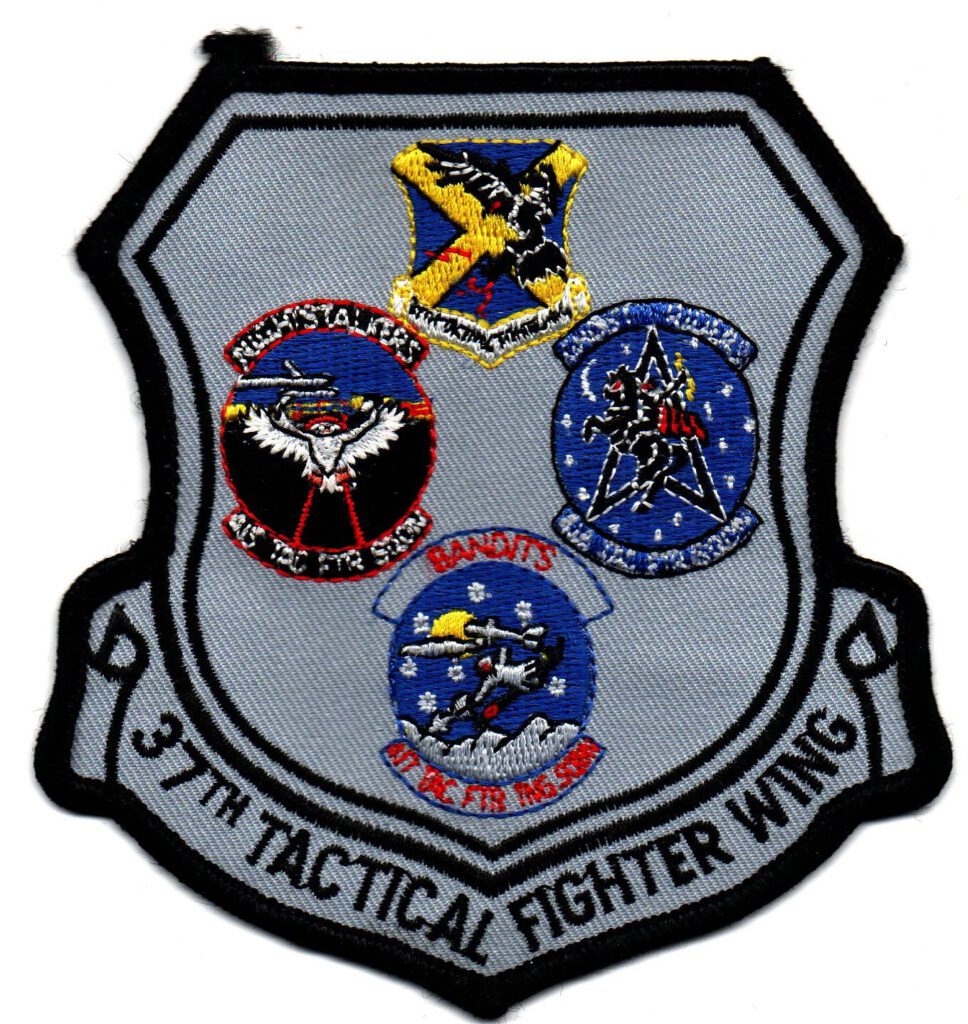
416th Tactical Fighter Squadron, 417th Tactical Fighter Training Squadron & 415th Tactical Fighter Squadron.

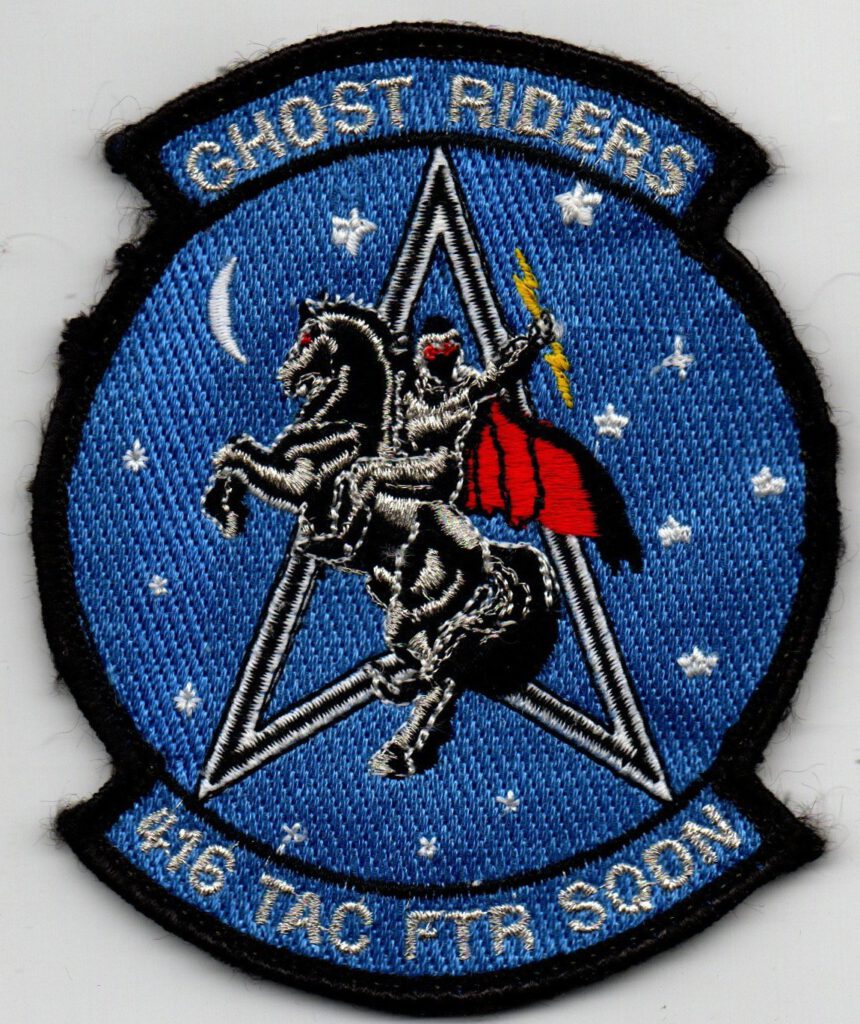
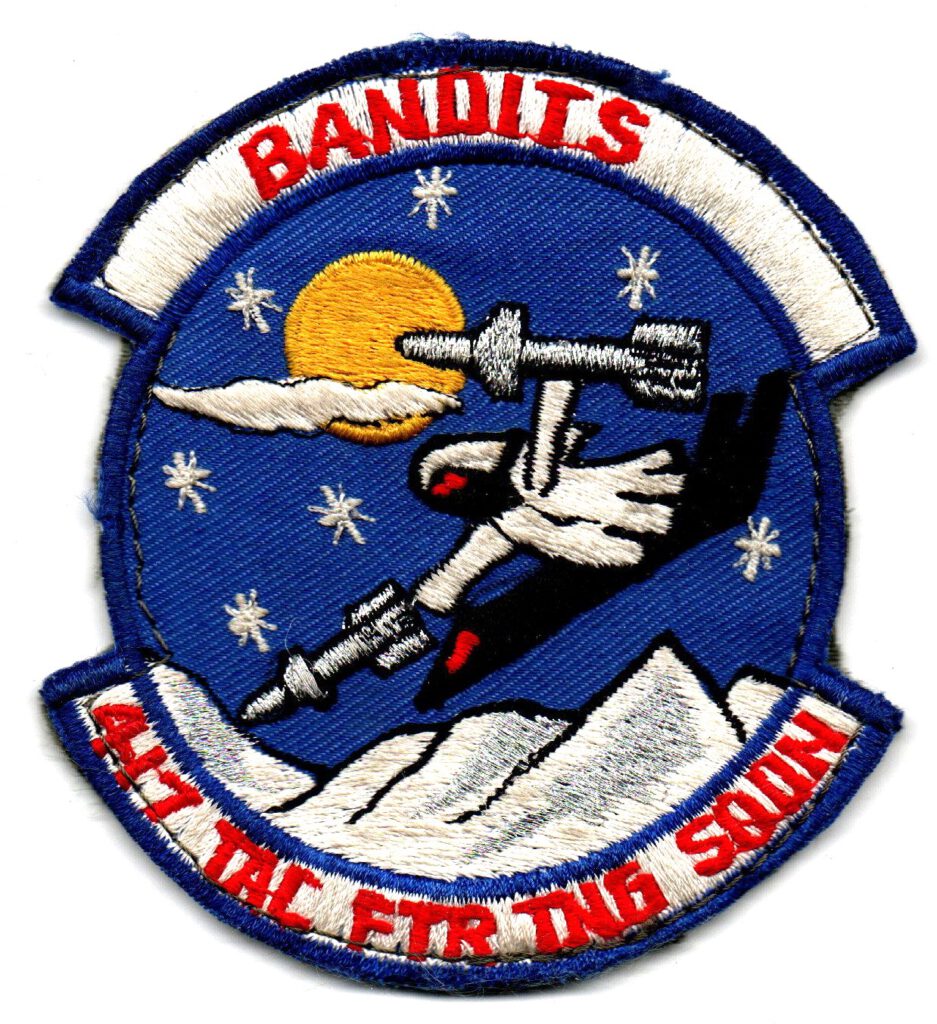
1st version
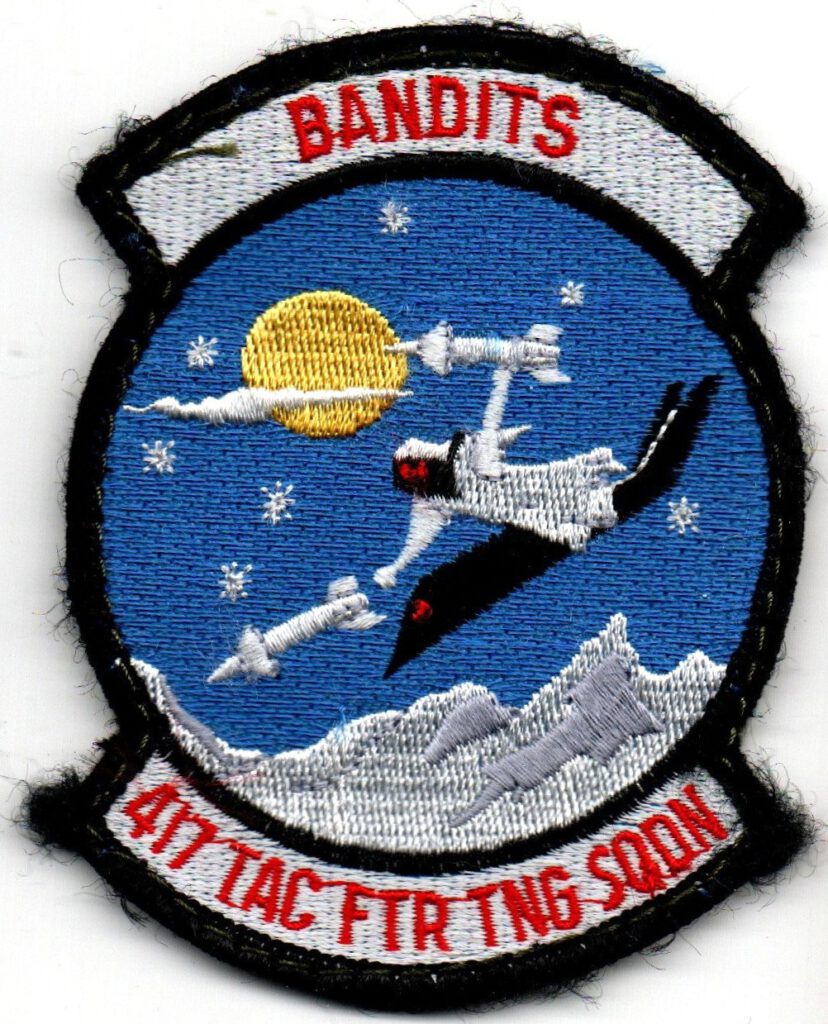
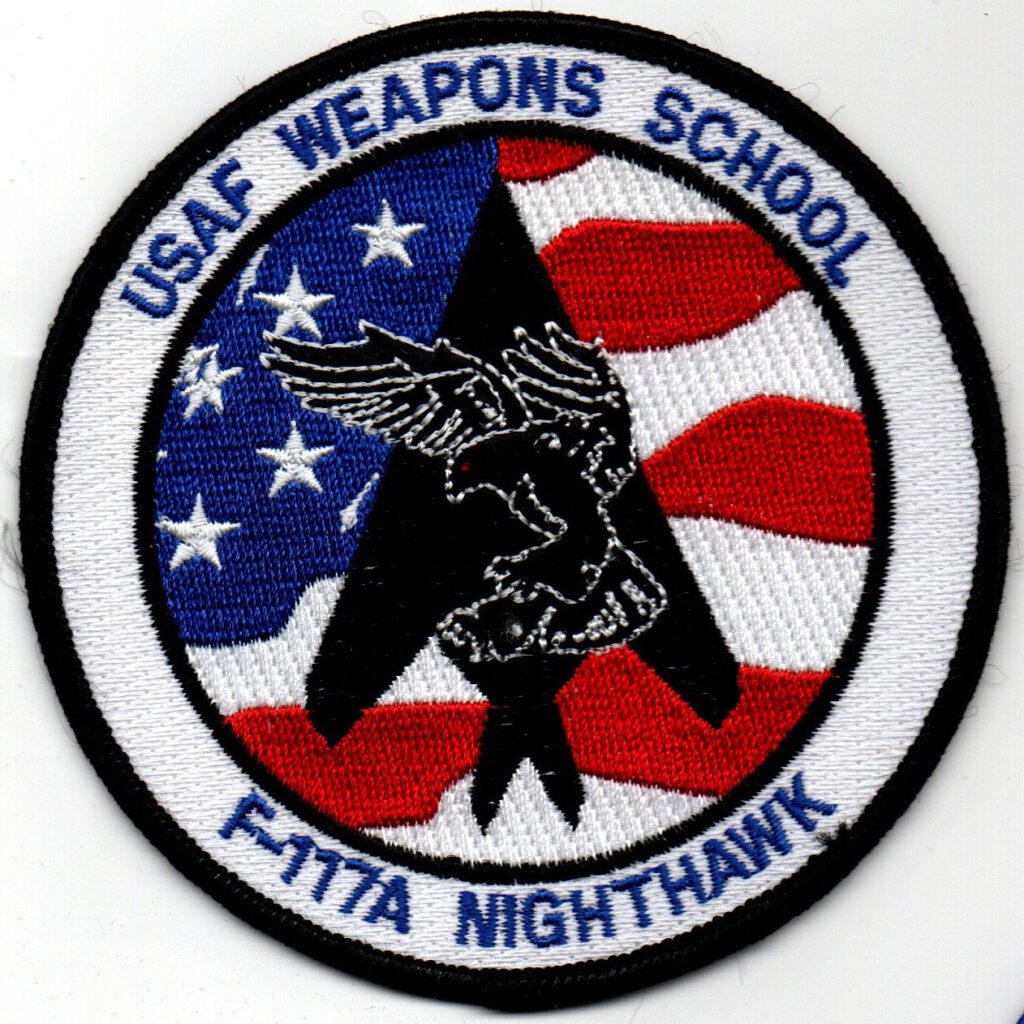
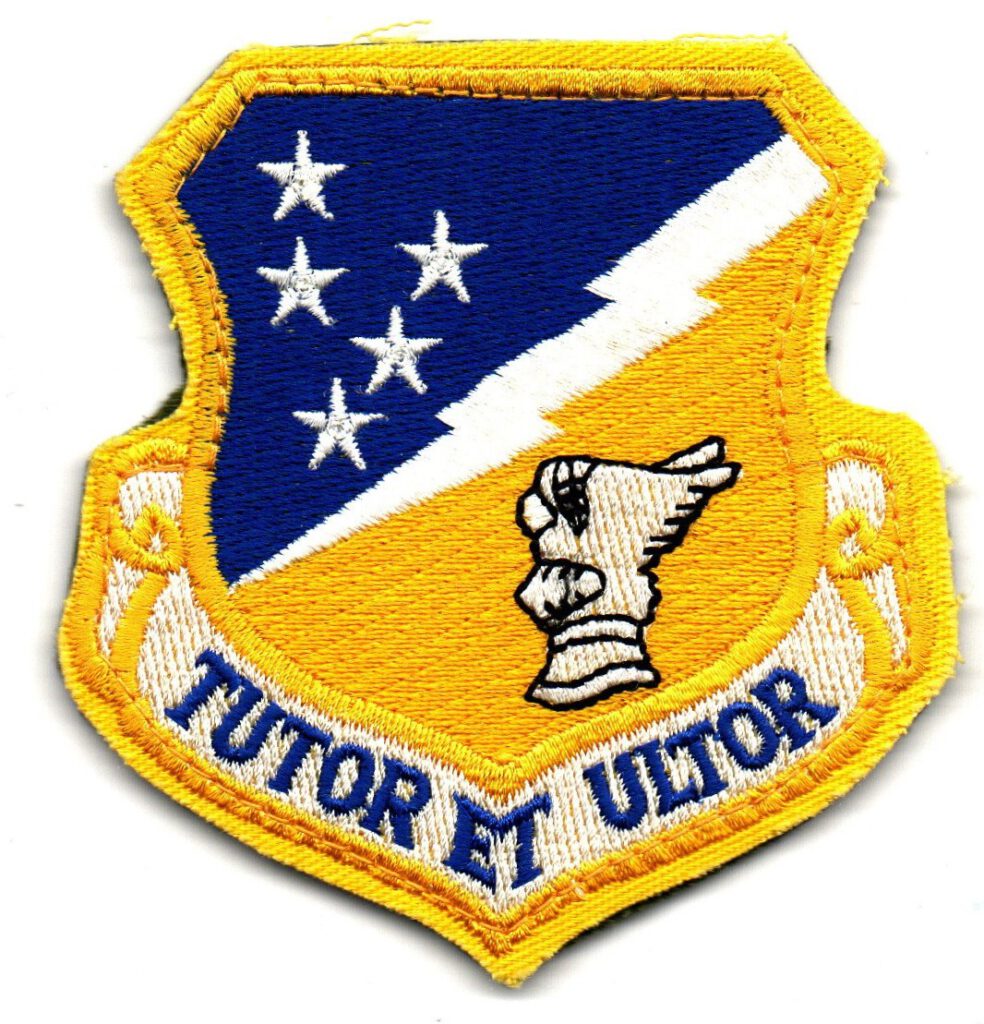
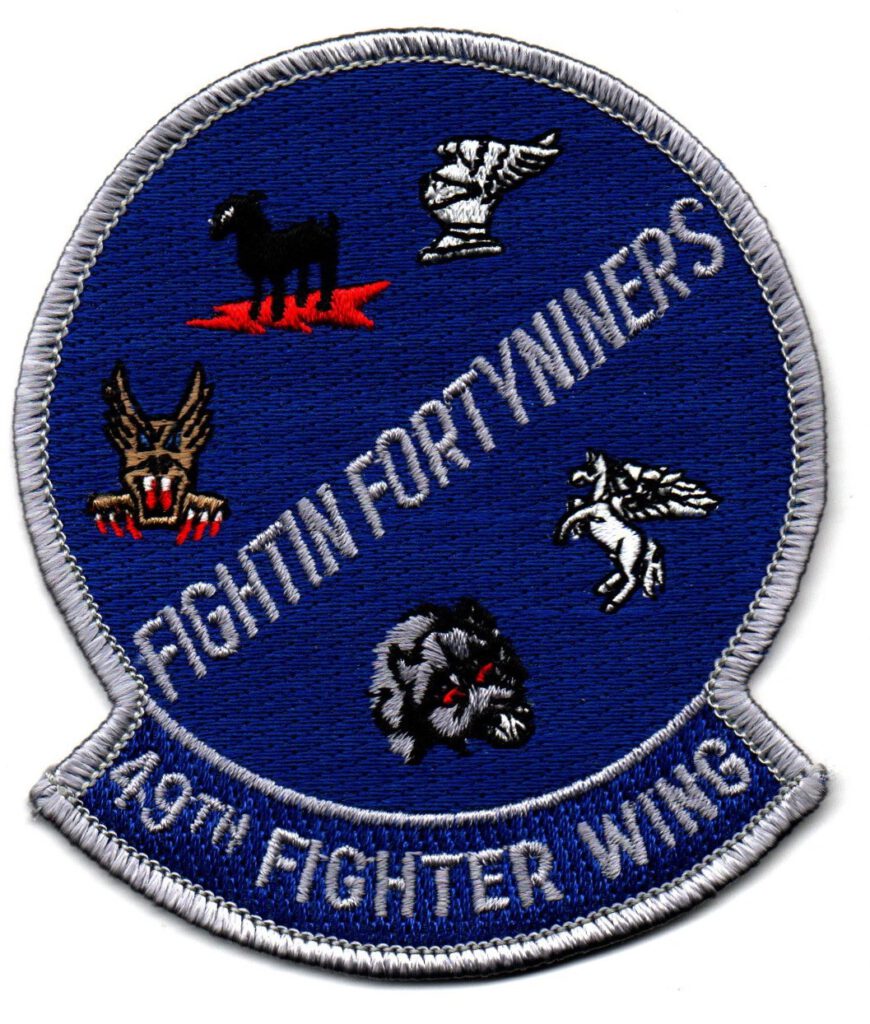
7th Fighter Squadron, 8th Fighter Squadron, 9th Fighter Squadron, 48th Rescue Squadron & 20th Fighter Squadron.
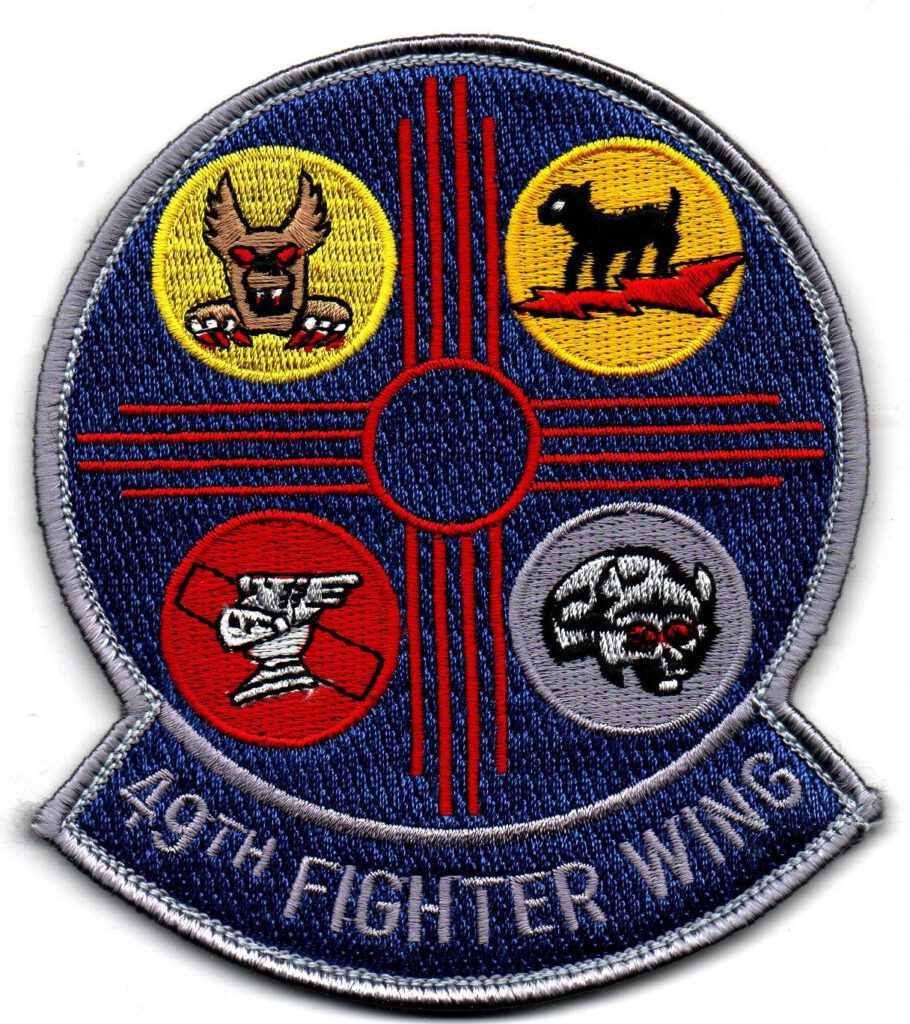
7th Fighter Squadron, 8th Fighter Squadron, 20th Fighter Squadron & 9th Fighter Squadron.
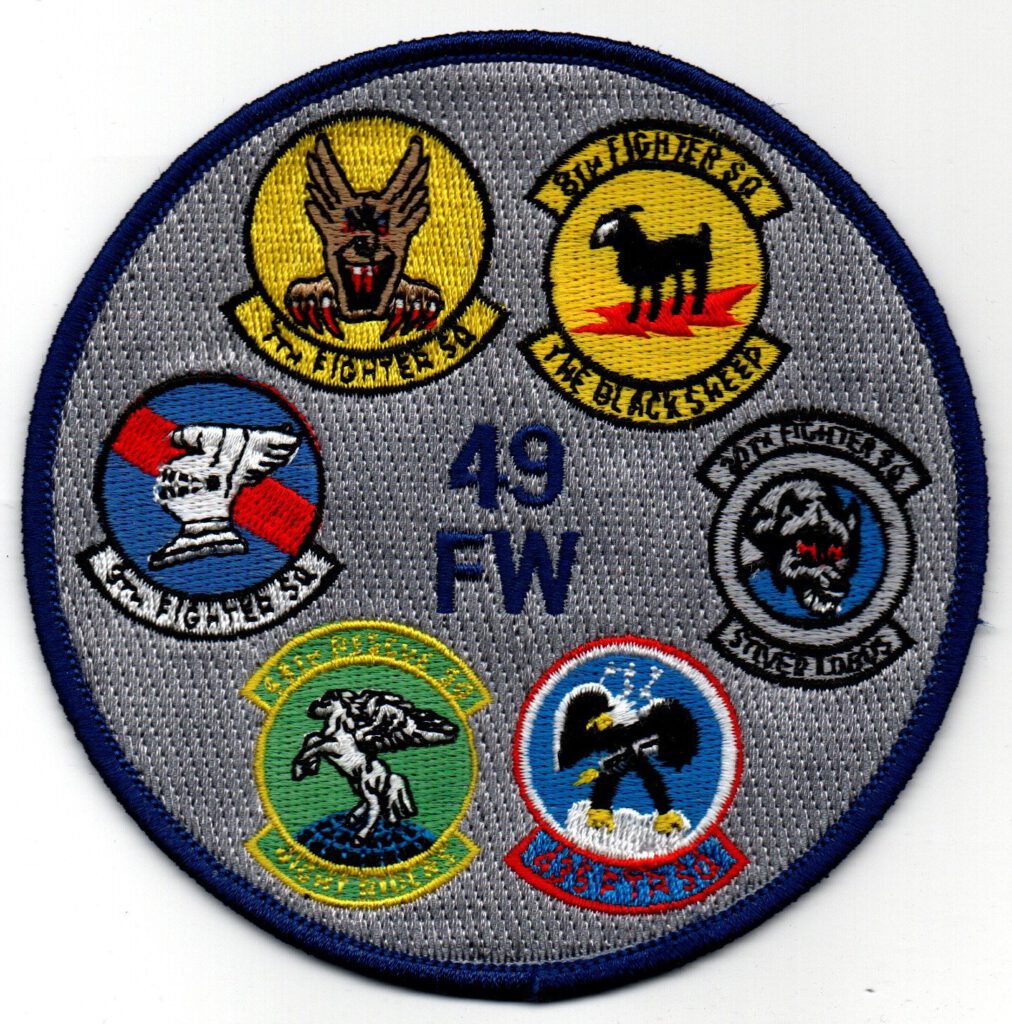
8th Fighter Squadron, 20th Fighter Squadron, 435th Fighter Squadron, 48th Rescue Squadron, 9th Fighter Squadron & 7th Fighter Squadron.
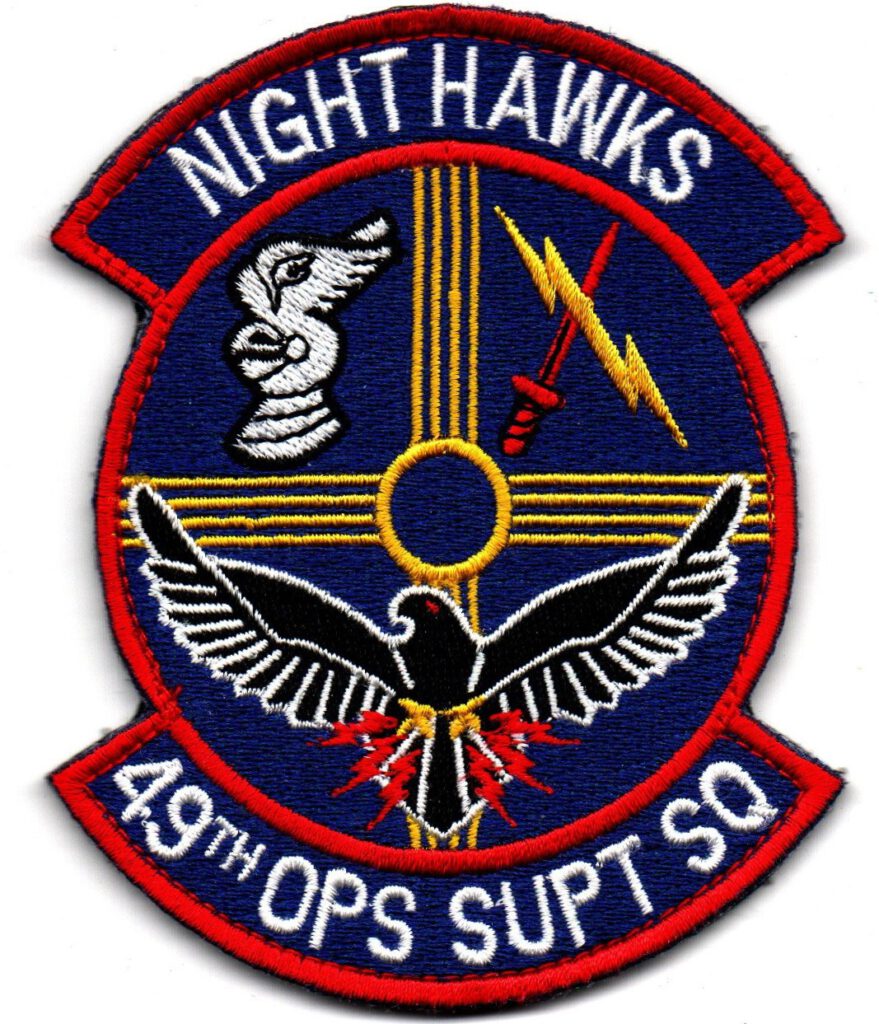
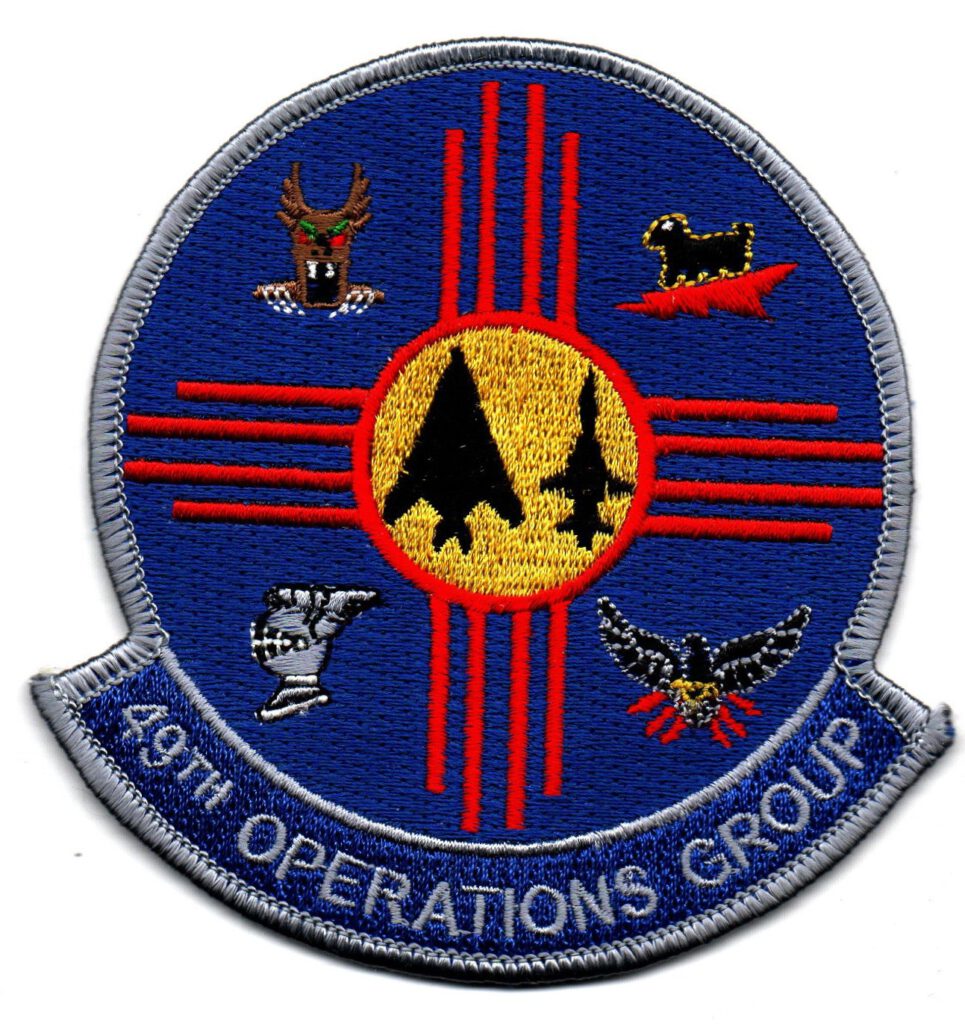
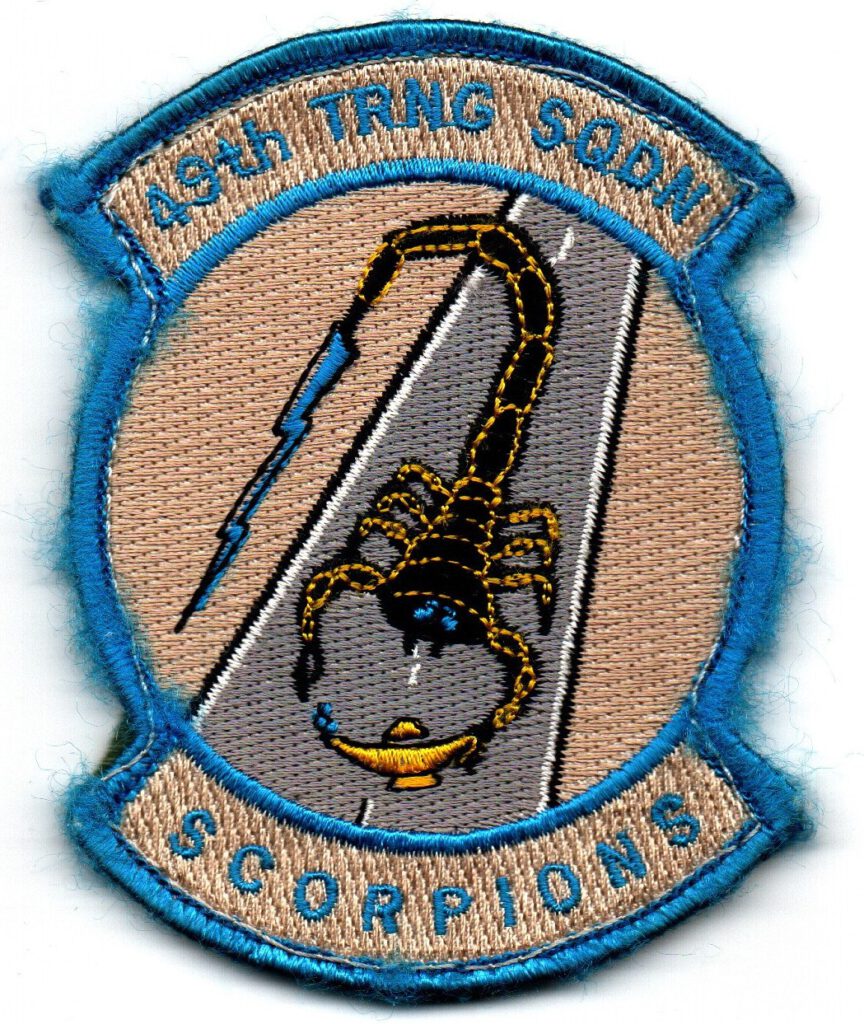
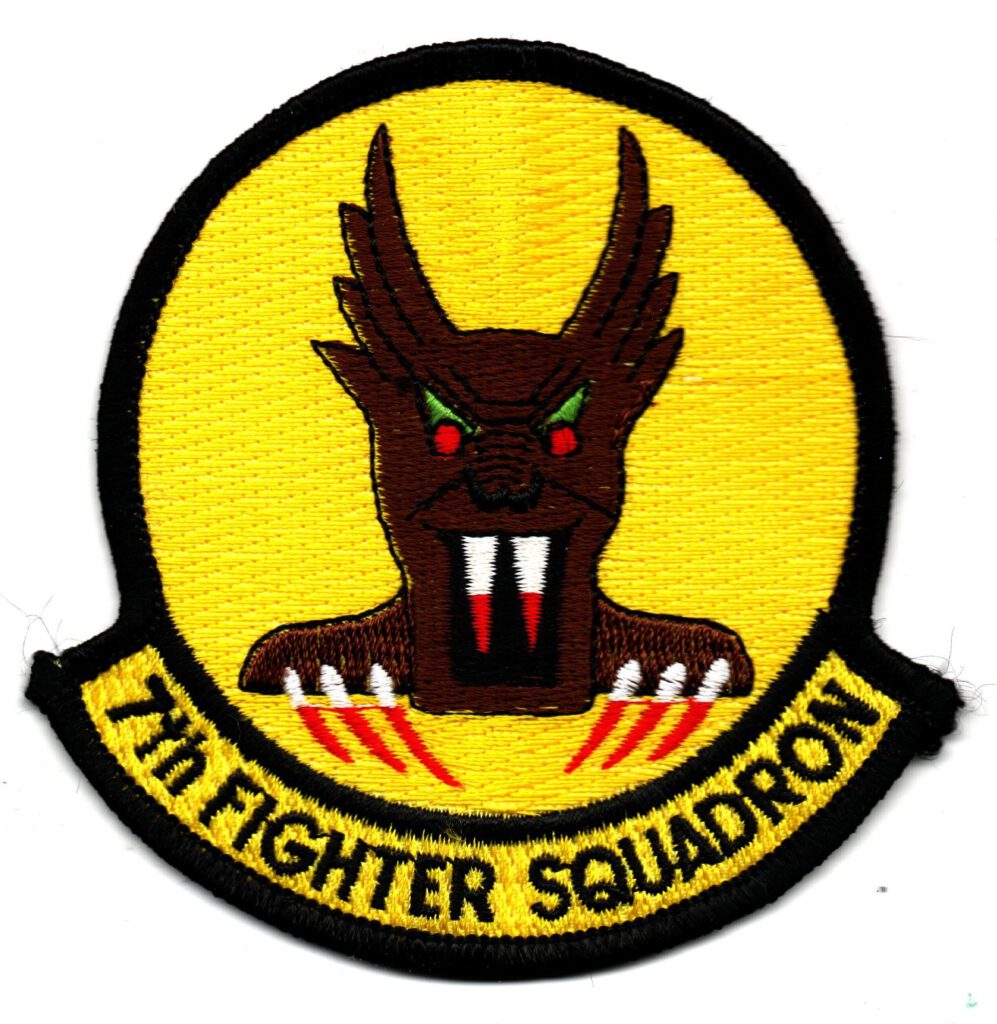
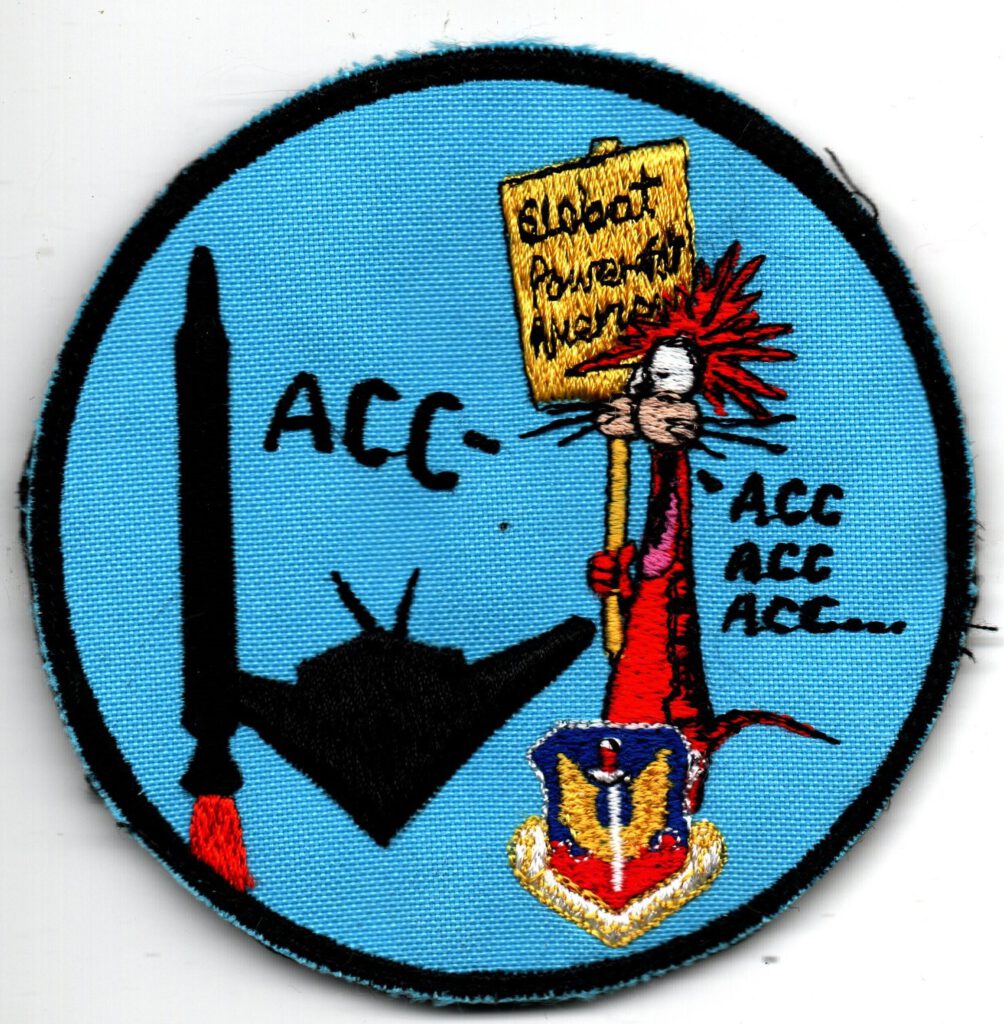
When TAC became ACC, made by an F-117 driver at Holloman AFB