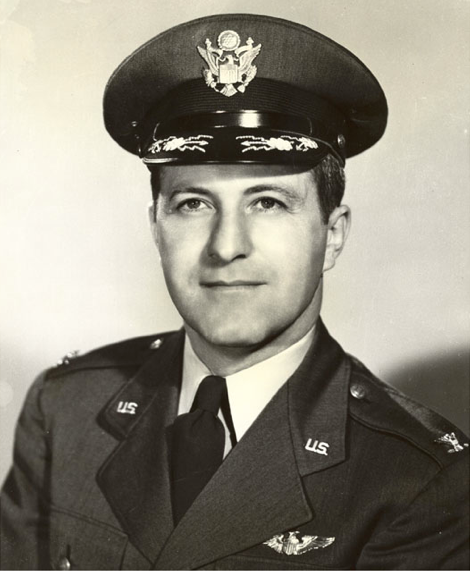
Born on May 29th 1917 in Beloit, Wisconsin, Frederick J. Ascani entered the world before America’s first aviation force had been tested in combat.
Ascani grew up in Rockford, Illinois, graduating from Rockford High School in the spring of 1935. After high-school graduation, Ascani attended the Beloit College for a two-year period. It was during this period that Adolf Hitler began his quest for world domination. Anticipating the onset of a global war, the young college student secured an appointment to the US. Military Academy. Graduating from West Point in June 1941, Ascani ranked 34th in a class of 424. Ascani graduated as a Second Lieutenant in the US Army Corps of Engineers and immediately volunteered for pilot training.
Ascani began his primary flight training at Hicks Field, near Fort Worth, Texas. Basic Pilot Training followed at Randolph Army field, with Advanced Flight Training at Foster Field, Victoria, Texas. It was March 1942 when Ascani won his wings as a rated Army Pilot. Lt. Ascani’s first assignment was that of Instructor in advanced twin-engine aircraft at Columbus Field, Mississippi. By the time he left the unit in February 1943, Ascani’s obvious leadership skills placed him in command of the school’s Flying Training Squadron. Ascani left Columbus Field for B-17 transition training at Sebring, Florida until May 1943.
The next eight months could have broke Ascani’s resolve, while flying for the 20th Tow Target Squadron over Spokane, Washington, he performed an endless stream of steady patterns towing targets for the fighter squadrons. In February 1944, Ascani was designated, the Squadron Commander for the 815th bombardment squadron, part of the 483rd bomb group. In January 1944, Ascani was promoted to the rank of Major and reported to MacDill AFB, Florida.
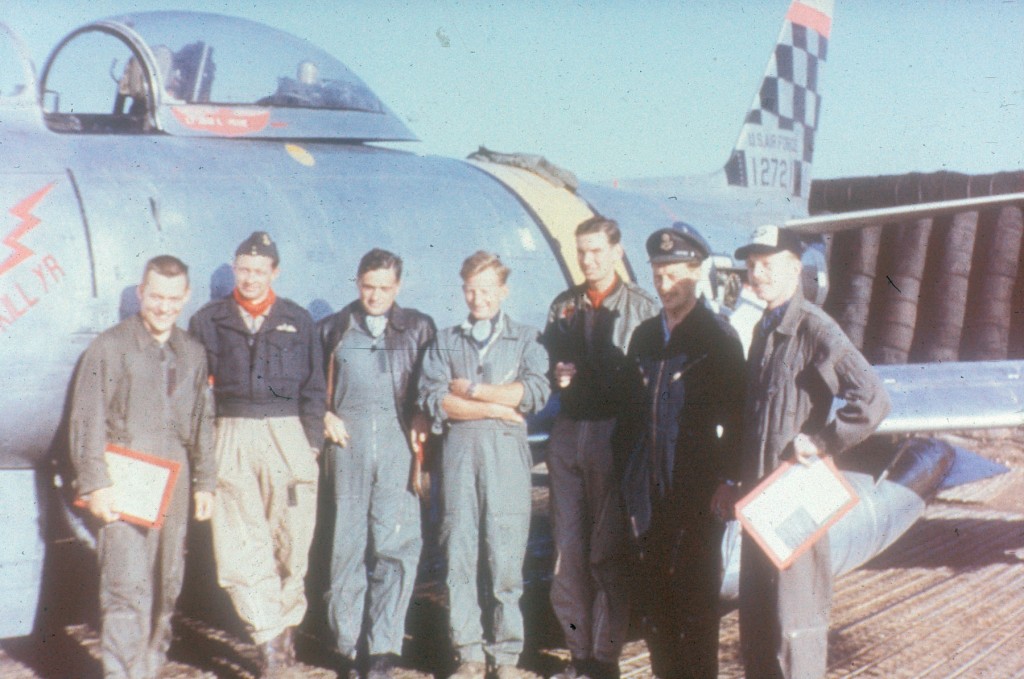
Major Ascani’s outstanding flying skills and management ability was recognised by his superiors, and in April 1944, Major Ascani was selected for an assignment as the commander of the 816th bombardment squadron stationed in Italy and moved there in May 1944. In the next 11 months, the 483rd Bombardment group (and its four squadrons) began bombing targets such as factories, oil refineries, railroad yards, airfields, bridges and enemy troop concentrations in countries such as France, Germany, Poland, Austria & Yugoslavia. During a mission on July 18th, 1944, operating without a fighter escort, the 483rd was attacked by more than 200 enemy fighters. In the course of the battle, more than 50% of the B-17’s were lost to the enemy fighters. Despite this, the group still managed to bomb its intended target of Memmingen, Germany. Ascani and the surviving aircrews won a distinguished unit citation that day. During his tour of duty, Ascani completed a total of 53 missions, most of them in the B-17 he had christened SNOONEY III.
Ascani rotated back to the USA with the rank of Lieutenant Colonel in December 1944. Assigned to the Air Technical Service Command’s Flight test Division at Wright Field, Dayton, Ohio, he was designated as chief of the Bomber Test section. Commander of the Flight Test division at the time was Colonel Albert G. Boyd. Boyd was a renowned test pilot and would later be known as “the father of modern flight test”. In 1946, Boyd selected Ascani to become his executive officer.
One of the most important projects at that time was to achieve supersonic flight. Success in that endeavour could only be achieved by the selection of the right personnel for the project. This was the first time that the Air Force would conduct a flight research program, so the correct personnel was essential to the successful outcome of the program. Boyd & Ascani agonised over the selection of the pilot and team who would eventually break the sound barrier. Ascani’s choice would have been head of the fighter test section, Maj. Ken Chilstrom; this was because Ascani new Ken better than any of the other 125 pilots in the flight test division. Boyd had seen Yeager (one of the most junior test pilots) fly in air shows and was tremendously impressed with that and his background as a maintenance officer, possibly seeing a lot of his younger self in Chuck.
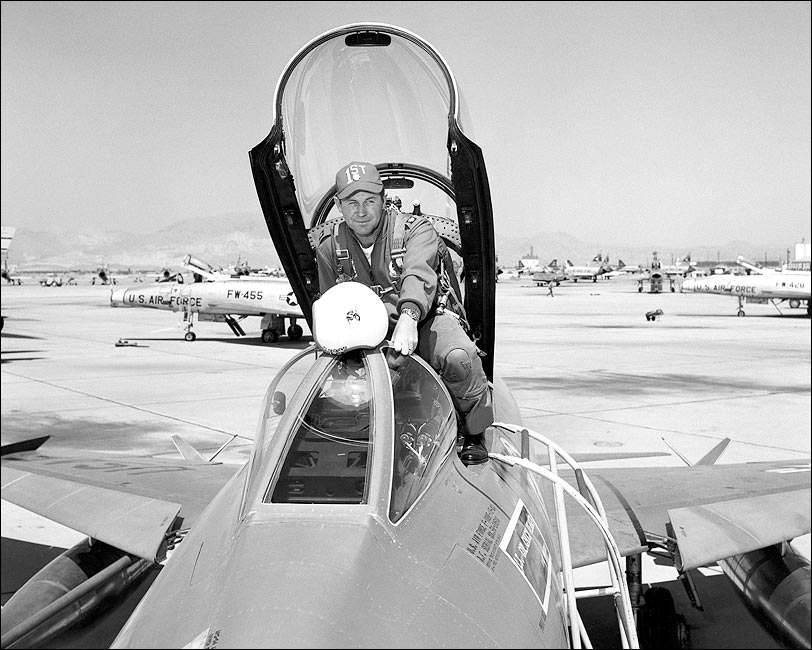
The day that Yeager was informed he had the hottest ticket in flying, Colonel Boyd made Yeager stand to attention the whole time the meeting between Yeager, Boyd & Ascani was in progress. At the end of the meeting Boyd warmly shook Yeager’s hand in congratulations. The Air Force crew that would make an assault on the sound barrier would be Capt. Chuck Yeager (prime pilot); Lt. Bob Hoover (backup pilot), Major Robert L. “Bob” Cardenas (B-29 launch pilot and officer in charge of the prodect at Muroc) and Capt. Jack Ridley (project engineer). Ascani later recalled: “Yeager flies an airplane as if he were welded to it as if he is an integral part of it”.
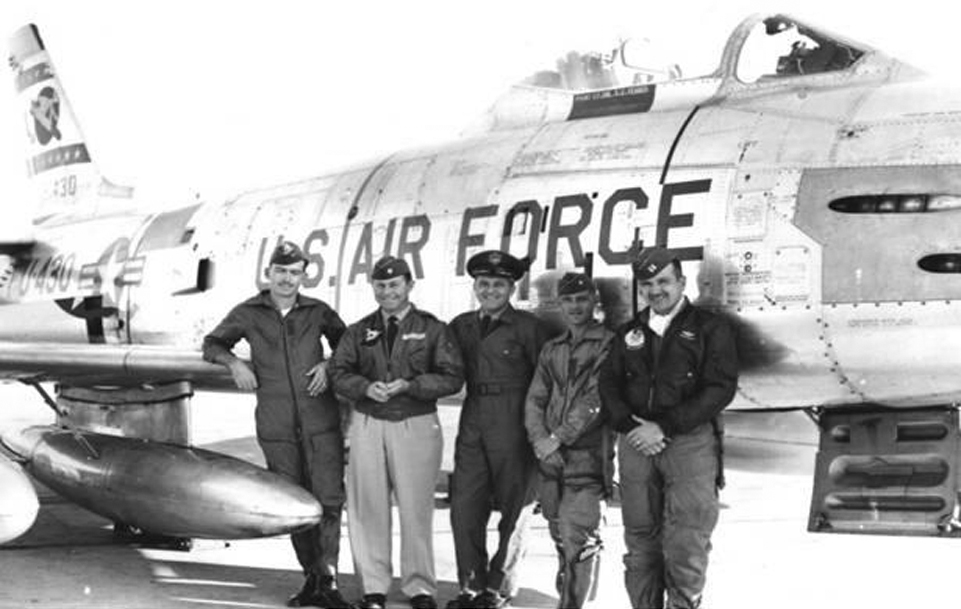
In July 1950, Ascani arrived at Edwards AFB, his job there was Director of Experimental Flight test & Engineering of the 3077th Experimental Group. When the Air Force Flight Test Center was created as a separate entity, he would become the first Vice Commander of the AFFTC.
Ascani remained an active test pilot throughout his years at Wright Field & Edwards AFB, flying over 50 different types of research and experimental prototype aircraft in the Air Forces inventory. Types flown include X-1, X-4, X-5, XF-92A, XB-42, XB-45 tornado, XB-46, XB-48, YB-49 Flying Wing, XB-51, B-36, B-47, B-52, B-1, C-130, C-5 & C-141.
At Detroit, Michigan, during the national air races in August 1951, Ascani flew an F-86E Sabre over a 100km closed course and set a new official world speed record of 635.686mph. That speed was averaged over a 100km distance at a height of no more than 50 feet above the ground! This feat earned Colonel Ascani the prestigious Thompson & Mackay Trophies as well as the Vaulx Medal of the Federation Aeronautique Internationale (FAI).
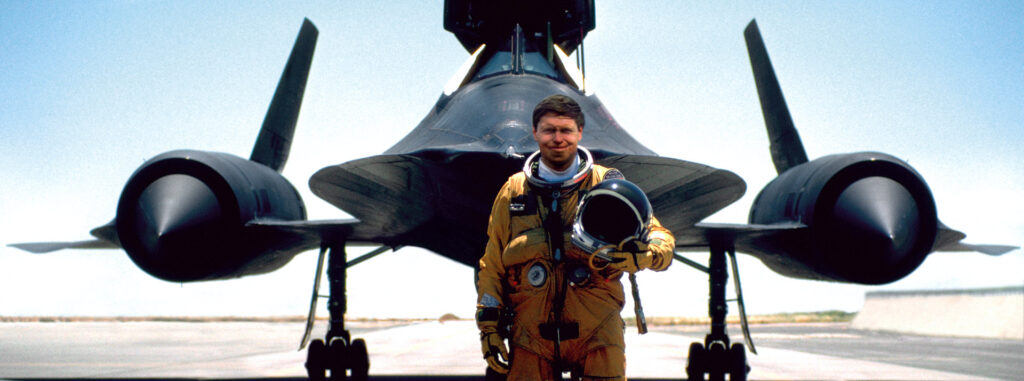
In 1955, Ascani became Commander of the 50th Fighter-Bomber Wing stationed at Hahn AFB, Germany. One of his top squadron commanders there was one Maj. Chuck Yeager. In July 1961, Ascani was promoted to the rank of Brigadier General and became System Program director for the XB-70 Valkyrie, in this position, he was responsible for the procurement and development of the two Mach 3 bombers.
In July 1964, Ascani became commander of the Systems Engineering Group & Deputy Commander of Wright-Patterson AFB, Ohio. On September 24th 1964, he was promoted to the rank of Major General. In 1971, Ascani earned his masters of Science degree in systems management from the University of Southern California. Ascani retired from the United States Air Force on August 1st 1973.
Following his retirement from the Air Force, Ascani taught a master of systems management course at the Defence Systems Management College at Fort Belvoir, Virginia from 1973 to 1978. Retiring from the academic scene in 1981, Ascani has become computer literate and at one point, even built his own primitive computer. General Ascani is a volunteer to the Air Force history Support Office located at Bolling AFB, Washington D.C.