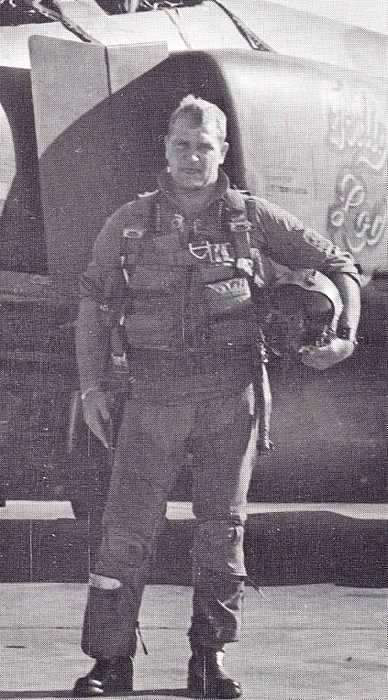
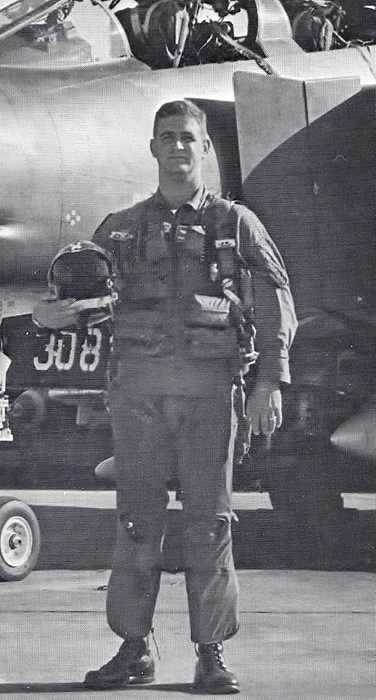
“The Blue Mags” and Paul Lang SAR, August, 1969
By Chuck Magsig
During the spring of 1969, the Tiger FAC program was getting started at Korat RTAFB, Thailand. I had been flying, up to that point, with Captain Michael “P.C.” Carns with whom I had been paired since RTU at George AFB, California, July – December, 1967. After RTU, we were assigned (as a crew) to the 40th TFS at Eglin AFB. There we became immersed in follow-on training leading up to the deployment later that fall to Korat.
Our primary mission was air superiority. We had trained extensively for it but we were frustrated by President Johnson’s bombing halt and no over-flight of North Vietnam ROE- rules of engagement. We were assigned to ground interdiction missions (both night and day) attempting to disrupt NVA re-supply efforts to South Vietnam along the “Ho Chi Minh trail”, which extended for several hundred miles down a good part of Laos.
When the opportunity came to leave this mission for the more exciting, and hopefully more productive, Tiger FAC mission operating in Barrel Roll (Northern Laos), we jumped at the chance.
Within the Tiger program, Mike and I sometimes flew together but not nearly as regularly as before. I flew many missions with Ted Dowd, Don Madonna, Rick Perlotto, and Paul Lang along with Mike. I have fond memories of exciting missions with each. Our procedures were so standardized and the mission so normalized (up to a point) crew coordination seemed not to suffer regardless of whom we flew with.
I was only weeks away from rotation back to the States on August 22, 1969 (6 weeks before the rest of the squadron since I had deployed to Southeast Asia early with the Advance Party the previous September). I had established two combat flying goals; most importantly, hit or surpass 200 combat missions, and secondly, surpass 500 hours combat time. We were all very aware of our mission counts, dutifully logging each sortie with an indelible marker on our bush hat bands within hours of landing. We were definitely proud of our “hash marked” bush hats; it is the one souvenir I most wish had remained in my possession.
Paul Lang and I were assigned to work with several flights in the “Plaines des Jarres” (PDJ) area of Barrel Roll. This area was not part of the trail but did have several points of interest and plenty of logistical and AAA activity. Our first flight of F-4s was directed on targets of opportunity without incident. We headed to our assigned tanker for a top-off. With a full load of fuel we rendezvoused with a flight of “Thuds” (F-105s) and decided to have a go at a bulldozer we had sighted earlier. Perhaps the normally excellent enemy camouflage had been placed in haste or blown off but the bulldozer was in plain sight.
We marked it with white smoke, allowed one pass each from the four Thuds and then took a recce pass to see how we had done. On the pull off from the low pass to check for BDA, I noticed the Master Caution light had come on and alerted Paul, the front-seater. He quickly informed me that it was triggered by a “Fuel low level” caution light and our fuel state was below 2000 pounds and decreasing rapidly. This was approximately 16 minutes after leaving the tanker fully topped off with fuel. Something unusual was going on with our fuel system!
We immediately called off the mission with the Thuds, turned south, started a climb, and initiated a “Mayday” call to “King”, the ABCCC- airborne command and control center. Our climb was complicated by an intermediate cloud layer which extended from 10,000 to 20,000 feet on the altimeter. We followed checklist procedures without success and jettisoned the centerline tank to reduce our gross weight and drag. A tanker was turned north to rendezvous with us, but we couldn’t see it due to the clouds. I located the tanker on our radar and the tanker turned in front of us at 21 NM, nautical miles. We broke through the cloud deck at around 20,000 feet about 2,000 – 4,000 feet below the tankers altitude, 3-4 miles in trail, and offset a couple miles to the side. With the tanker in sight now, we thought we might have a chance for a wet hook-up even though our fuel was now below 500 lbs.
We initiated the chase with hopeful, but anxious, hearts… but it was not to be. At a range inside two miles, the first of our engines wound down followed by the second flame-out only seconds later. We requested the tanker go into a toboggan maneuver. The tanker pulled his power back and slowed with all the drag they could muster. But we just couldn’t close the gap before re-entering the clouds.
Recognizing that bail-out was now our only recourse, we thanked the tanker for the “good try” and contacted ABCCC asking them to maintain a good fix on our position. Paul and I maintained intercom communications for the next few minutes as we set up our 230 knot glide speed. We decided on individual bail-outs, as opposed to an auto sequenced ejection, with me pulling the handle at 10,000 feet. With my cockpit secured, my straps all re-tightened, my clipboard discarded, and posture erect… I watched the altimeter with thoughts that had never entered my mind before. Fortunately, the wait was not all that long!
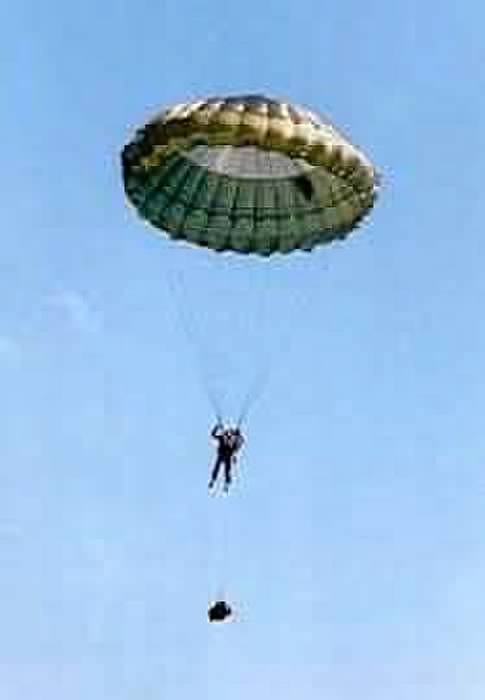
At precisely 10,000 on the altimeter, I bid my “Adios and good luck” to Paul and pulled the lower ejection seat handle of our now “six million dollar glider”. With a loud “swoosh” and a fairly stiff jolt, I was propelled upward into the clouds. I believe I did a backward somersault and was quickly aware I had lost my helmet but more importantly, had a good parachute.. Seat separation occurred instantly and my survival seat kit pack was hanging from the 20 foot lanyard below me. So far so good! I attempted to pull out one of my two radios to establish contact and report my condition, but ran into my first post-ejection glitch. As I pulled out the recessed antenna to enable the call, it separated from the radio and hung limply from my hand!
Deciding to put off another attempt until landing, I set about thinking all I had learned (but not as well as I now wished!) in previous parachute training sessions. I broke through the clouds at around 2,000 feet above the ground in hilly jungle terrain. I tried to make a mental note of all the terrain features to assist in rescue efforts. A small village off to the east and a very small road or pathway leading through it might help. Looking straight down, it was all jungle with tree canopy hiding all clues to their heights.
As I started crashing through the tree limbs, I was thankfully aware of no severe pain before coming to a rather soft “landing” with my feet definitely not yet on the ground. As I hung in the heavy foliage, I had no idea how high above ground level I was. I quickly became aware that my only way down was to unhook from my parachute and climb, fall, or jump the remaining distance. I searched beneath trying to determine my height above the ground and slowly became convinced it was a matter of some feet, but not dozens of feet. With some apprehension, I decided to take what came and released from the parachute risers. I immediately rotated 180 degrees and found myself hanging upside down after falling only a few feet. Now, to my relief, I saw the ground only 3-4 feet away. Realizing that the lanyard to my survival seat kit was the only thing holding me, I punched it off and fell to the ground – unhurt. After collecting my thoughts on the ground, I got out my second radio and made contact with “King”, the ABCCC. I was relieved to hear Paul on the radio. We were told by ABCCC, that due to the time of day a rescue could not be mounted until morning. Since we were assured of a morning effort, Paul and I decided not to attempt to link up but rather stay close to our parachutes to help with the rescue.
The night proved mostly uneventful, although torrential rains and the occasional rifle shot heard in the distance kept me from getting any rest. At one point during the rain, I heard a loud crashing sound from a near-by stream. I was momentarily convinced an elephant was heading my way. At dusk, I saw what I thought were two eyes slowly approaching me from a near-by embankment. With pistol drawn, I was on the verge of firing when the “eyes” separated and I realized I was looking at two fireflies momentarily flying in formation. The mind will play tricks on one under unusual circumstances.
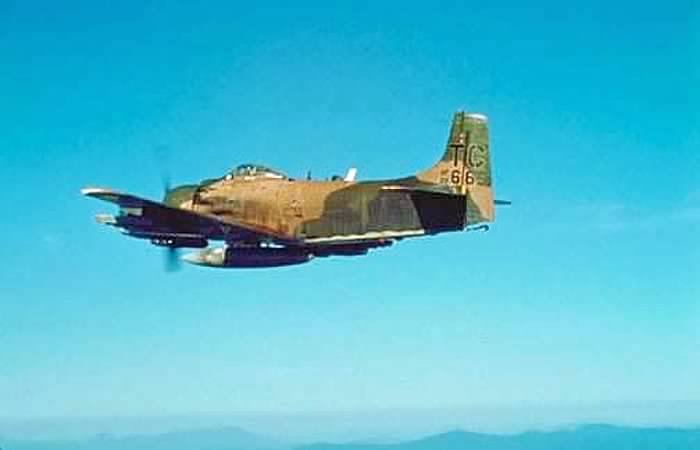
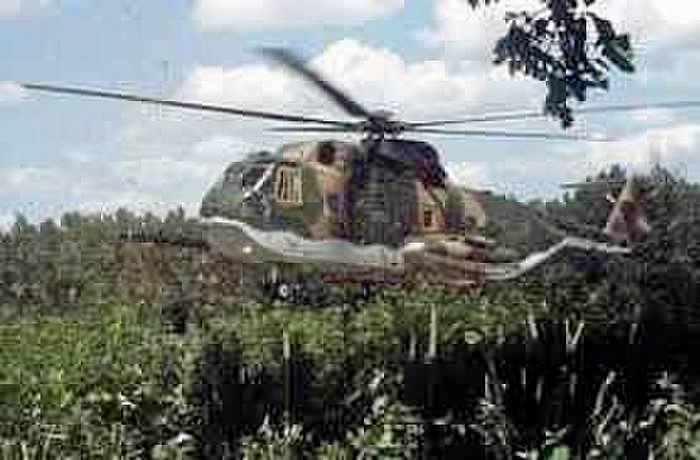
The sleepless, rain-drenched night was followed by the welcomed dawn and shortly thereafter the drone of approaching A-1E Skyraiders. These vanguards of the rescue force from Nakhon Phanom (NKP) beat up the local area near me with CBU (Cluster Bomb Units) and other light ordnance. (The rescue choppers had been ambushed on prior occasions and these guys were not about to let it happen again.) Satisfied that there were no “bad guys” lying in wait, the H-53 rescue chopper made its way overhead. With a combination of my voice directions and the H-53 pilots seeing my parachute, they were soon in a hover near my position. After thencable lowered from the helicopter was grounded, I pulled down the seats on the forest penetrator and waved them to “pull away”. I have to say that the trip up through the jungle canopy was much more traumatic than the one down. I was nearly scraped off a couple of times and the abrasion on my arms caused by scraping through the tree limbs was the most painful experience of the whole ordeal.
All pain was soon forgotten when I was pulled into the chopper and we headed south for Udorn. Paul was already on board and the muffled celebration got a little more vigorous with every passing mile as we got closer to “freedom”. We landed uneventfully at Udorn, the most Northern, non-secretive, base with medical facilities in Thailand. We were medically checked out, given a short debriefing and then sent on our way down to Korat.
The “welcome back” reunion celebration at Korat remains one of the emotional highlights of my life! The welcome we received at home base was joyful, loud, and spirited. We were given a short parade through the base (accompanied by fire trucks with hoses spraying water onto the waving bystanders along the way) to the Officers club and surrounded by well-wishers at the bar where every space was filled! It was a great afternoon!
In retrospect, Paul and I never did know for sure what got us. The brief time between tanker and flameout convinced us that a fuel line had either been severed by enemy fire or come loose from other causes. Either way, we were both just thankful to be alive. We made sure to let the Personal Equipment technicians, the Sergeants who worked on the ejection seats and packed our parachutes, know our gratitude for their professionalism and quality work. (A task that, although seldom put to the test, when needed is all that hangs in the balance between life and death.) The warm and raucous welcome of our friends in the 388th Tactical Fighter Wing back at Korat formed a lifelong memory of camaraderie and to this day warms my heart.
Footnote: During an airline flight on May 1, 1975, I had a life-changing encounter while seated next to an NFL linebacker, Greg Brezina (then the Atlanta Falcons defensive captain). During the 2-hour flight he talked to me about the opportunities I was missing by my long-postponed decision to become a Christian. I have since come to fully believe that the prayers of my parents, Rev Floyd and Leown Magsig, played a major role in my safe recovery that day in 1969. It could have been otherwise…and for many, tragically, it was.