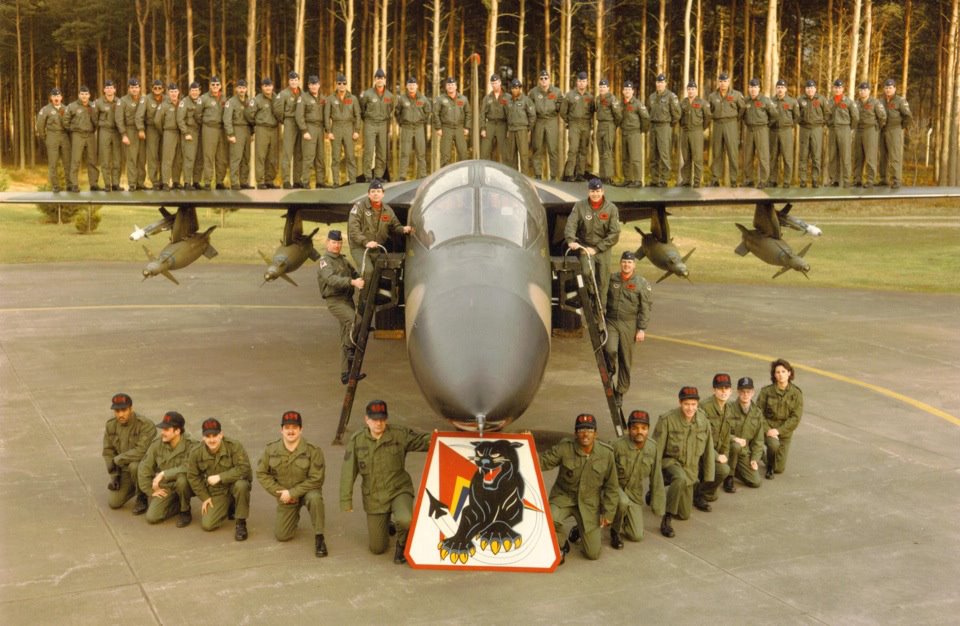
During the Cold War, USAFE required a survivable deep strike, all weather platform capable of penetrating Warsaw Pact air defenses at low altitude and high speed; the F 111, with terrain following radar and variable sweep wings, fit that role. Two USAFE wings in the UK operated the type: the 20th Tactical Fighter Wing (TFW) at RAF Upper Heyford (F 111E, later hosting EF 111A) and the 48th TFW at RAF Lakenheath (F 111F).
USAFE’s introduction of the F 111 into Europe reflected a shift from older types (e.g., F 100) toward platforms that could deliver both conventional and nuclear ordnance under Europe’s notoriously poor weather and heavy IADS threat.
RAF Upper Heyford (Oxfordshire): First European F‑111 base
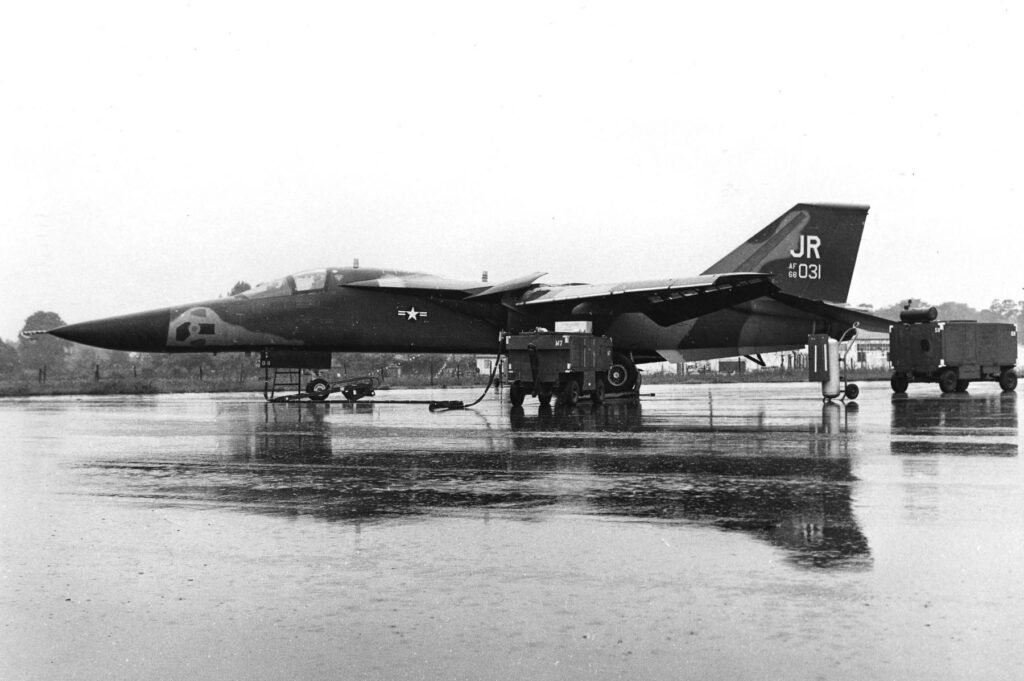
Arrival and unit build‑up (1970–1974)
- The 20th TFW moved from RAF Wethersfield to RAF Upper Heyford on 1 June 1970; its first F‑111E aircraft arrived on 12 September 1970. The wing’s three fighter squadrons—55th, 77th, and 79th TFS—converted from F‑100s to F‑111Es, giving USAFE a long‑range, all‑weather strike capability from British soil.
- The F‑111E was an interim variant introduced after delays to the more advanced F‑111D; 94 F‑111Es were built, several of which served at Upper Heyford through 1991–93.
Mission, training, and infrastructure
Upper Heyford’s assigned mission was deep‑strike and attack, including NATO exercises and contingency plans against Eastern Bloc airfields, missile sites, and armored concentrations. The base hosted intensive low‑level training across UK ranges and NATO airspace, and regularly deployed to Nellis AFB for Red Flag. The airfield was notable for 56 hardened aircraft shelters, initially designed to house two F‑111s each, later reduced to one for safety.
Through the 1970s–80s, the wing participated in recurring exercises (e.g., Display Determination, Ocean Safari, Dawn Patrol, Reforger), sharpening night/all‑weather penetration tactics and multinational interoperability.
Electronic warfare at Upper Heyford (EF‑111A “Raven”)
- On 1 July 1983, Upper Heyford activated the 42nd Electronic Combat Squadron (ECS); EF‑111A Ravens arrived in February 1984, providing stand‑off jamming and SEAD support. Operational control later shifted to the 66th Electronic Combat Wing (Sembach AB) on 1 June 1985, but Upper Heyford remained a primary operating location for the squadron.
- The 42 ECS’s lineage confirms its RAF Upper Heyford stationing (1983–1992) and its combat participation in El Dorado Canyon and Desert Storm.
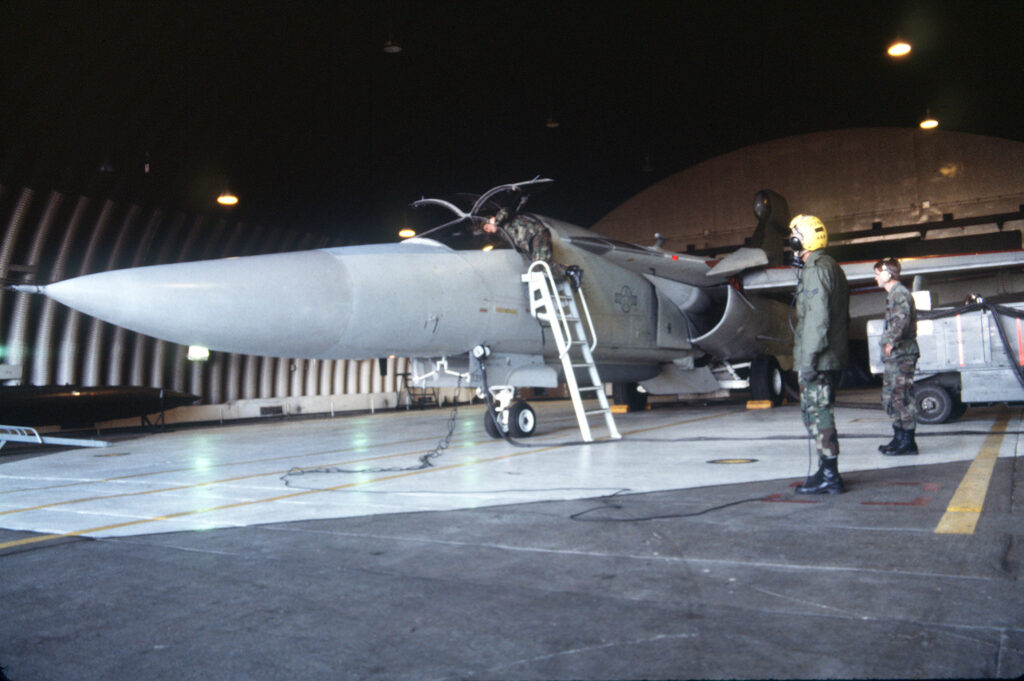
1986: Libya contingency role from Upper Heyford
During Operation El Dorado Canyon (April 14–15, 1986), Upper Heyford launched five EF‑111As and twenty F‑111Es. The EF‑111s joined the Lakenheath F‑111Fs to provide electronic defense over Libya, while the E‑models served as airborne reserve for the strike package.
Desert Shield/Desert Storm (1990–1991)
In 1990, Upper Heyford’s F‑111Es deployed to Incirlik AB, Turkey; as the coalition air war began, they conducted night, low‑level strikes in northern Iraq. The wing also sent four EF‑111As and ~80 personnel to Taif, Saudi Arabia; notably, a 42 ECS EF‑111A achieved the first aerial victory of the war when an Iraqi Mirage pursuing the low‑flying Raven crashed during terrain chase.
Drawdown and closure
Post‑Cold War reductions led to the stand‑down of Upper Heyford’s flying units in 1993; the last F‑111Es departed 7 December 1993, ending more than two decades of Aardvark operations at the base.
RAF Lakenheath (Suffolk): Home of the F‑111F
Transition to the F‑111F (1977)
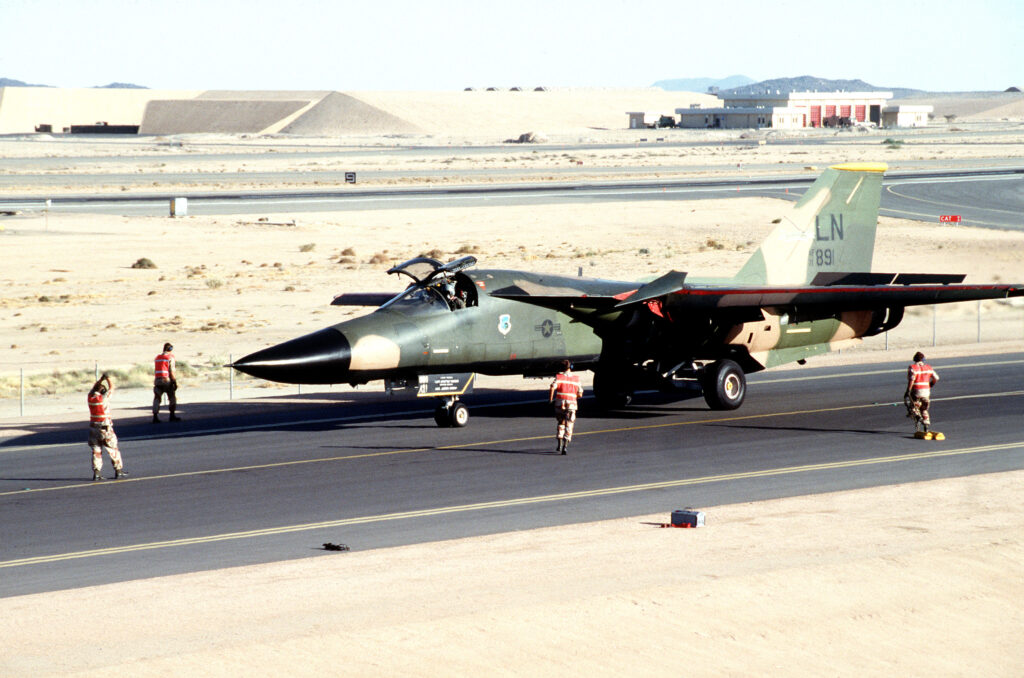
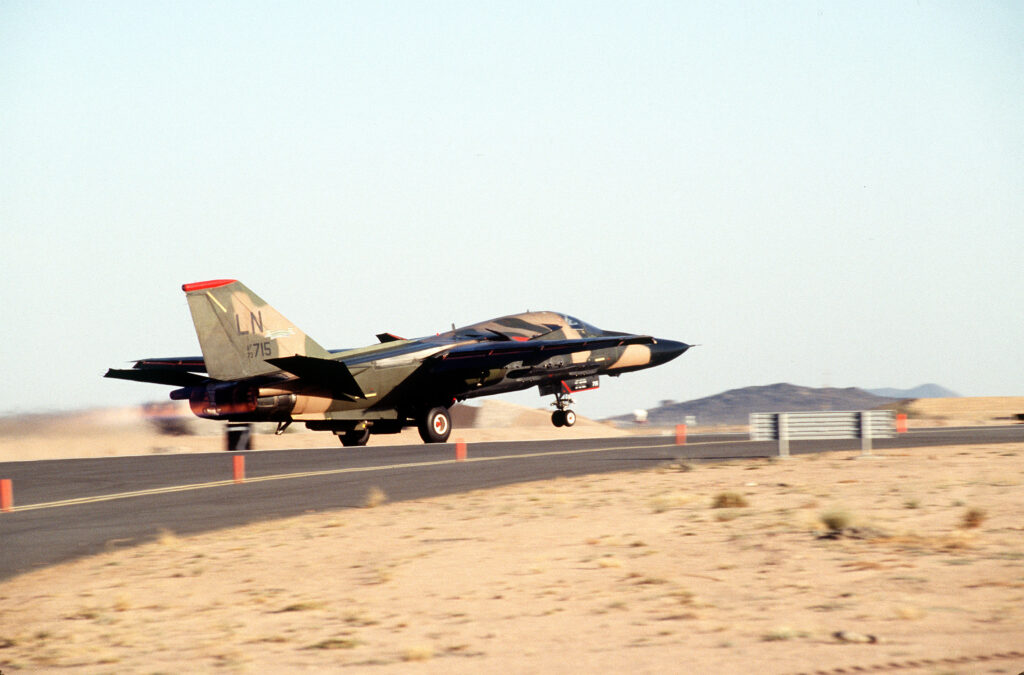
RAF Lakenheath’s 48th TFW received its first F‑111Fs on 1 March 1977, replacing F‑4 Phantoms and establishing a more advanced Aardvark capability within USAFE. The F‑111F featured upgraded avionics, AN/APQ‑144 attack radar, and more powerful TF30‑P‑100 engines, boosting performance for low‑level ingress and precision attack.
The 48th Fighter Wing’s official lineage confirms F‑111 operations from 1977–1992, before transitioning to the F‑15E.
Precision strike revolution: Pave Tack at Lakenheath
Beginning in the early 1980s, Lakenheath’s F‑111Fs integrated the AN/AVQ‑26 Pave Tack pod in the internal bay, enabling laser designation and thermal imaging for precision LGB delivery—capabilities that would define the wing’s combat value in the latter 1980s and early 1990s.
Operation El Dorado Canyon (1986): Lakenheath in combat
On the evening of 14 April 1986, 24 F‑111Fs from Lakenheath launched; 18 proceeded to targets in Tripoli and Benghazi after air‑spares (and any jets with system faults) returned per strict ROE. The strike constituted the longest fighter combat mission to date (~13–14 hours), requiring complex KC‑10/KC‑135 tanker orchestration from UK bases; EF‑111As from Upper Heyford and Navy EA‑6Bs provided jamming. Pave Tack‑guided LGBs struck high‑value targets including the Murat Sidi Balal training complex, though one F‑111F was lost.
Gulf War performance (1991)
Lakenheath’s F‑111Fs demonstrated exceptional precision and sortie effectiveness in Operation Desert Storm, benefiting from their low‑level penetration profile and Pave Tack LGB accuracy; comparative analyses cite their high success rates among US strike types.
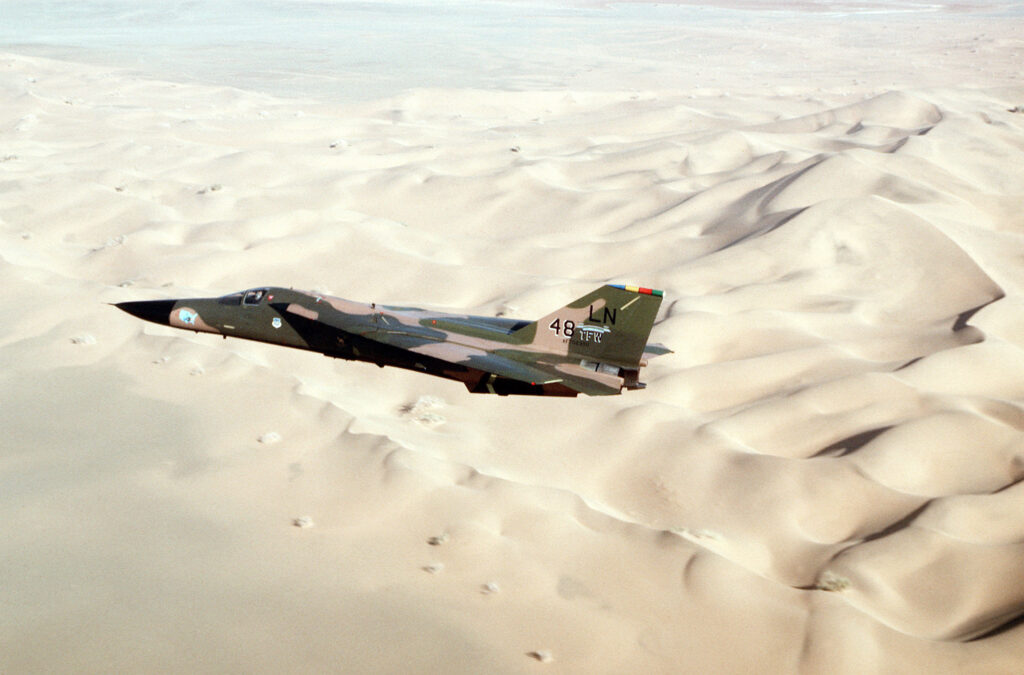
Transition out of the F‑111 (1992)
By 1992, USAFE retired its European F‑111 fleet, driven by post‑Cold War force cuts and the high maintenance burden of the type; Lakenheath transitioned to the F‑15E Strike Eagle, retaining a dual‑role deep‑strike mission in Europe.
Organization: Wings, groups, and squadrons
- 20th TFW (RAF Upper Heyford): 55th TFS, 77th TFS, 79th TFS (F‑111E). Added 42nd ECS (EF‑111A) in 1983; EF‑111 operational control later aligned to 66th ECW (1985) but aircraft operated from Upper Heyford and deployed forward as required.
- 48th TFW (RAF Lakenheath): Converted to F‑111F in 1977; the wing’s lineage documents F‑111 operations until 1992, followed by F‑15E. (Squadrons commonly referenced include the 492nd, 493rd, and 494th TFS in the F‑111 period.)
Technology and modifications
- F‑111E (Upper Heyford): “Triple Plow II” intakes; Mark I avionics with improvements to stores management; some later TF30‑P‑109 engine upgrades; served in Europe through 1993.
- F‑111F (Lakenheath): TF30‑P‑100 (later P‑109) engines; AN/APQ‑144 attack radar; Pave Tack LGB capability; formed the backbone of precision deep‑strike from the UK in the 1980s.
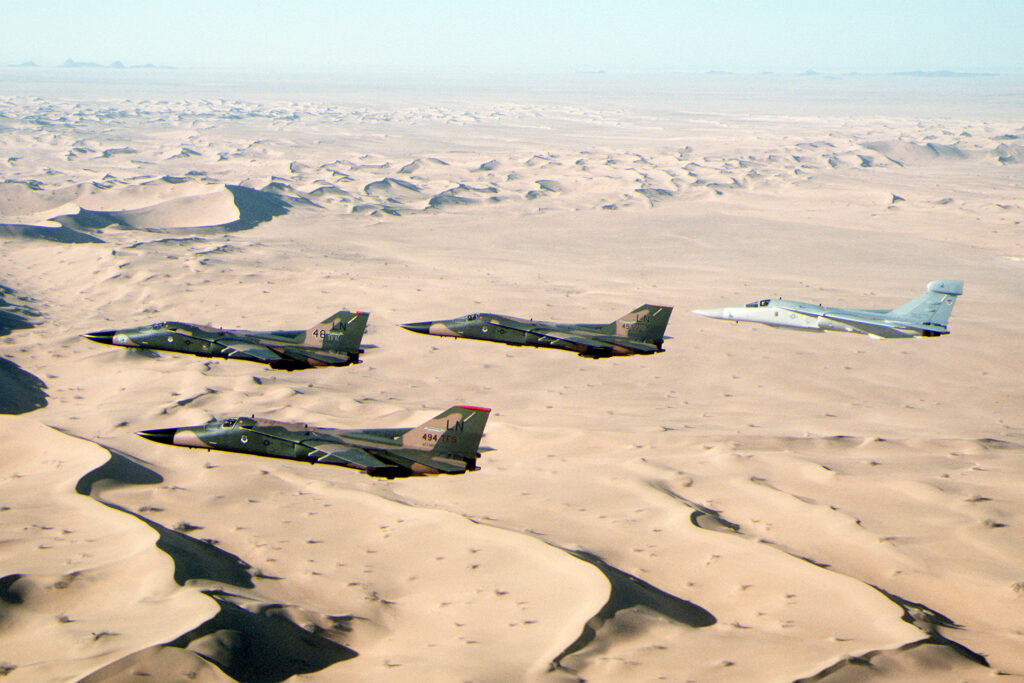
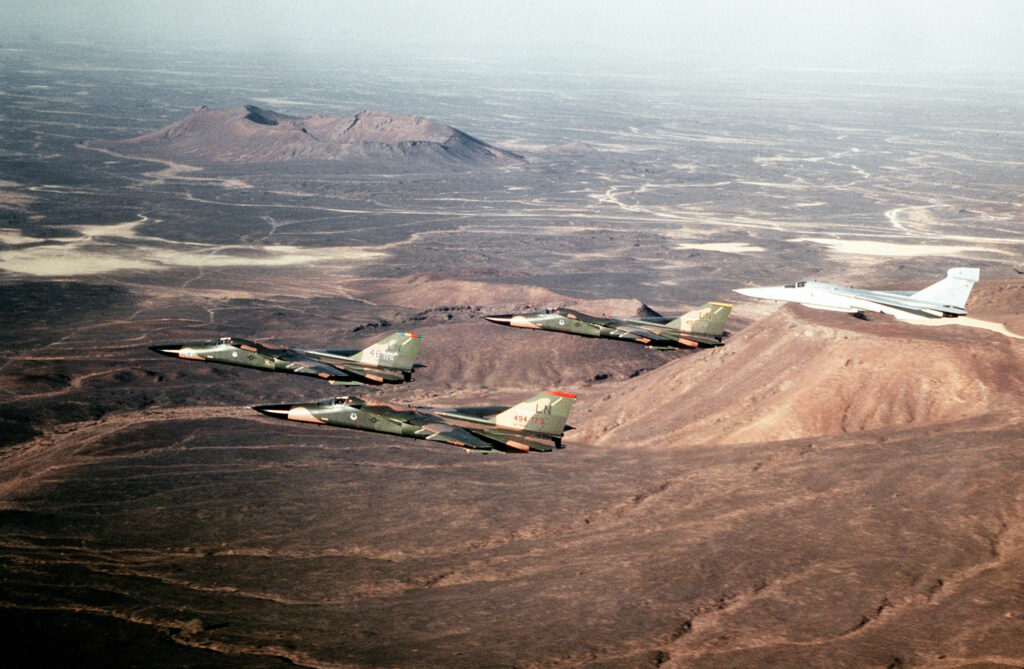
- EF‑111A (Upper Heyford): AN/ALQ‑99E tactical jamming suite, fin‑tip receiver pod, and ventral canoe fairing; jamming support critical for Libya (1986) and Gulf War packages (1991).
Drawdown and retirement
Following the Soviet collapse, USAFE rationalized forces. By 1992, F‑111 operations in Europe ceased, with the F‑15E assuming the deep‑strike mission at Lakenheath; Upper Heyford’s flying units inactivated and the base closed to flying by late 1993. Cost, maintenance burden, and fleet modernization priorities accelerated the type’s retirement, which concluded in USAF service in the mid‑1990s (EF‑111 through 1998
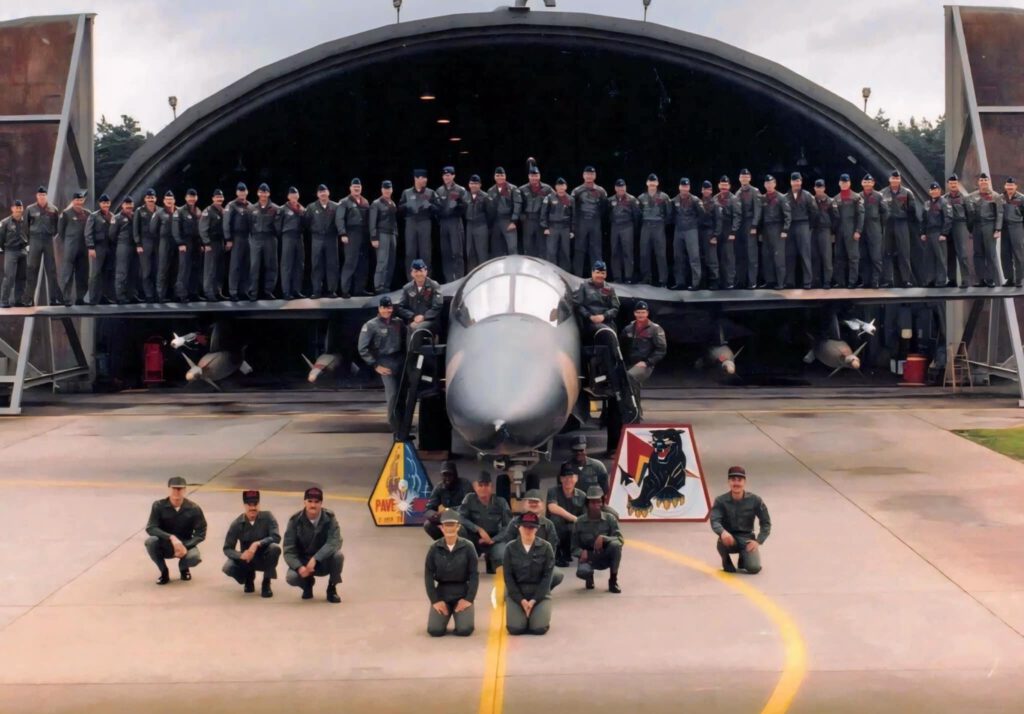
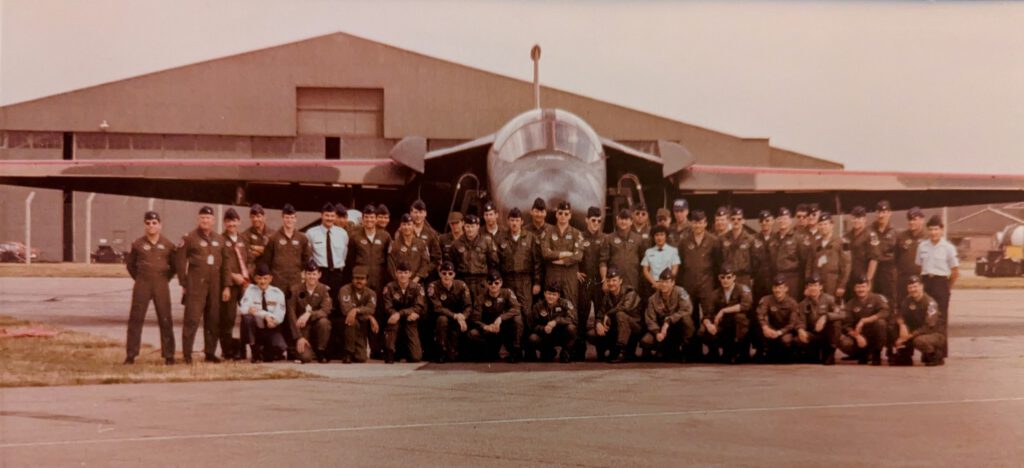
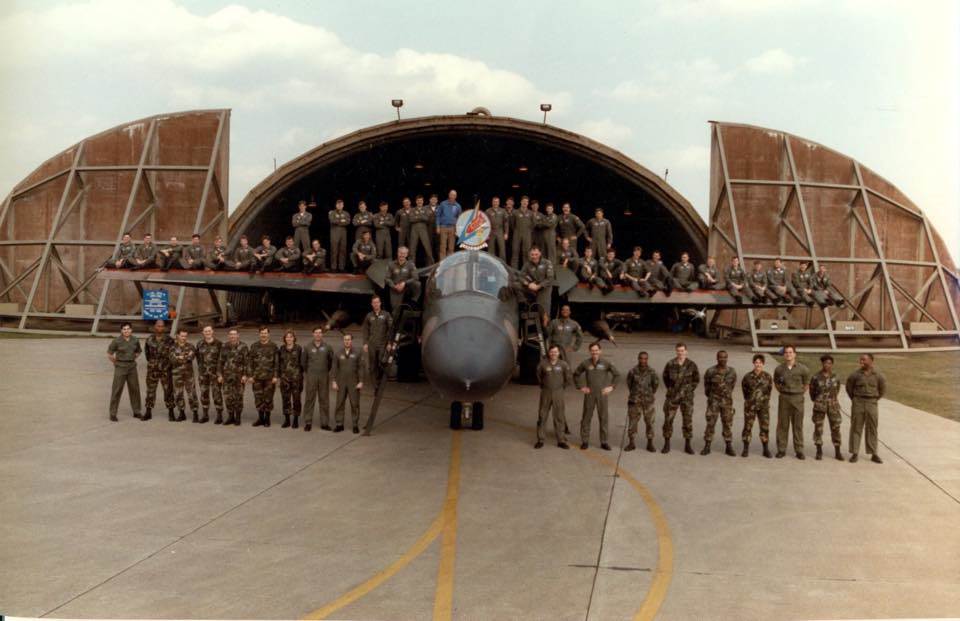
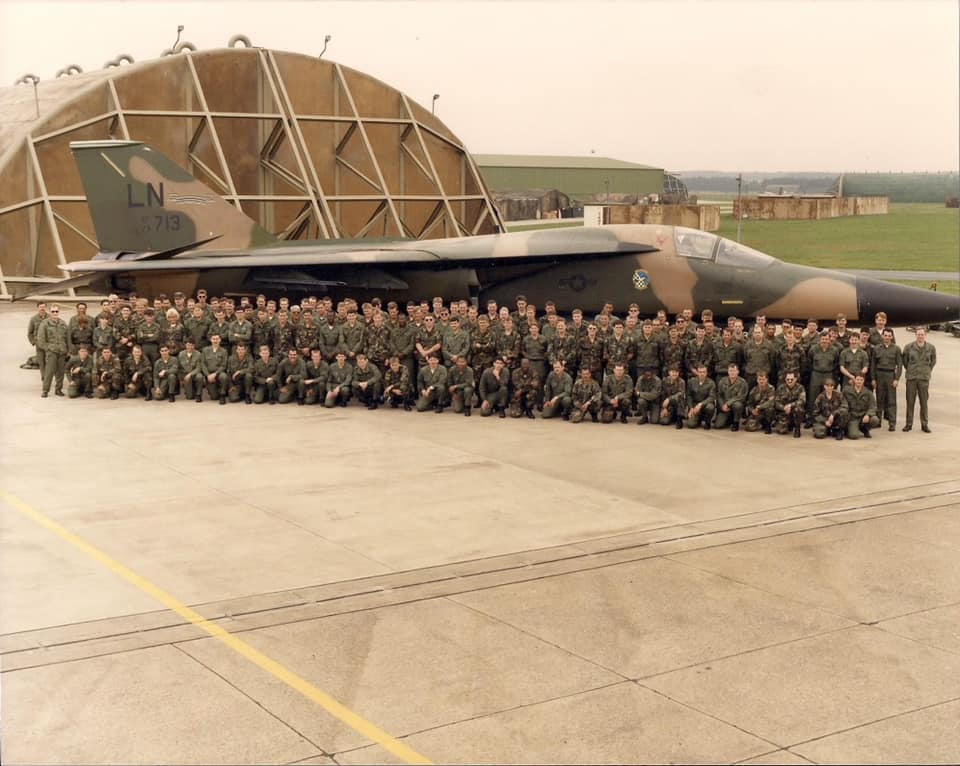
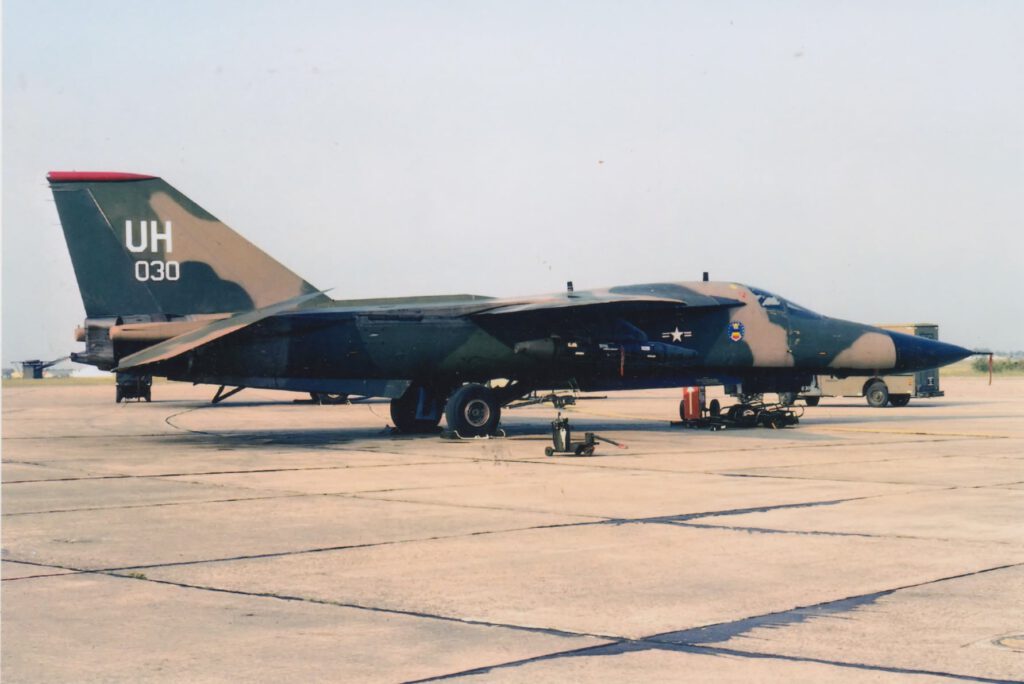
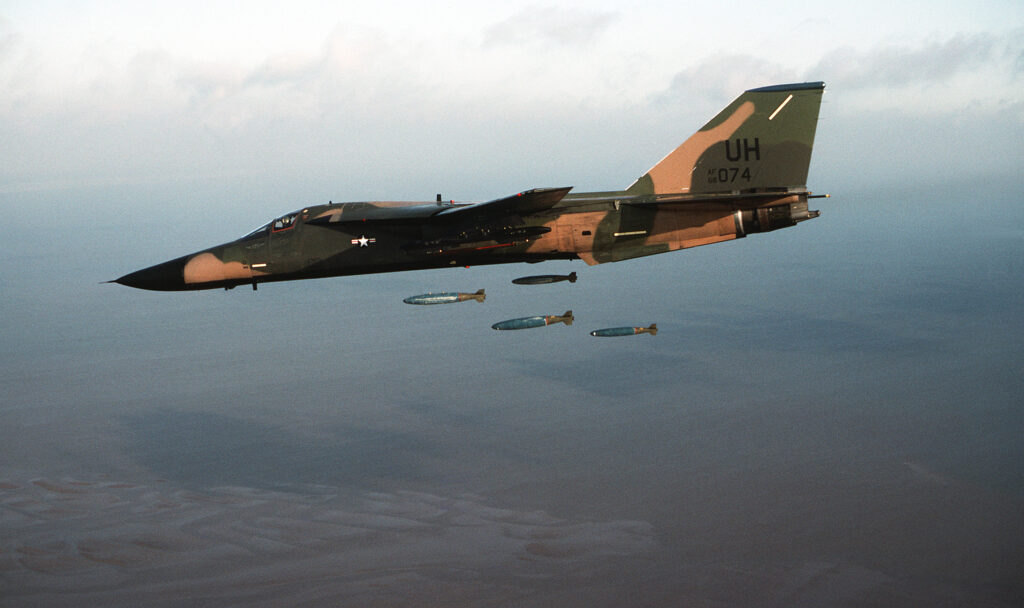
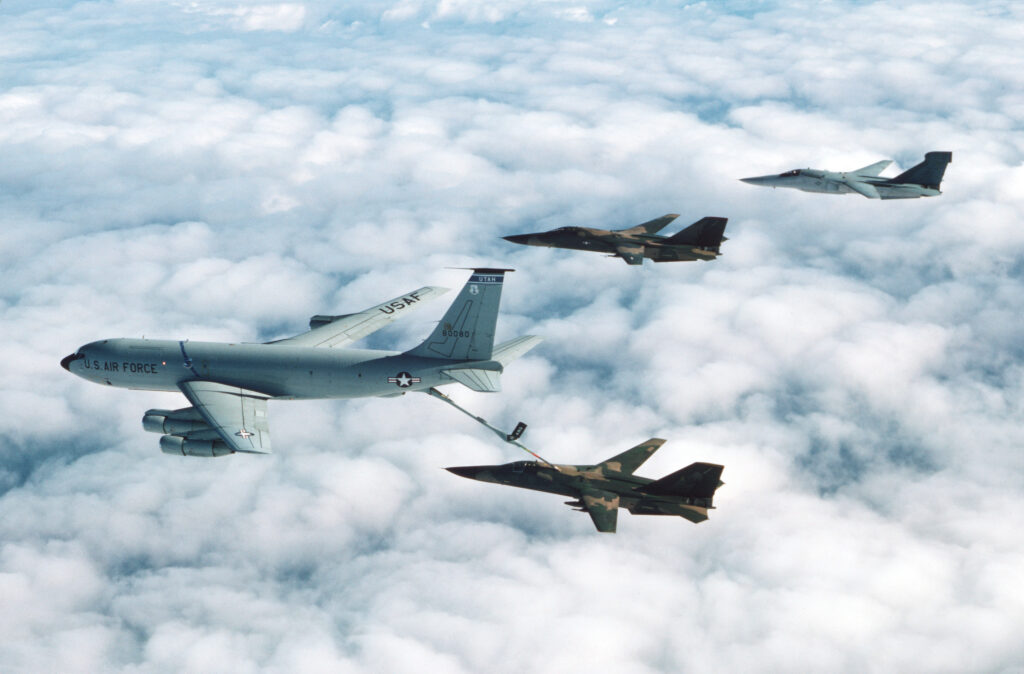
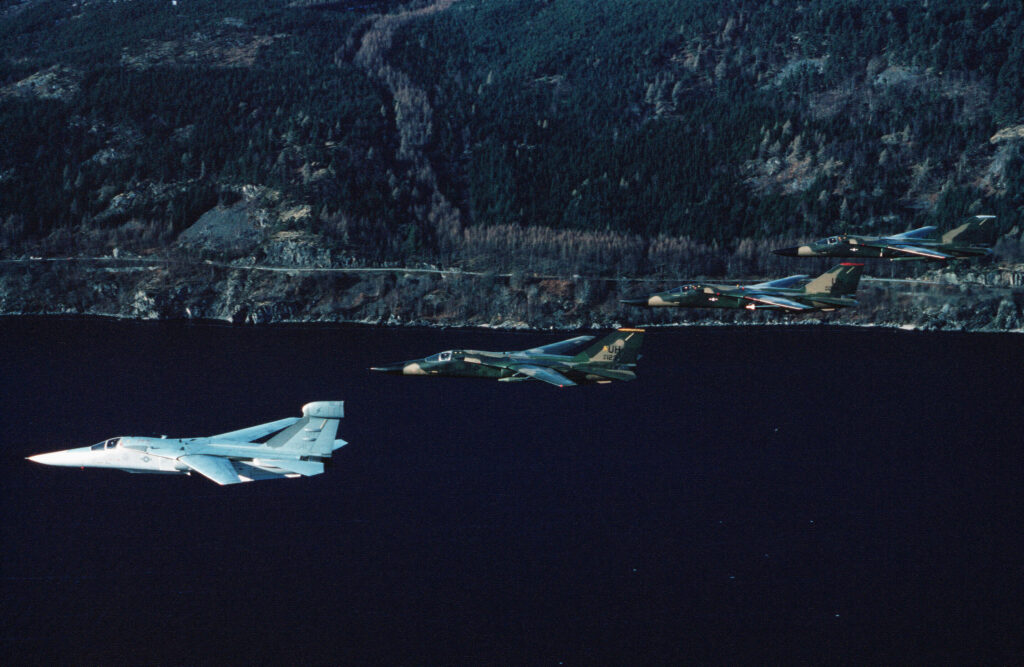
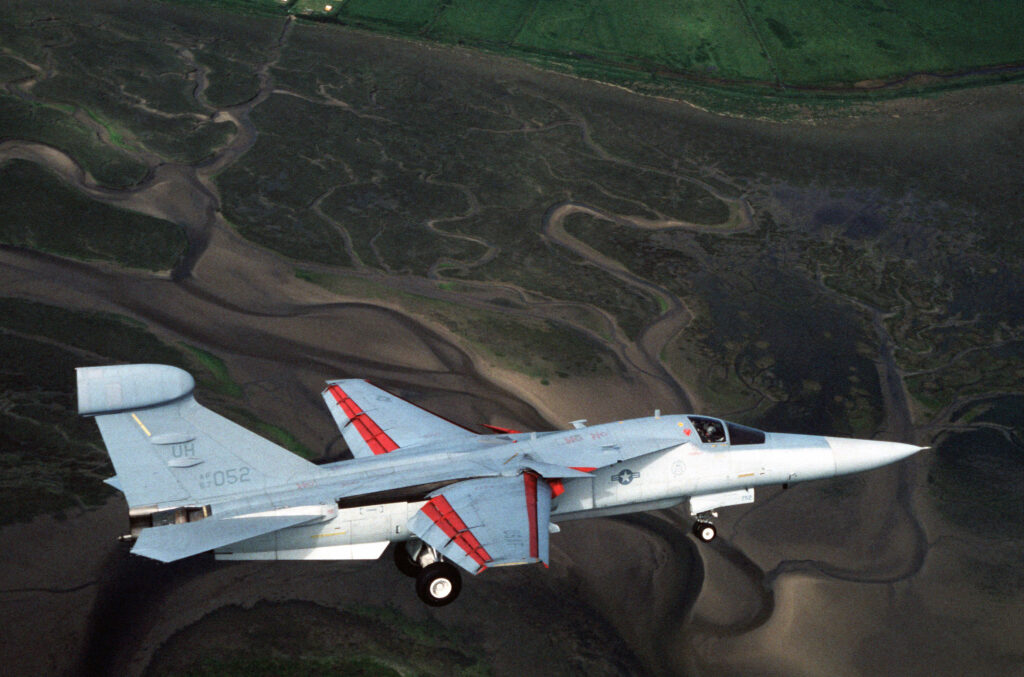
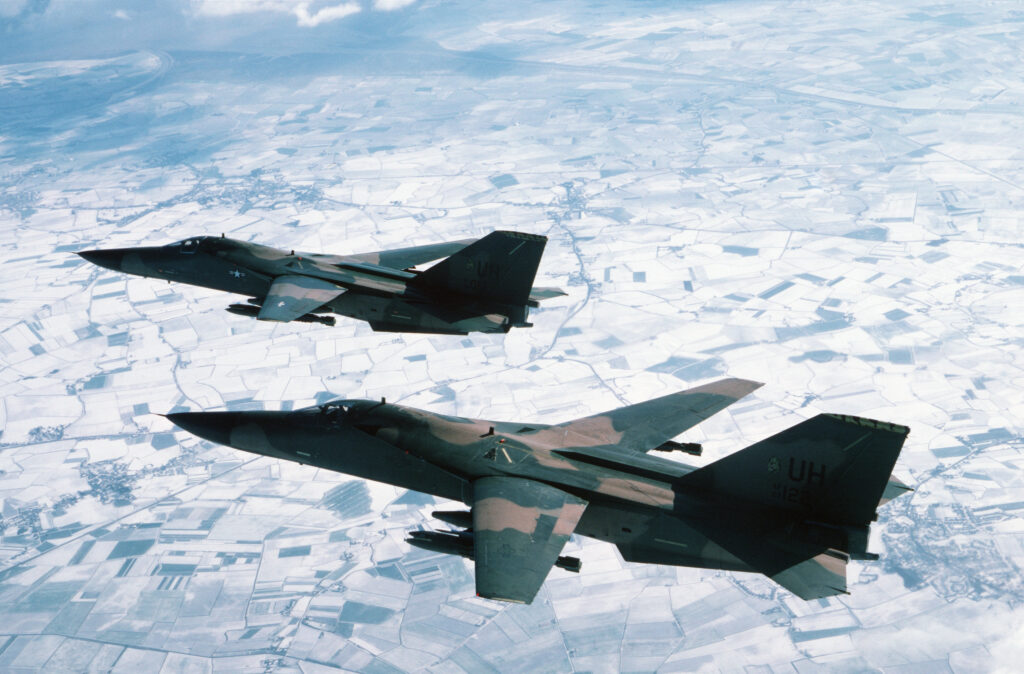
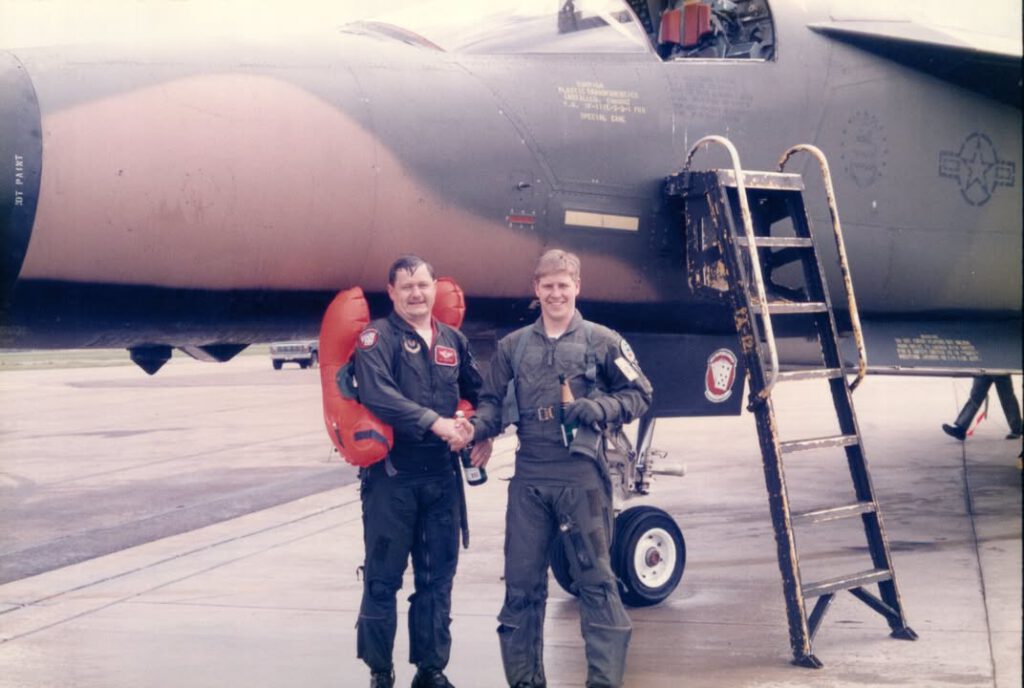
20th TFW related F-111 Photos
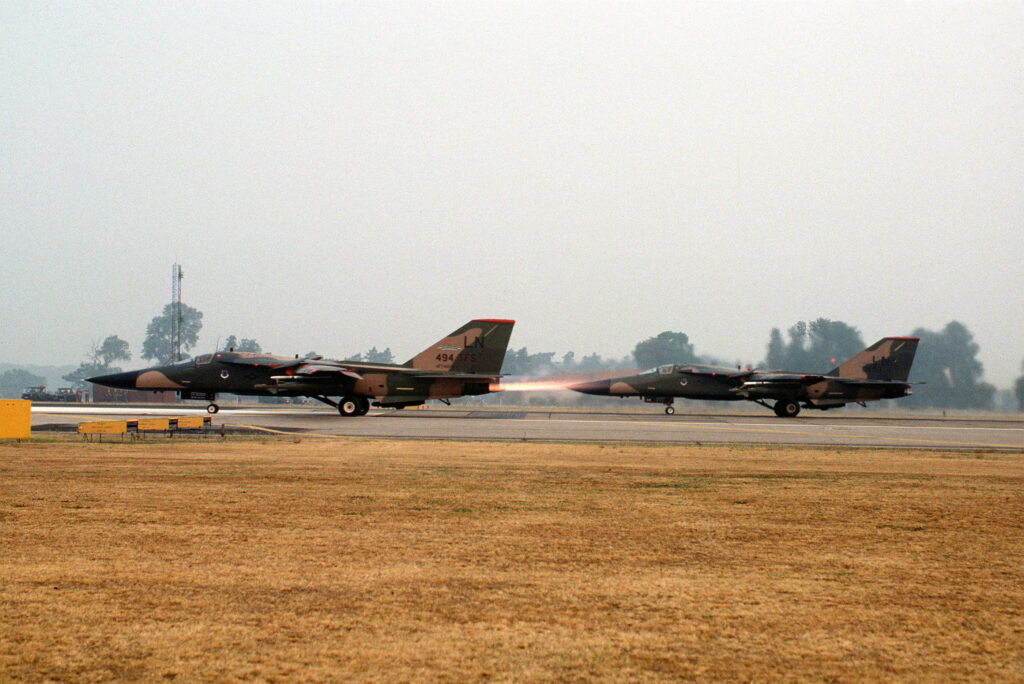
48th TFW related F-111 Photos