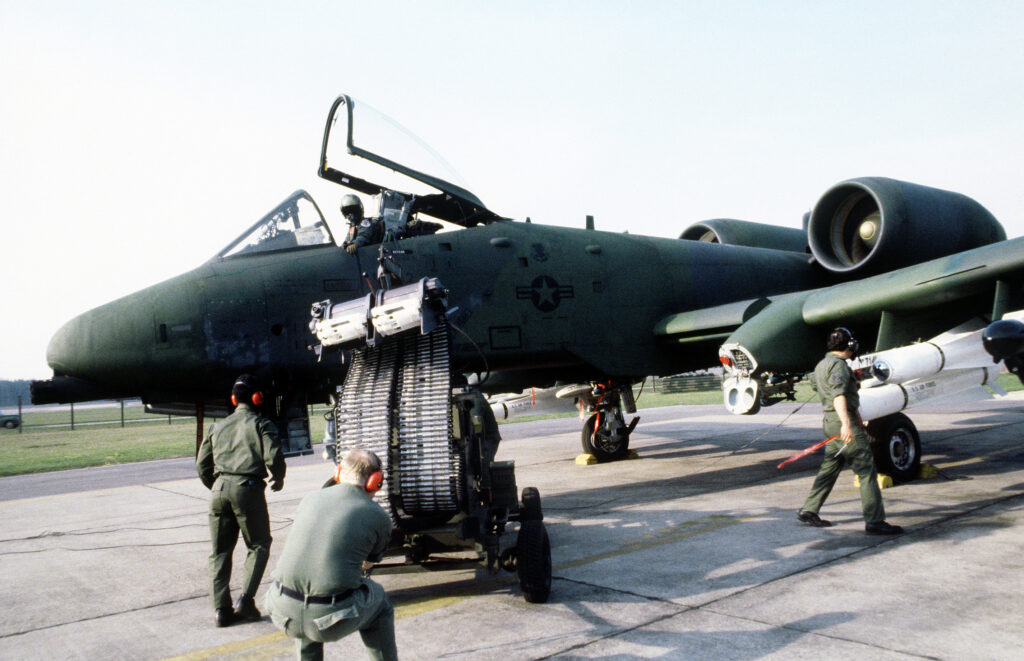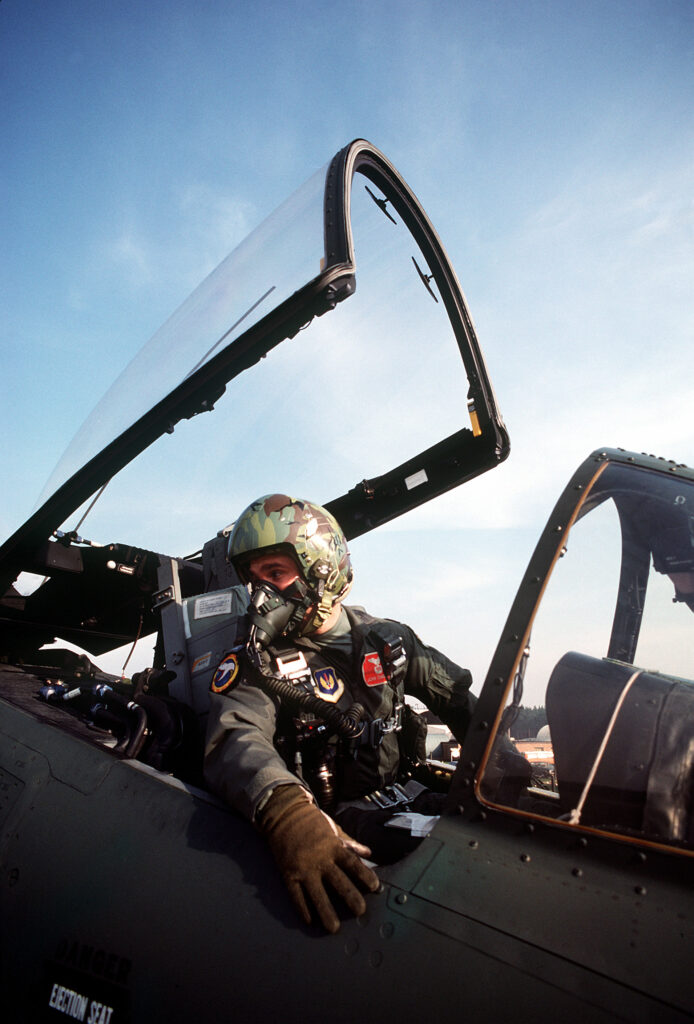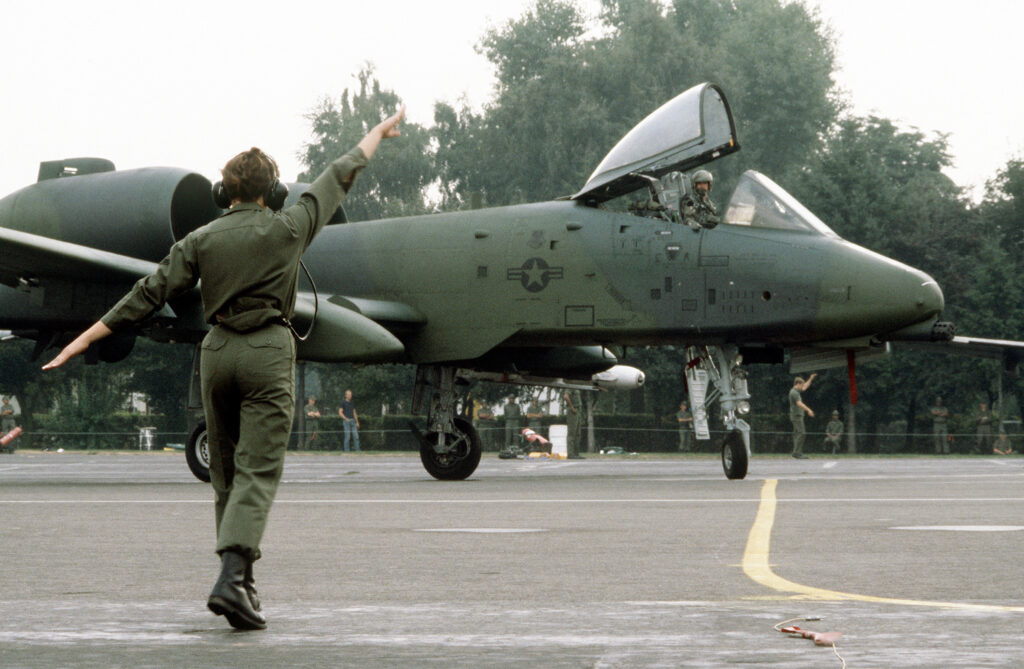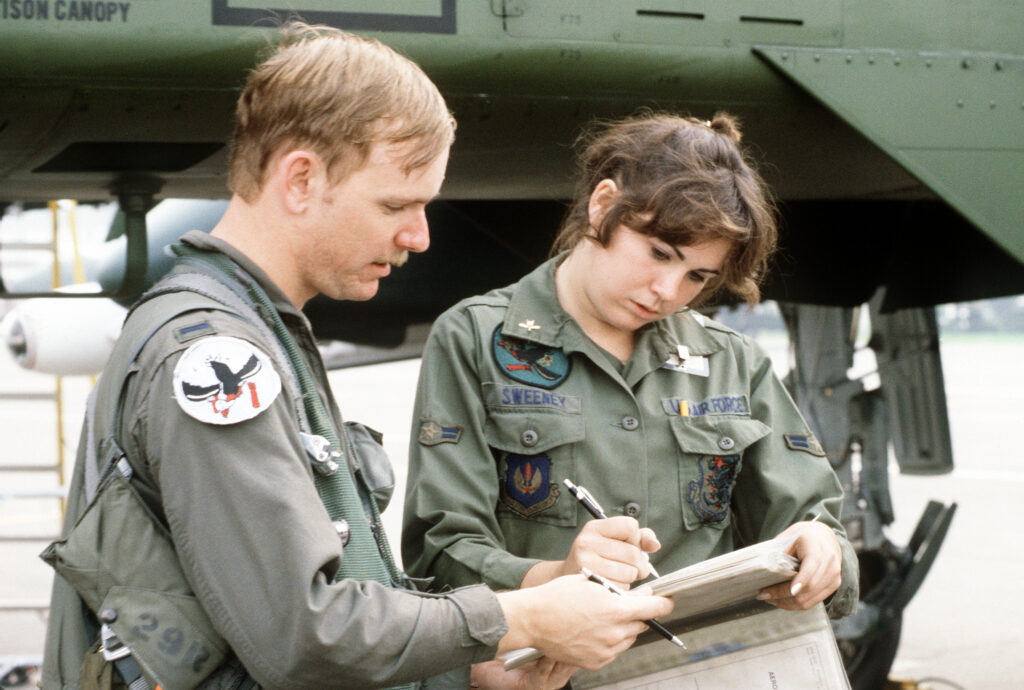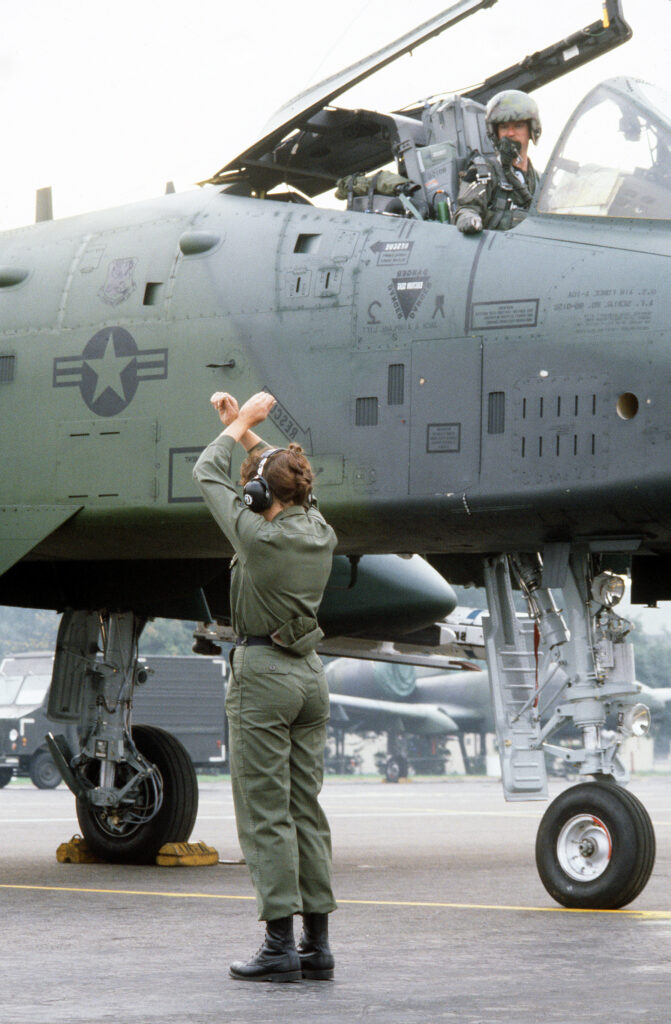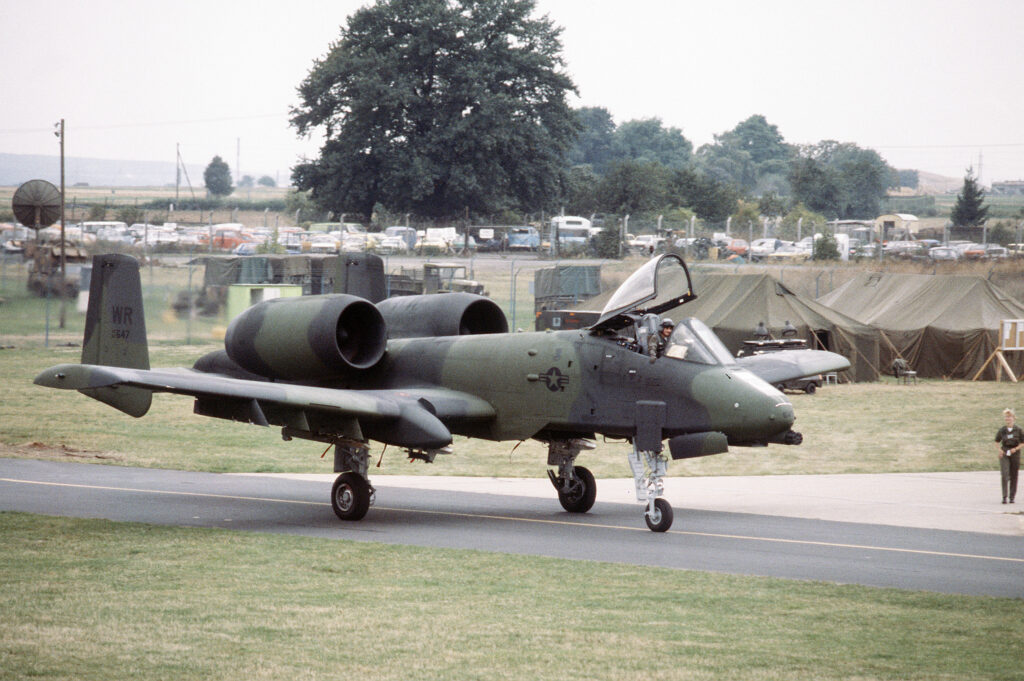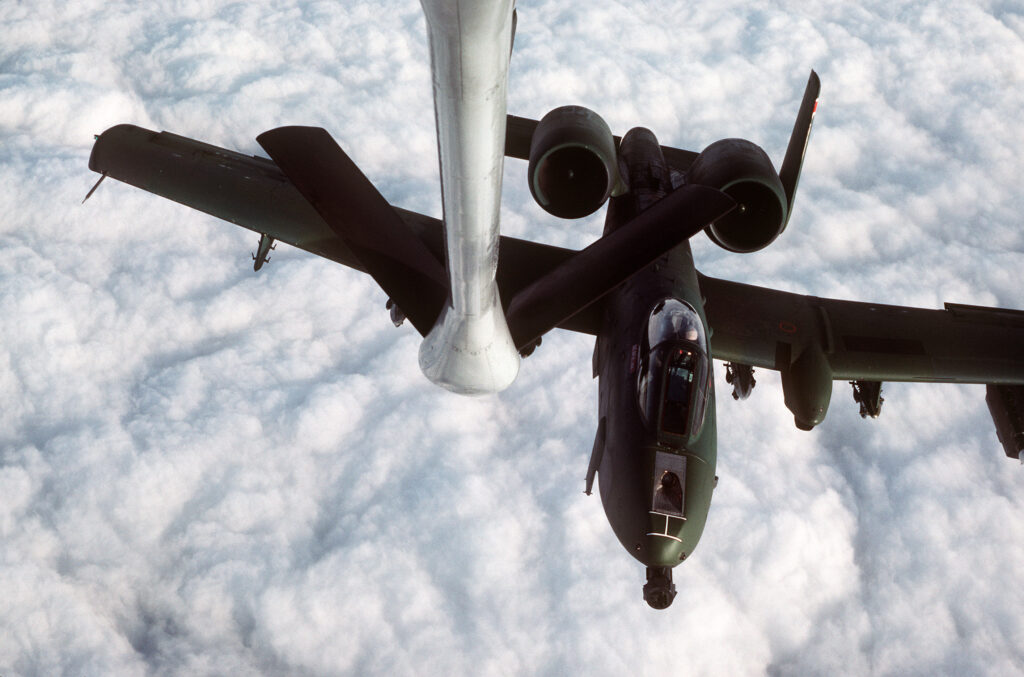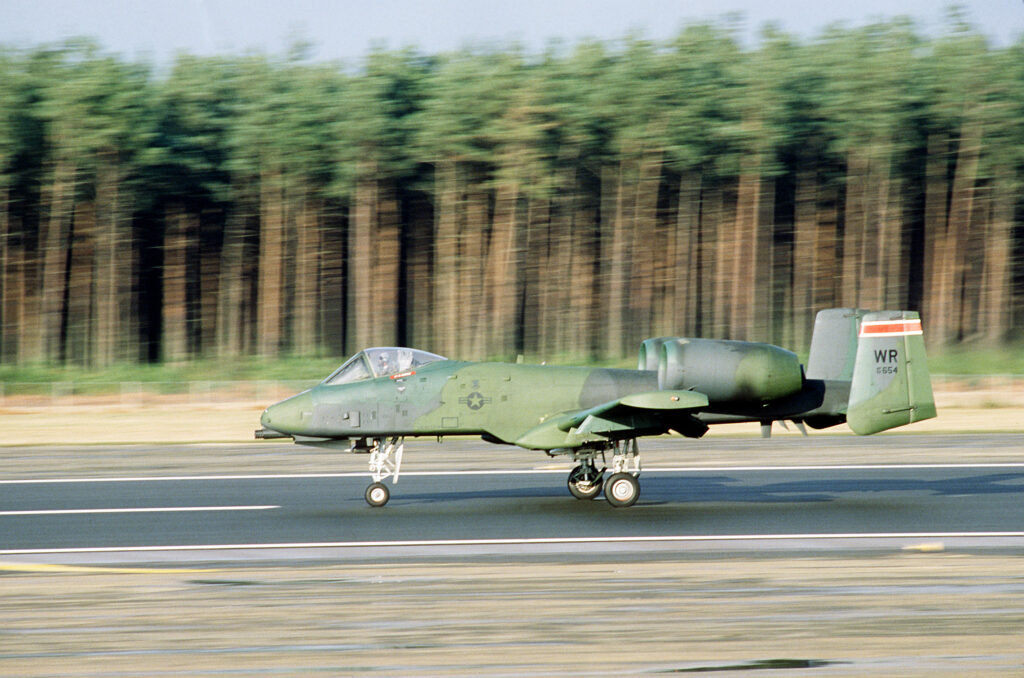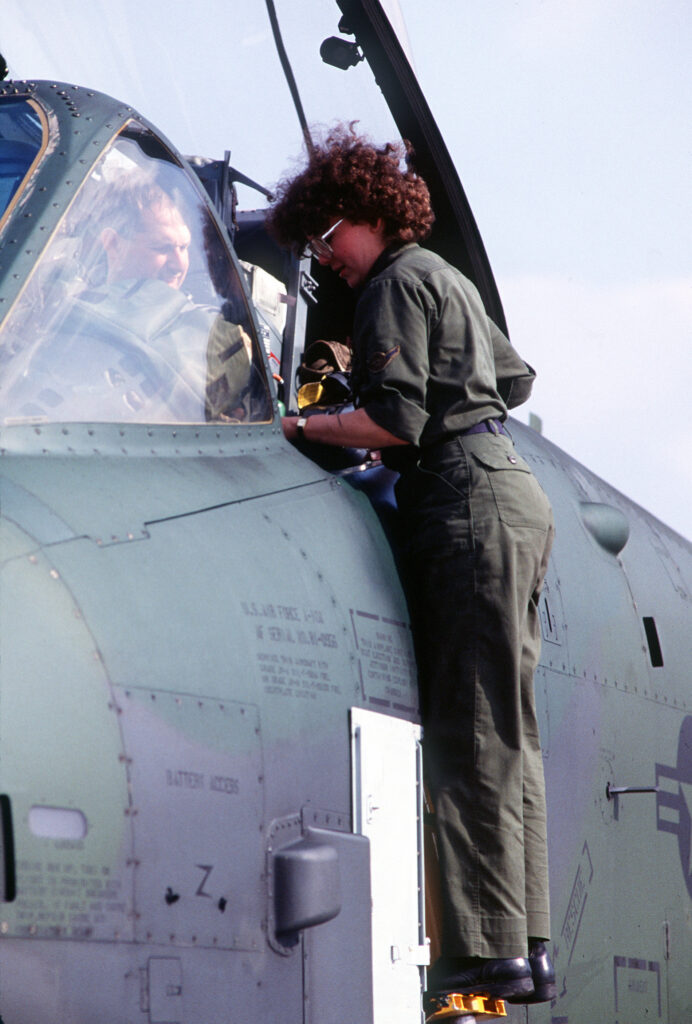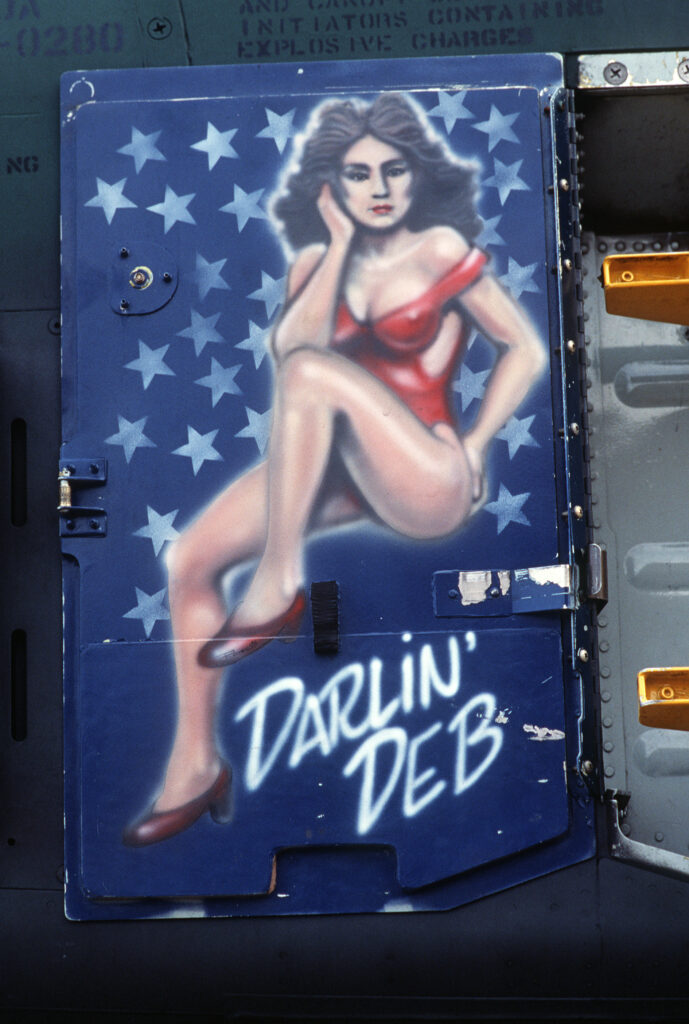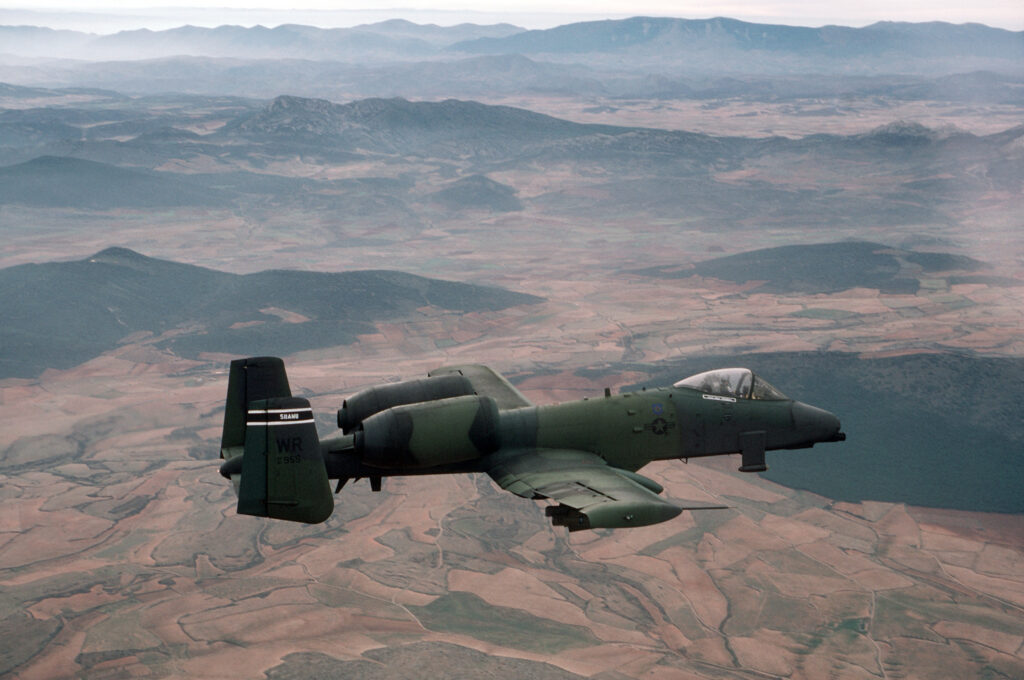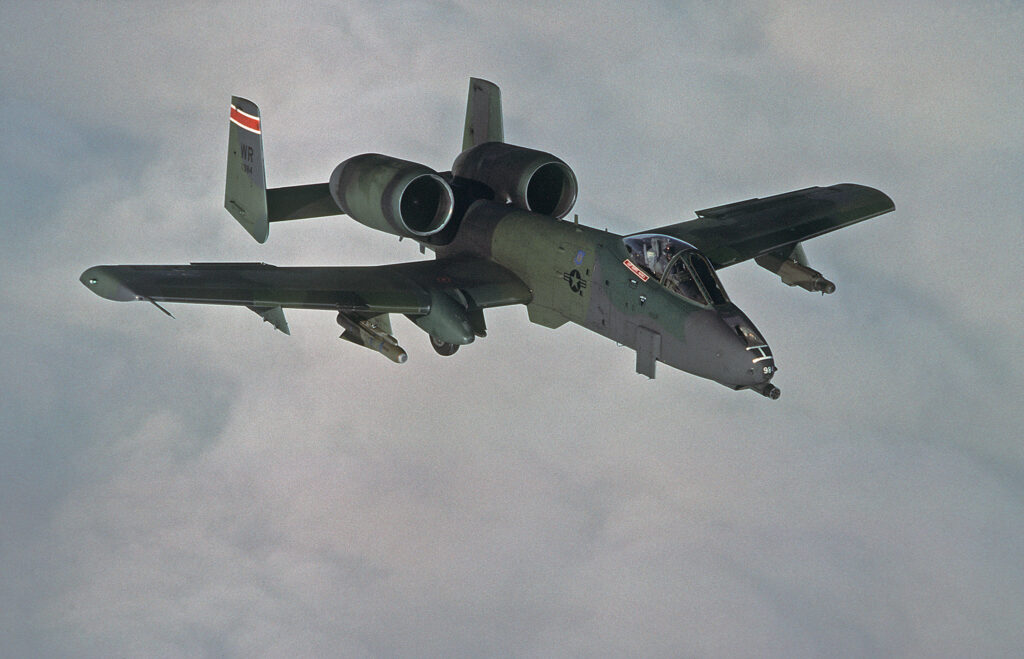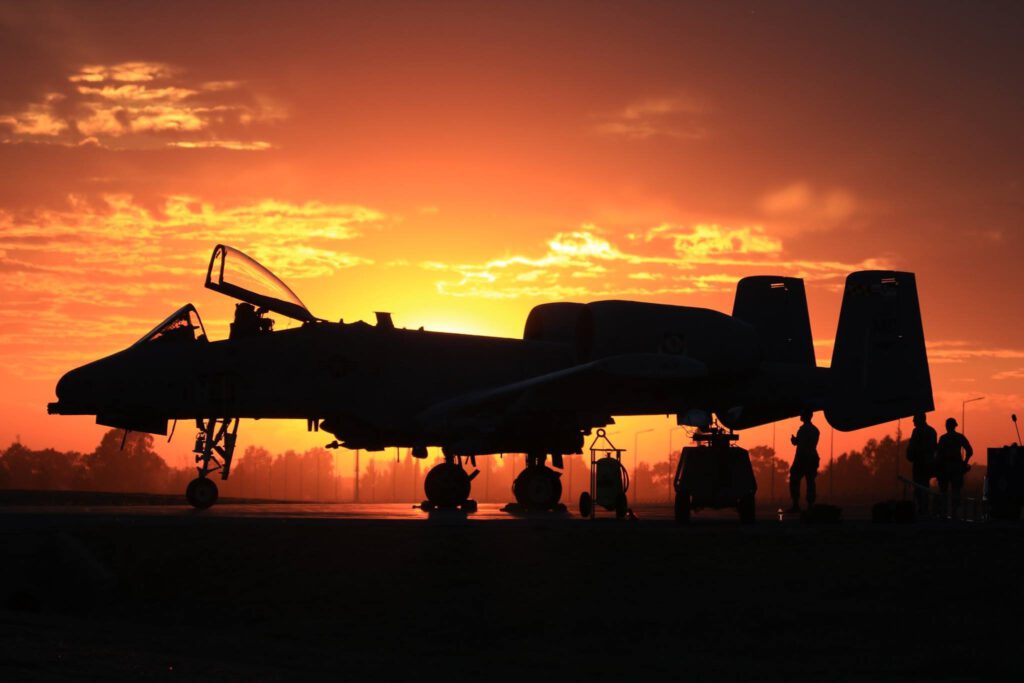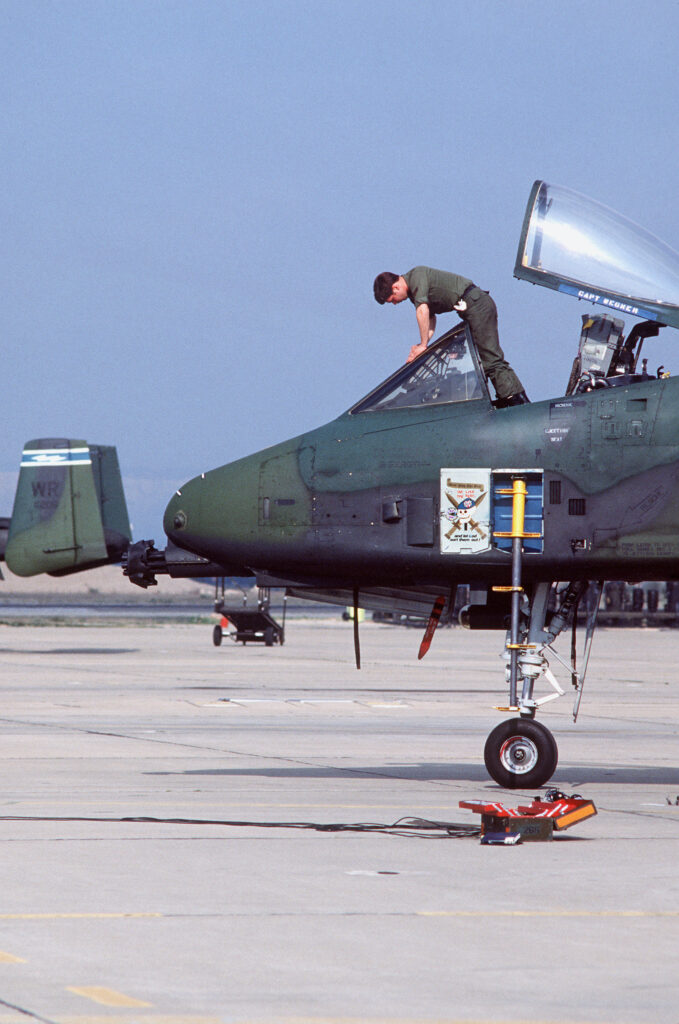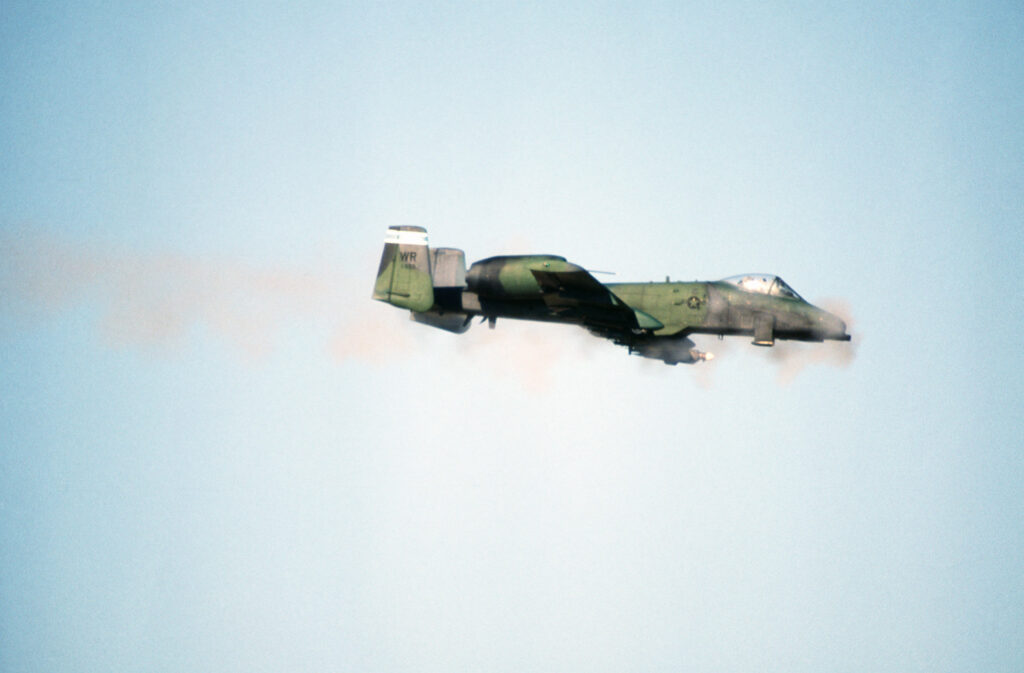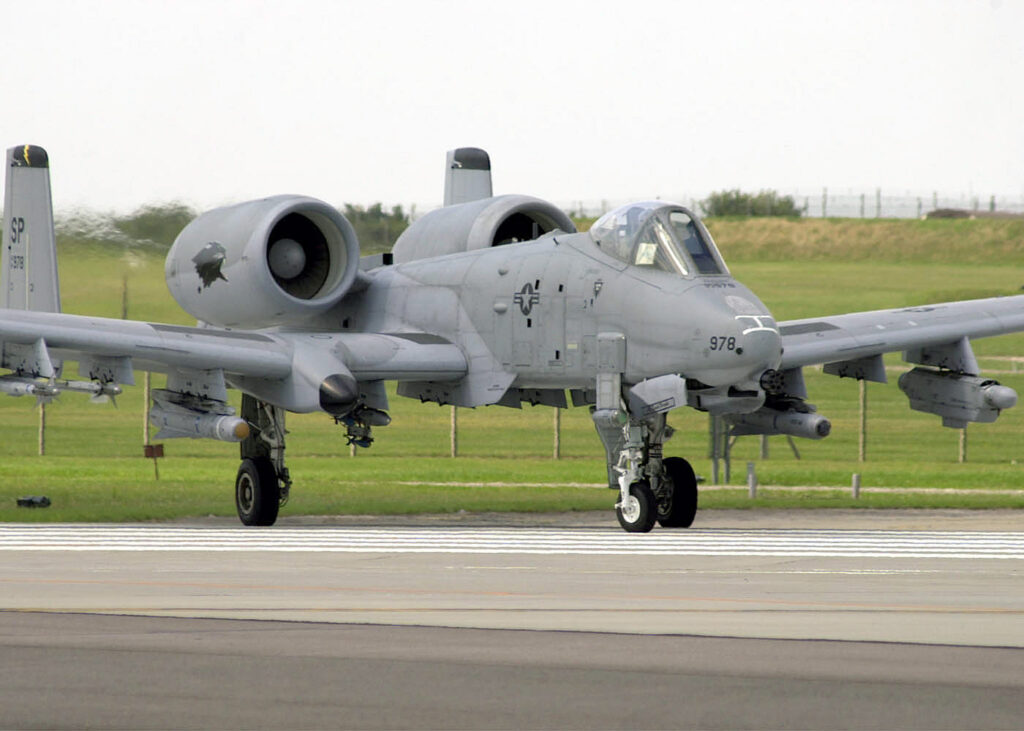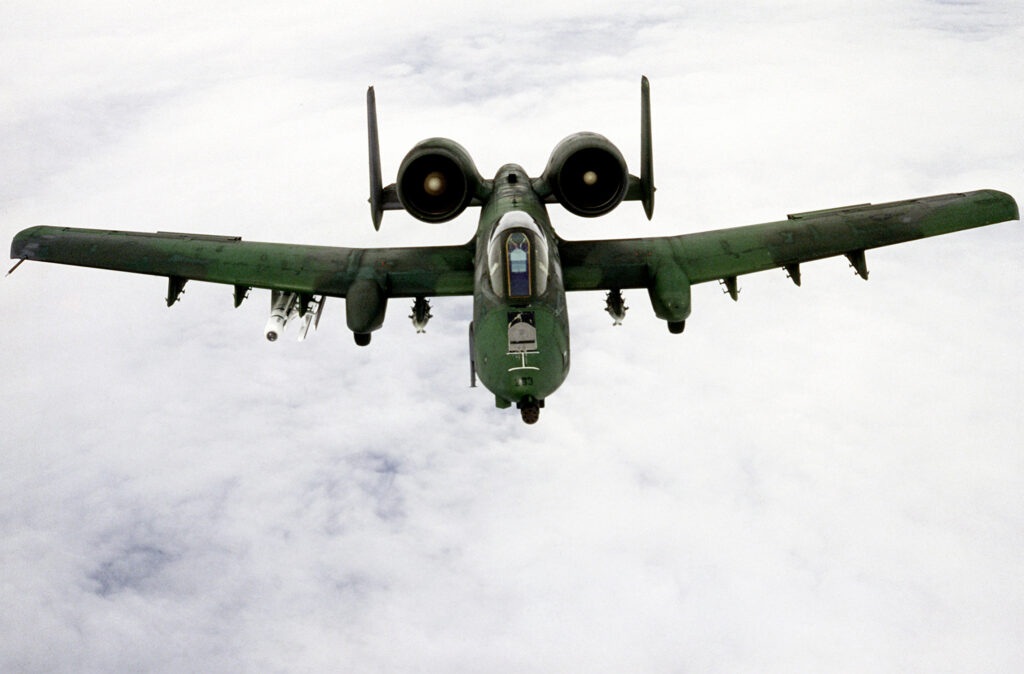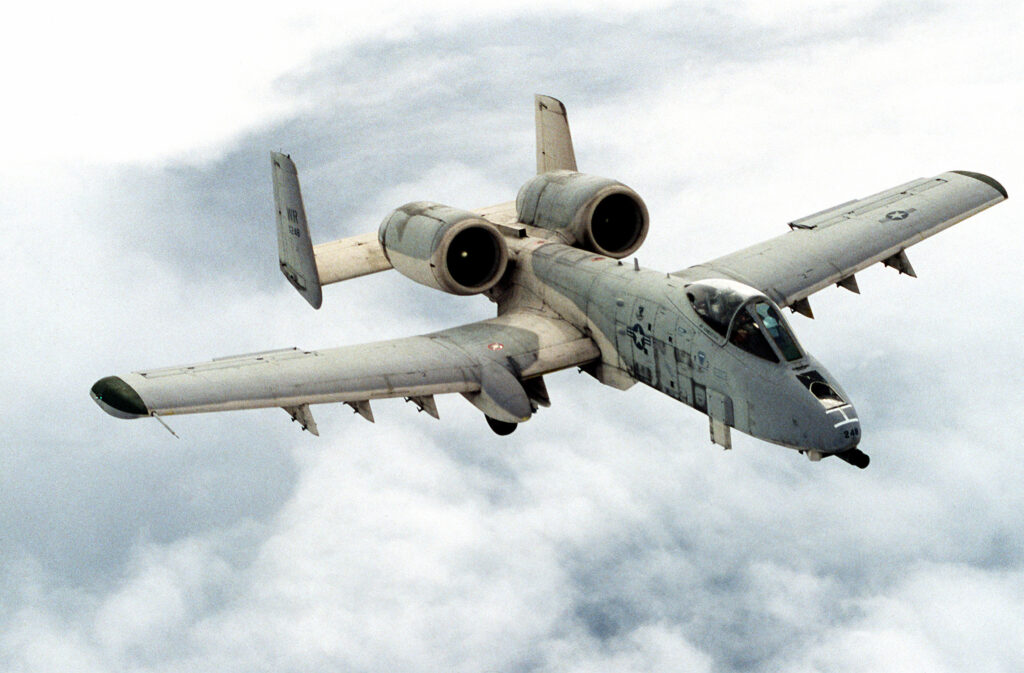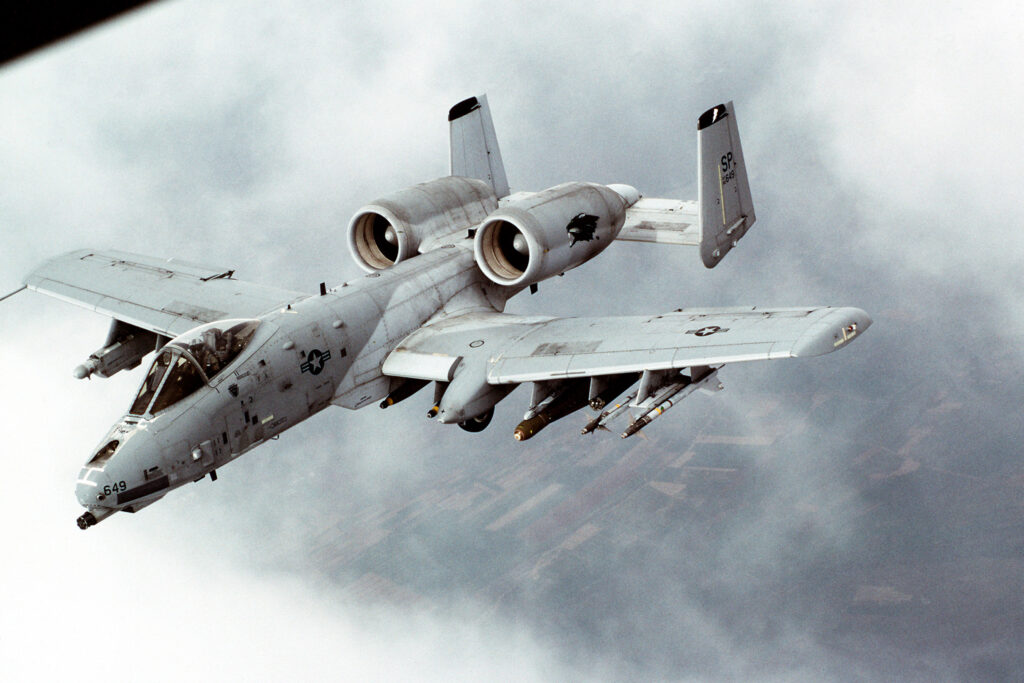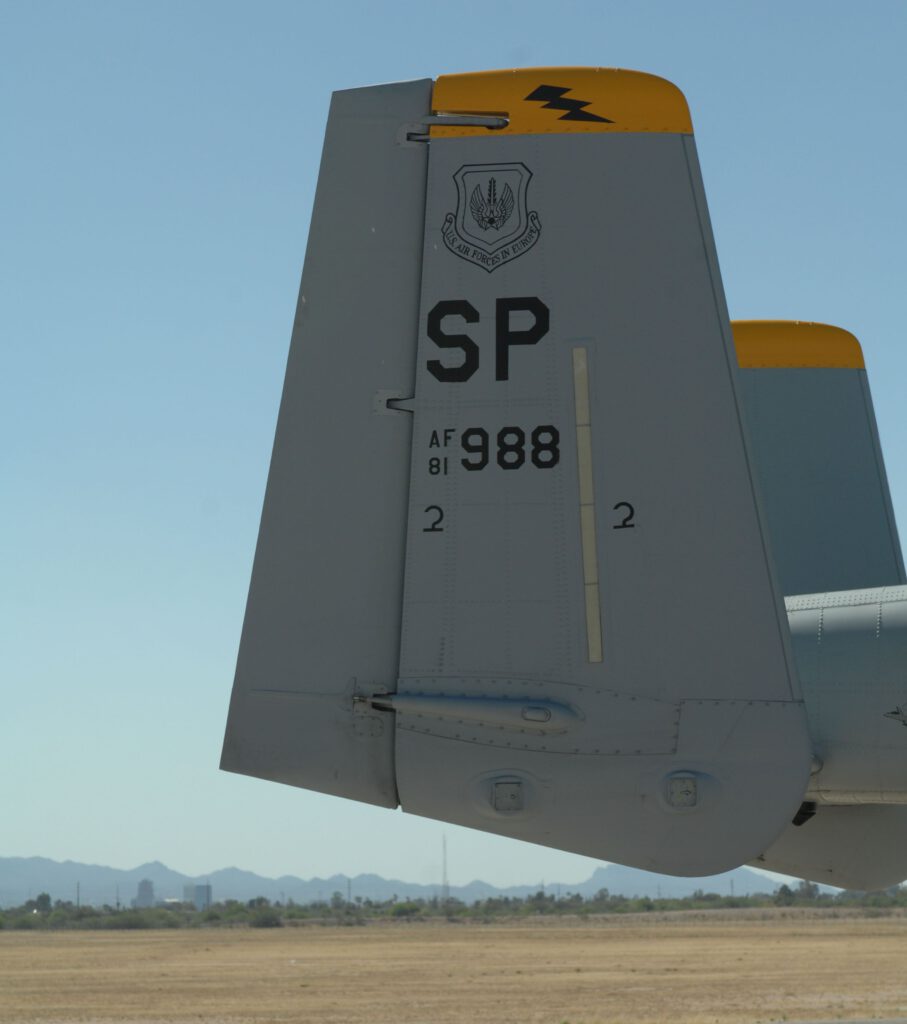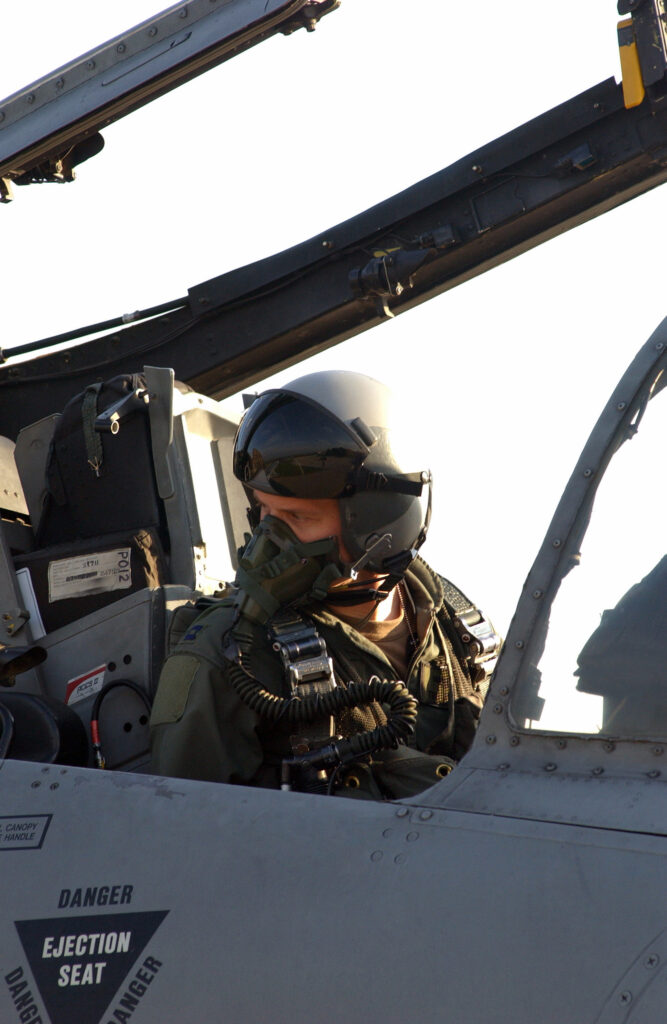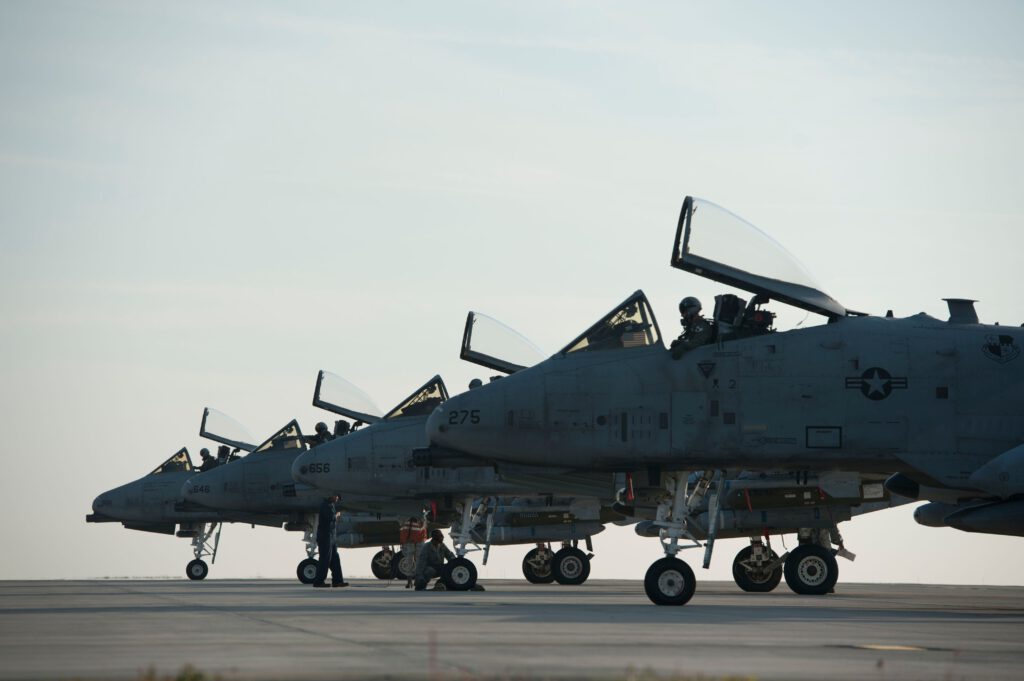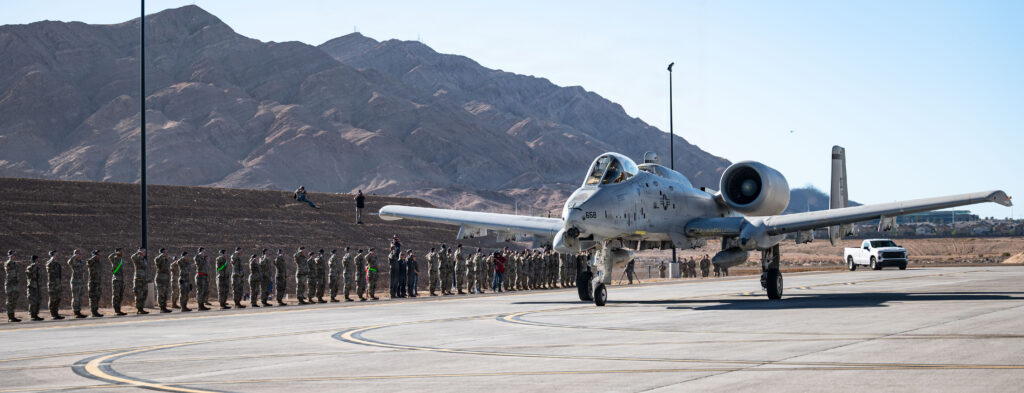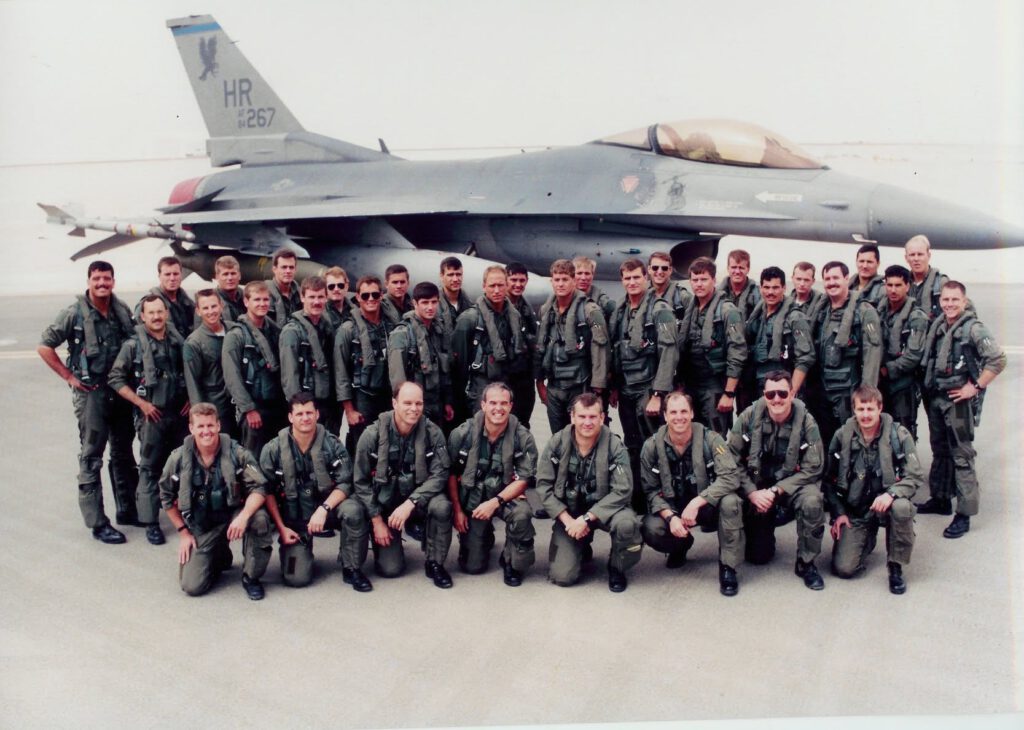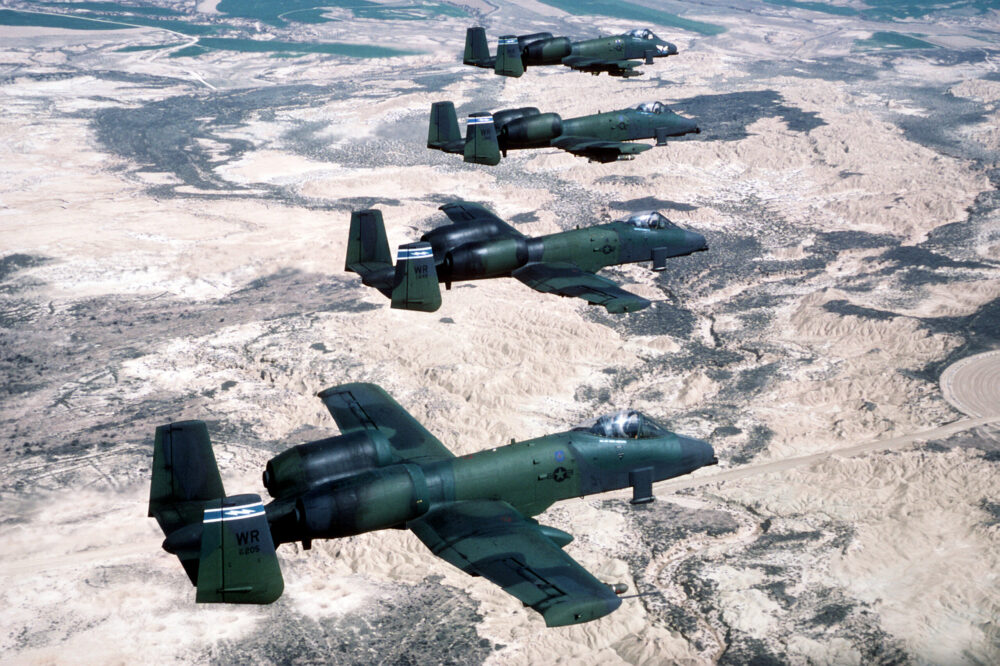
During the height of the Cold War a large portion of the A-10 Warthogs were based in the European theater of Operations, this was during the late 70’s and end in the early 90’s with the collapse of the Soviet Union and Warhaw patch.
The first Warthog entered service in March of 1976 at Davis-Monthan AFB in Arizona, which would be the main A-10 training base for the USAF for the upcoming decades. The first A-10 Warthogs arrived in Europe in 1979 destined for the 81st Tactical Fighter Wing (TFW) at RAF Bentwaters and RAF Woodbridge bases in the UK, establishing the aircraft’s dedicated presence in the region for Cold War defense against Soviet tanks, with continuous deployments and rotational support continuing until recent years.
The A-10s would be based mainly in the United Kingdom divided under 2 Tactical Fighter Wings with the 81st TFW being the largest one with 4 squadrons divided over 2 RAF bases and 4 forward operating locations in West-Germany.
81st Tactical Fighter Wing, at RAF Bentwaters & Woodbridge
- 78th Tactical Fighter Squadron (based at RAF Woodbridge)
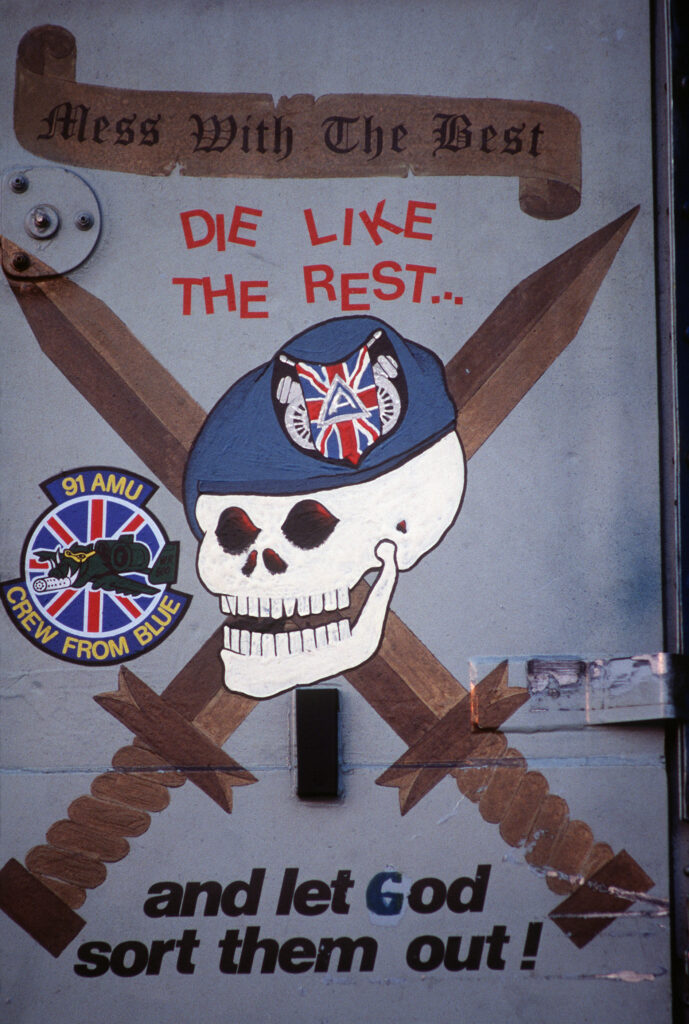
- 91st Tactical Fighter Squadron (based at RAF Woodbridge)
- 92d Tactical Fighter Squadron
- 510th Tactical Fighter Squadron
81st Tactical Fighter Wing, Forward Operating Locations in West-Germany
- Detachment 1: Sembach Air Base
- Detachment 2: Leipheim Air Base
- Detachment 3: Ahlhorn Air Base
- Detachment 4: Nörvenich Air Base
10th Tactical Fighter Wing, at RAF Alconbury
- 509th Tactical Fighter Squadron
- 511th Tactical Fighter Squadron
Each of the six squadrons comprised 24 A-10 aircraft, contributing to the total number of around 120 aircraft in the European theater at peak strength.
The 81st TFW began conversion to the Fairchild Republic A-10 Thunderbolt II in June 1979. The A-10 being a single-seat, twin-engine jet aircraft designed to provide close air support (CAS) of ground forces by attacking tanks, armored vehicles, and other ground targets. With the A-10, the wing’s mission changed to close air support and battlefield air interdiction in support of NATO ground forces.
This arrangement continued until June 1988 when the 10th Tactical Reconnaissance Wing at RAF Alconbury became a Tactical Fighter Wing, and two of the 81st TFW squadrons, the 509th and 511th Tactical Fighter Squadrons were transferred there on 1 June and 1 September 1988.
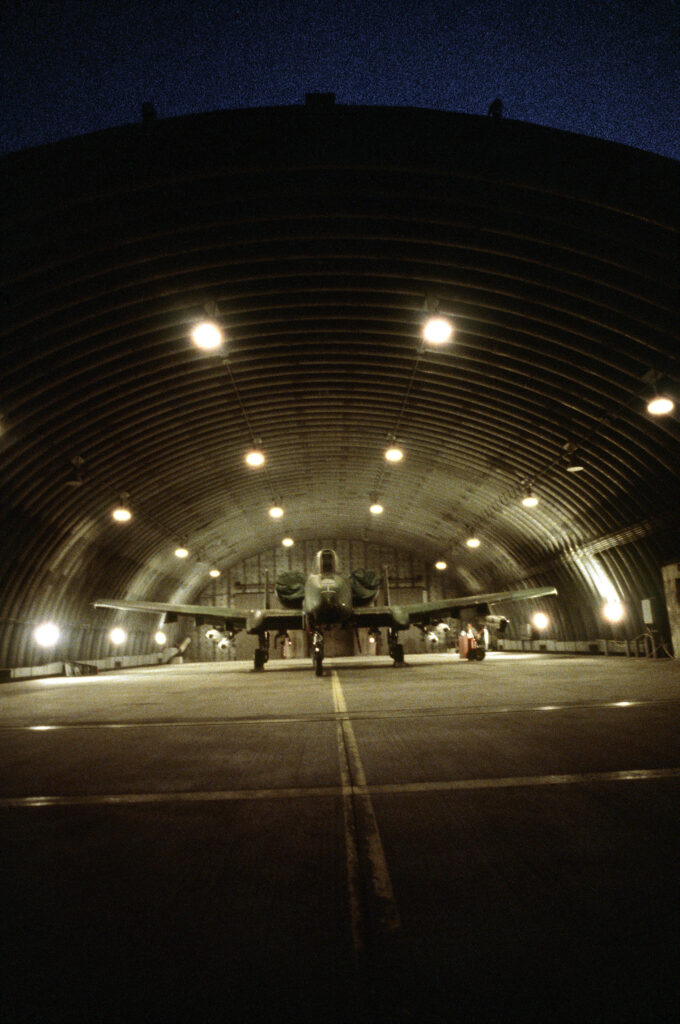
An A-10 forward operating location was established at Sembach Air Base West Germany on 1 September 1978 when Det. 1, 81st Tactical Fighter Wing was activated. Revetments and a dozen hardened aircraft shelters were built and A-10A Single-seat forward air control versions began operations at Sembach during May 1979. Additional detachments were subsequently established at Leipheim, Ahlhorn and Norvenich Air Bases and at two rear-ward Forward Operating Locations which remain classified to this day, in West Germany, believed to be Jever air base and Wiesbaden Army airfield. A-10s and support resources routinely rotated to these Forward Operating Locations from RAF Bentwaters for training and Tactical Evaluations. In the event of war in the 1980s, the Bentwater A-10s were to fight from Germany, and Bentwaters would host F-16s from Nellis Air Force Base and A-10s from Myrtle Beach Air Force Base, South Carolina.
During 1988 the 10th Tactical Fighter Wing received two squadrons of A-10A Thunderbolt IIs, the 509th and 511th Tactical Fighter Squadrons, arrived from RAF Bentwaters/Woodbridge. Both A-10 flying squadrons, kept a strong close air support vigilance and remained ready to perform their mission in a contingency situation. The 511 TFS deployed to Saudi Arabia in support of Operations DESERT SHIELD/DESERT STORM from December 1990 to June 1991. The wing’s A-10s played an important part in the air phase of the Gulf War, attacking tanks, Scud missiles, and other ground positions.
With the end of the Cold War, the USAF presence at Bentwaters was gradually phased down. It was announced that the base would be closed and the 81st TFW would be inactivated. Began preparation for base closure in December 1992, ending flying operations on 1 April 1993. The last A-10 aircraft departed Bentwaters on 23 March 1993, and the 81st Tactical Fighter Wing was inactivated on 1 July 1993.
The 10 TFW The wing drew down its A-10 mission, September 1991 – March 1992. Without its aircraft, the 10 TFW’s mission became installation and community support for U.S. personnel at Alconbury and beyond and inactivated October 1994.
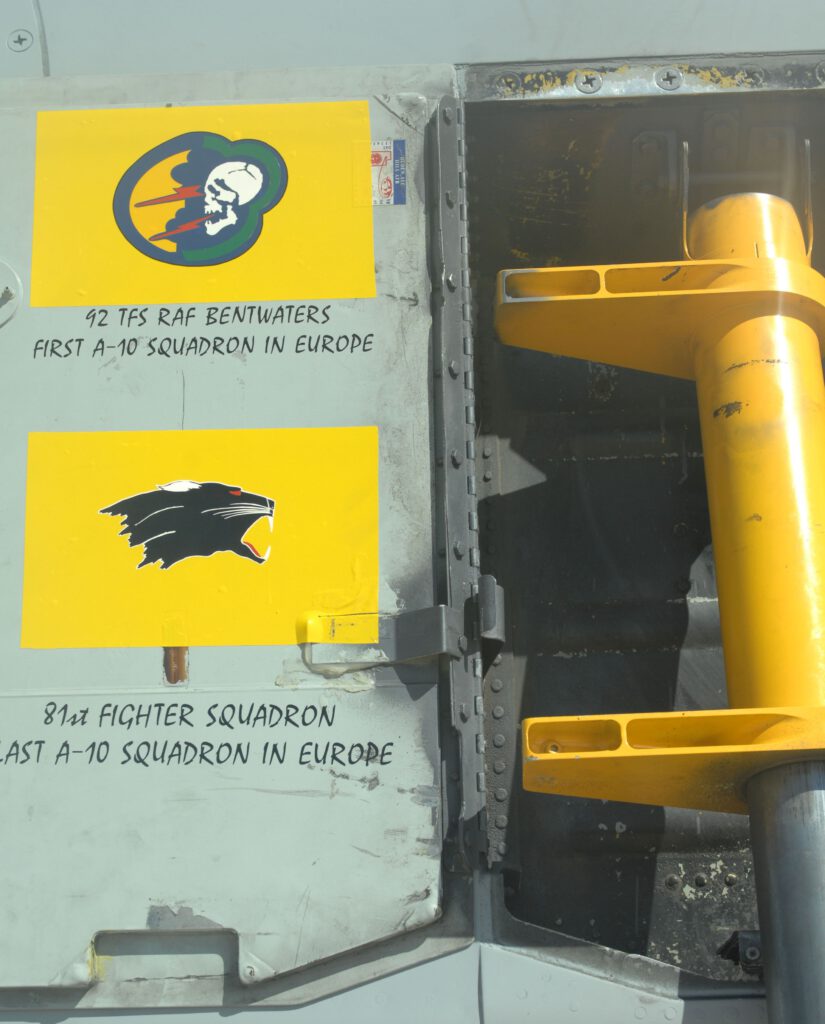
Not all the A-10s left Europe, for a short while the 510th Fighter Squadron changed RAF Bentwaters for Spangdahlem AB from October 1992 until 1994 attached to the 52nd Operations Group to set up the A-10 operation at Spangdahlem AB. he 510th flew more than 1,700 combat sorties from Aviano Air Base, Italy, in support of Operation Deny Flight and would stay at Aviano AB to transition to the F-16 as part o the 31st Fighter Wing. The A-10s returned to Spangdahlem AB as the 81st Fighter Squadron.
In September 1997, it became the first U.S. Air Forces Europe squadron to participate in Operation Southern Watch, enforcing the United Nations imposed no-fly zone in southern Iraq.
Members of the 81st again deployed to Aviano Air Base in October 1998, supporting NATO air presence during the crisis in Kosovo, Yugoslavia. The 81st FS returned to Aviano Air Base in January 1999 for a regular contingency rotation, but then stayed to support Operation Allied Force. The squadron supported air operations from Aviano Air Base until 11 April 1999, when it moved to Gioia del Colle, Italy. From there, the unit flew more than 1,400 combat missions throughout Operation Allied Force and led the first large force packages in A-10 history. The 81st also led the first two successful combat search and rescue task force missions, which involved coordinating all rescue assets resulting in the rescue of downed F-117 and F-16 pilots.
In September 2000, the 81st deployed 12 aircraft to Southwest Asia for Operation Southern Watch, accumulating more than 700 combat and training sorties. Immediately following the deployment, the 81st FS was additionally tasked to participate in Croatian Phiblex 2000. The squadron generated and deployed their remaining 6 A/OA-10s and 183 people to Split, Croatia, to aid U.S. Marine and U.S. Navy forces in a joint amphibious landing exercise with Croatian military forces and support another real-world contingency.
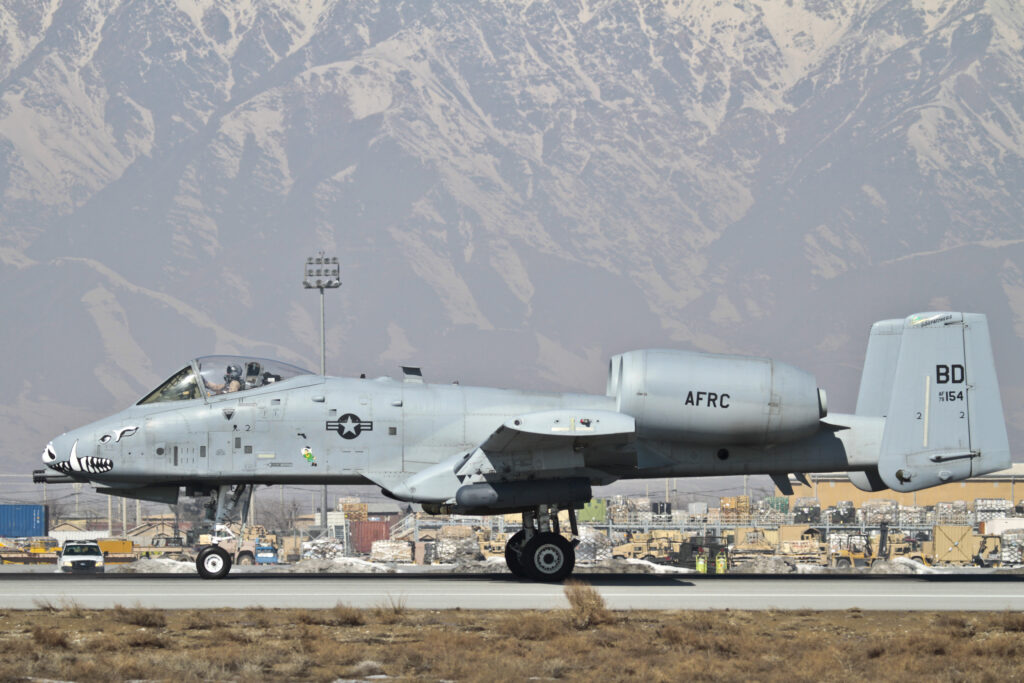
The squadron deployed several times to Bagram Air Base, Afghanistan to provide close air support to coalition ground forces during Operation Enduring Freedom in June 2003, September 2004, and most recently May 2006. During the 2006 deployment the squadron performed an intensive regimen of combat patrols to find, fix and destroy elusive, guerrilla-type enemy combatants in support of ground forces, flying in excess of 2,000 combat sorties and 7,600 combat hours. The 81st employed over 109,000 rounds of 30mm, dropped 350 guided and conventional bombs, and fired over 325 rockets in support of 260 Coalition force operations. As a direct result of the combat action in the 2006 deployment two pilots in the 81st won the prestigious Mackay Trophy and the Daedalian Exceptional Pilot Awards.
The first A-10C arrived in May 2009, after receiving the Precision Engagement upgrade, which significantly increased the Warthog’s already impressive precision and lethality with a digital stores system, integration of advanced targeting pods, hands on throttle and stick (HOTAS) functionality and Situational Awareness Data-Link (SADL). The Panthers returned to Afghanistan with the A-10C in May 2010, this time to Kandahar AB in the south. Despite the heat, wind and dust, the 81 FS flew over 9,500 hours on over 2,100 sorties and employed over 70,000 rounds of 30mm, 159 precision weapons and 141 rockets while again providing precision close air support to OEF and ISAF operations. The 81st has earned the 1991, 1996, and 2006 USAFE Commander’s Trophy.
On 18 June 2013, the squadron was inactivated at Spangdahlem Air Base as the last A-10 squadron permanently stationed in Europe.
USAFE A-10 Photos