In the beginning, the North Vietnamese air force was a rag‑tag operation equipped with little more than cast‑off aircraft and borrowed expertise. The first unit was formed in 1959, and its first combat aircraft arrived almost by accident—a T‑28 trainer flown over by a defecting Laotian pilot. From such modest origins emerged the Vietnamese People’s Air Force (VPAF), an organization that would go on to challenge the most advanced fighters in the U.S. inventory.
The VPAF sent pilots to the Soviet Union and China for training in MiG fighters, but for years it possessed no jets of its own. That changed in February 1964, when the Soviets donated 36 MiG‑15s and MiG‑17s. For security reasons, the aircraft were based across the border in southern China and did not deploy to Phuc Yen Air Base near Hanoi until August 1964, following the U.S. buildup in Southeast Asia after the Gulf of Tonkin incident.
Even then, American planners were unimpressed. The VPAF would not receive its first MiG‑21s until November 1965, and the older MiG‑15s and ‑17s were regarded as obsolete—no match for modern U.S. fighters. That assumption did not survive first contact.
On April 3, 1965, a pair of MiG‑17s pounced on a U.S. Navy strike flight south of Hanoi, raking F‑8E Crusaders with 23 mm cannon fire. The North Vietnamese believed they had destroyed two fighters; in reality, only one was seriously damaged. Still, the message was unmistakable: the MiGs were in the fight.
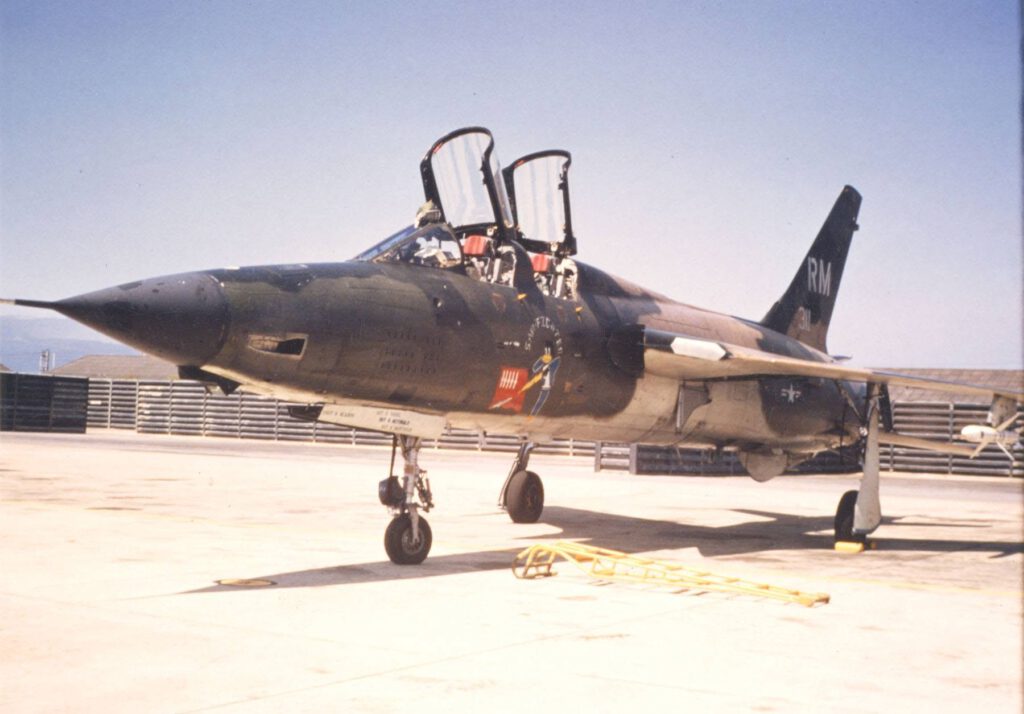
The following day delivered a greater shock. On April 4, MiG‑17s ambushed U.S. Air Force F‑105s attacking the “Dragon’s Jaw” bridge at Thanh Hoa. Slipping through haze and eluding F‑100 escorts, the MiGs struck bomb‑laden Thuds that could not maneuver effectively. Two F‑105s were shot down—the first confirmed aerial victories of the war.
A War Not Meant to Be Won in the Air
From the outside, the air war over North Vietnam looked like a classic contest for control of the skies. In reality, it was nothing of the sort.
Vietnam was a fundamentally different air war, shaped less by airpower doctrine than by Cold War politics. For Washington, “winning the air war” was never the objective. The Johnson administration viewed air power primarily as a tool of coercive diplomacy—to signal resolve, raise the cost of aggression, and pressure Hanoi toward negotiation—while avoiding escalation with China or the Soviet Union.
As Defense Secretary Robert S. McNamara defined it, the sole military goal of the bombing campaign was “to reduce the flow and/or increase the cost of infiltration of men and supplies from North Vietnam to South Vietnam.” Air superiority and MiG destruction were incidental.
This philosophy shaped Operation Rolling Thunder (1965–1968), a gradual, tightly controlled bombing campaign in which civilian leaders in Washington approved targets, dictated tempo, and imposed restrictive rules of engagement. Large areas around Hanoi and Haiphong were off-limits. MiG airfields were protected sanctuaries. U.S. fighters could not attack enemy aircraft on the ground and often could not fire until visual identification was achieved.
As a result, U.S. airmen frequently entered combat from a defensive posture, reacting to MiG attacks rather than initiating them.
“The objective was to protect the strike force,” said Maj. Gen. Alton D. Slay of 7th Air Force. “Any MiG kills obtained were considered a bonus. A shootdown of a strike aircraft was considered a mission failure, regardless of the number of MiGs killed.”
North Vietnam’s Strategy: Interference, Not Domination
The North Vietnamese approached the air war with very different goals—and far fewer illusions.
They never intended to defeat U.S. airpower outright. Instead, they pursued a strategy of air denial, integrating MiGs into a layered defense system of radar, surface‑to‑air missiles, and antiaircraft artillery. The purpose of the MiGs was not to win dogfights, but to disrupt bombing missions.
“The principal MiG mission was to interfere with bombing attacks,” historian Walter J. Boyne noted, “seeking to force the incoming F‑4s and F‑105s to jettison their bombs before getting on target.”
MiG pilots attacked only under ideal circumstances—when U.S. aircraft were bomb‑laden, low on fuel, or damaged. They favored one‑pass, high‑speed attacks, then escaped to sanctuaries or into dense SAM and AAA coverage. Even when no aircraft were shot down, forcing a strike flight to turn away was a victory.
This asymmetry of objectives defined the air war. For the United States, success meant bombs on target. For North Vietnam, success meant preventing that—even temporarily.
The Matchup: Phantom vs. MiG
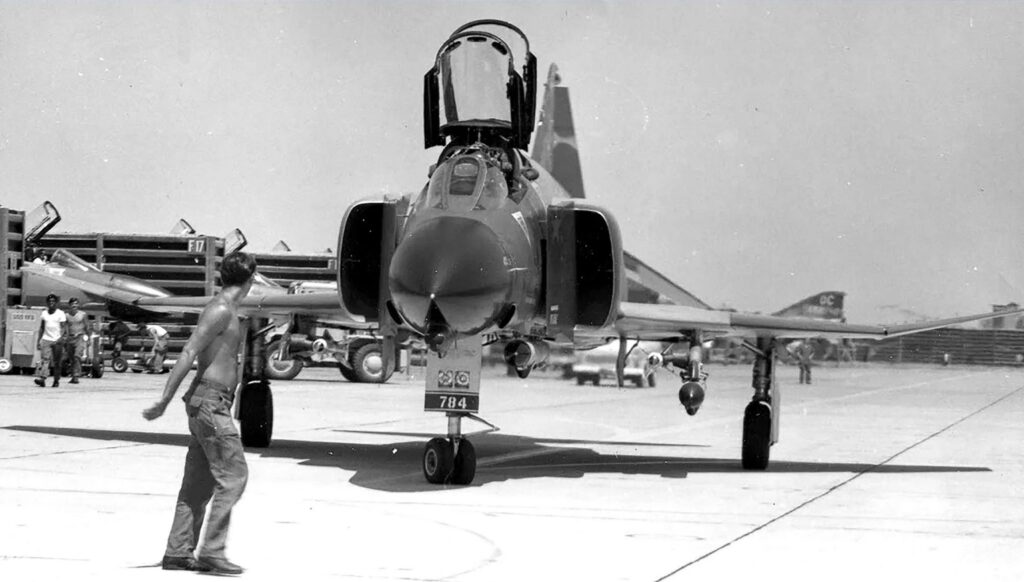
The principal matchup pitted the McDonnell Douglas F‑4 Phantom II against North Vietnam’s MiG‑17s and MiG‑21s.
The Phantom was fast, powerful, and versatile, designed in an era when missiles were expected to make guns obsolete. Early versions carried no internal cannon, a disadvantage in the slow, turning engagements common over North Vietnam. The MiGs, half the size and highly maneuverable, relied heavily on guns and short‑range missiles.
When engagements were straightforward, U.S. fighters usually prevailed. The problem was getting the MiGs to commit.
One notable exception was Operation Bolo in January 1967. Disguised as bomb‑laden F‑105s, a force of F‑4Cs lured MiG‑21s into battle and shot down seven—nearly half of North Vietnam’s MiG‑21 fleet—in fifteen minutes, without loss.
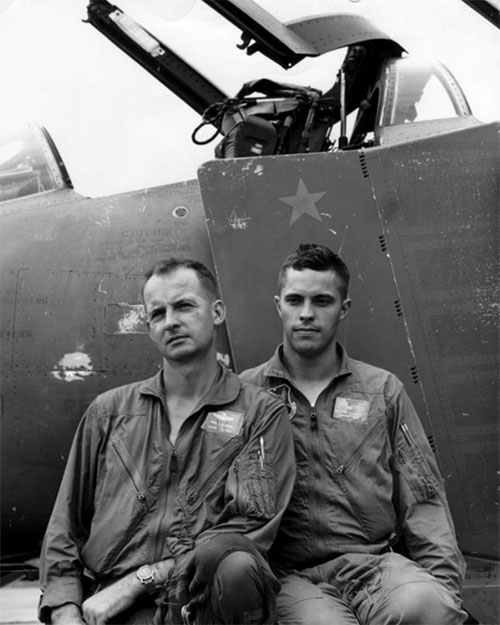
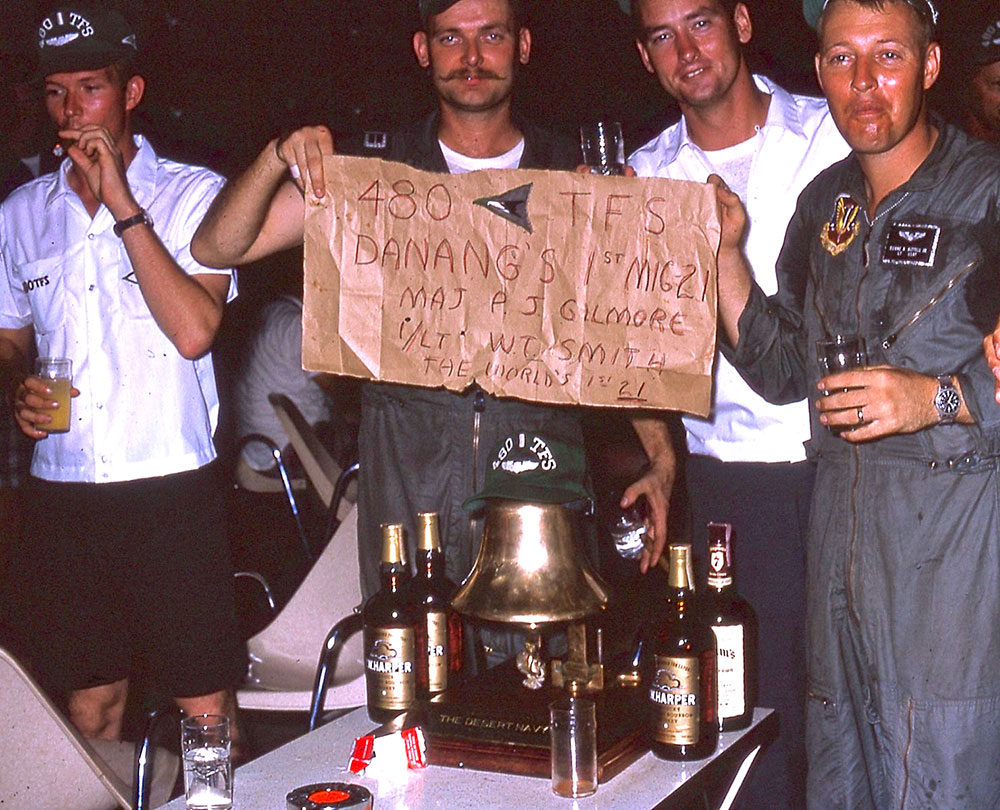
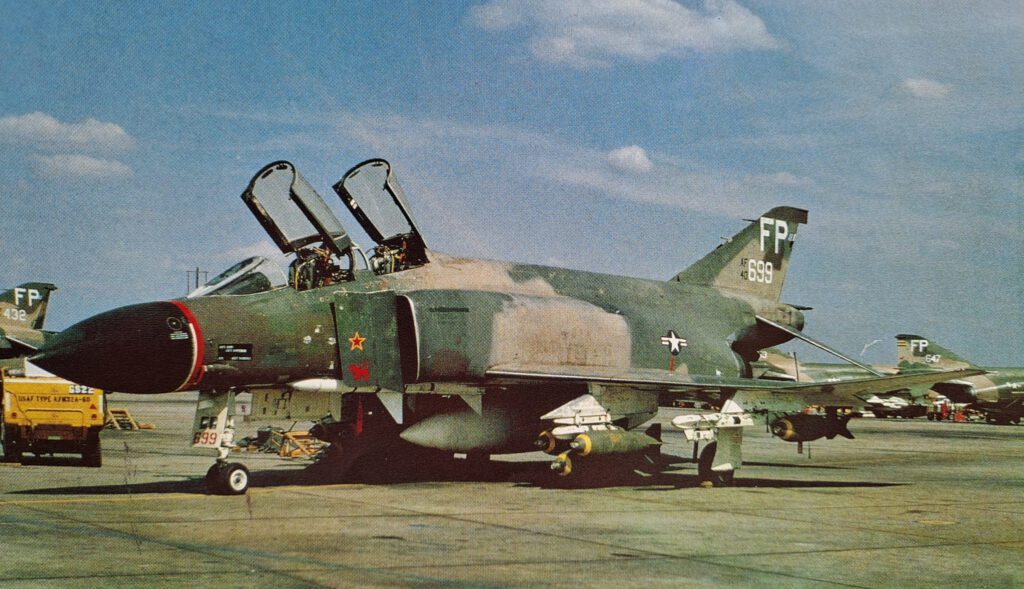
29 April 1966, F-4C / MiG-21 / AIM-9 480 TFS Danang AB, South Vietnam
More Than a Fighter War
Despite their visibility, MiGs were not the greatest threat to U.S. aircraft. Of USAF combat losses in Vietnam, 67 were attributed to MiGs, compared with 110 to SAMs and more than 1,400 to antiaircraft artillery. The combination was lethal. In 1966, the USAF loss rate around Hanoi and Haiphong was one aircraft per 40 sorties—grim odds for aircrews required to fly 100 missions to complete a tour.
Adaptation and the Late-War Shift
By 1972, when bombing resumed under Operations Linebacker I and II, the character of the air war had changed. Rules of engagement were loosened. Targets were struck decisively. Intelligence was centralized through a fusion center known as Teaball, which tracked MiGs from takeoff and provided early warning to strike forces.
The results were dramatic. In the final months of U.S. involvement, Air Force fighters achieved an exchange ratio of 5‑to‑1 against the MiGs—evidence of what airpower could do when applied in accordance with its own doctrine.
The Meaning of the MiG War
In total, U.S. fighters shot down 196 MiGs and lost 83 aircraft in air‑to‑air combat—an exchange ratio of 2.36‑to‑1. It was a clear advantage, but nothing like the lopsided air wars of World War II or Korea.
The MiG war was not a failure of American pilots or aircraft. It was the product of strategy overriding doctrine, of political restraint shaping tactical reality, and of an enemy that understood exactly how to fight a stronger opponent without ever needing to defeat him outright.
From Rolling Thunder to Linebacker, the strike forces got through. The MiGs—despite skill, courage, and occasional success—could not stop them. But for years, they made every mission harder, riskier, and costlier.
And that, for North Vietnam, was victory enough.
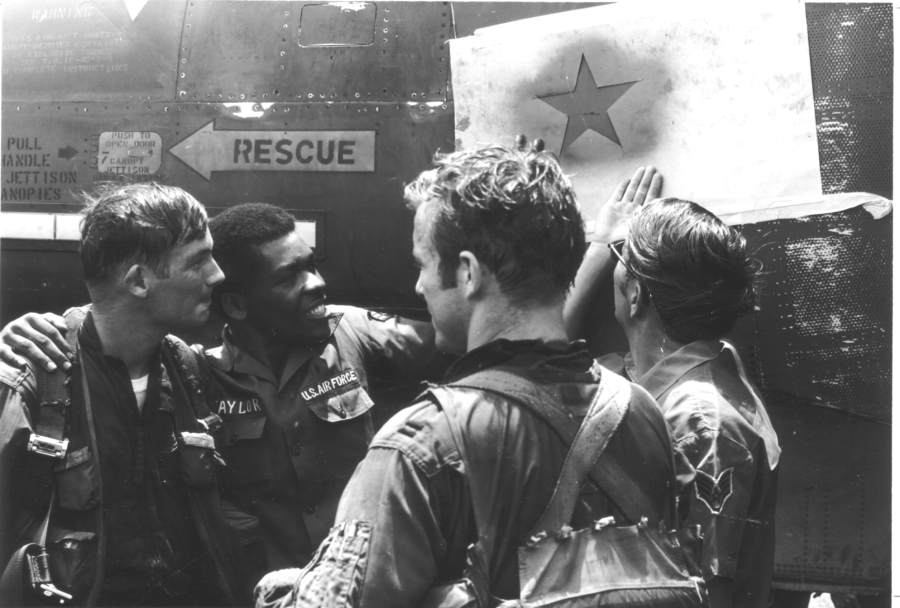
Bellevue. Sgf. Reggie Taylor,; Capt.
Ritchie; and Sgt. Ronald W. Burrrey, the aircraft’s crew
chief.
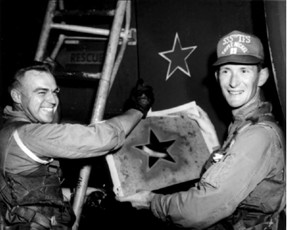
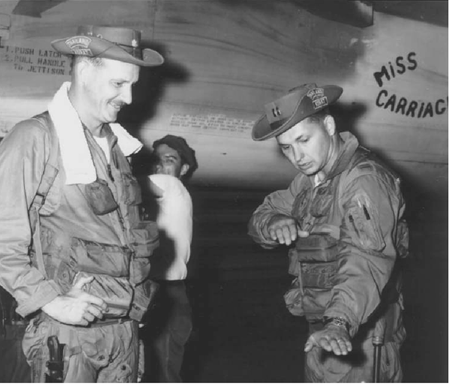
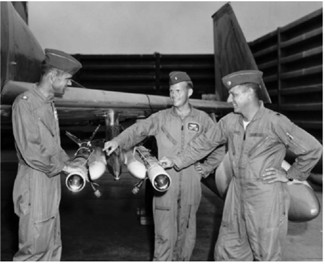
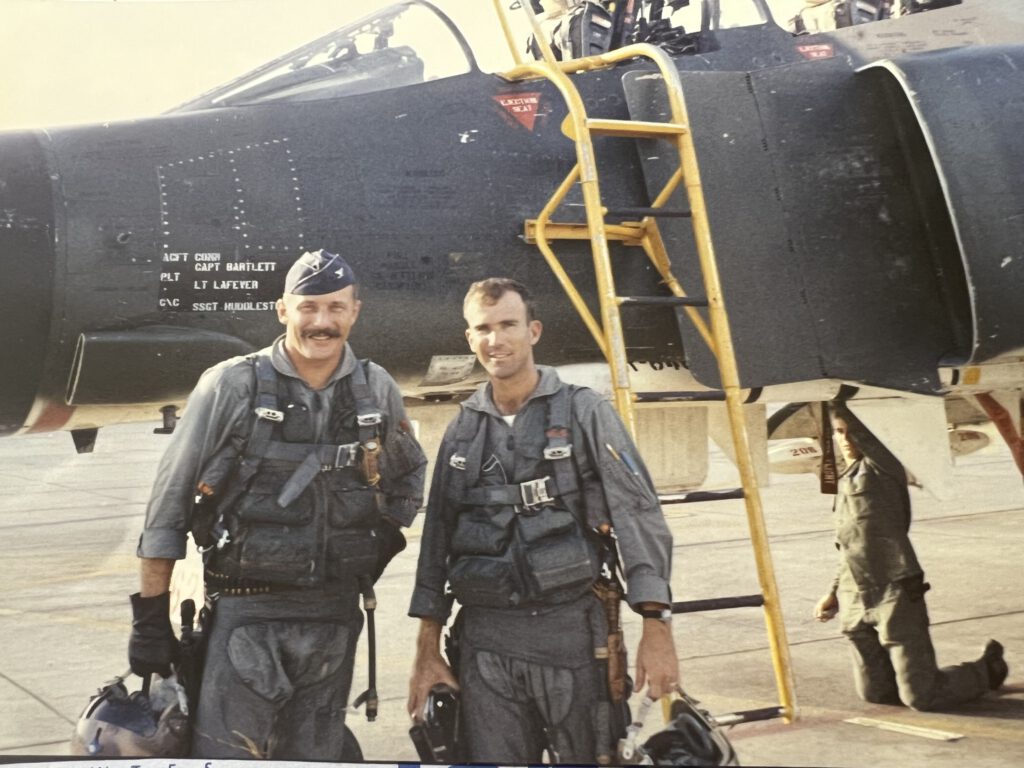
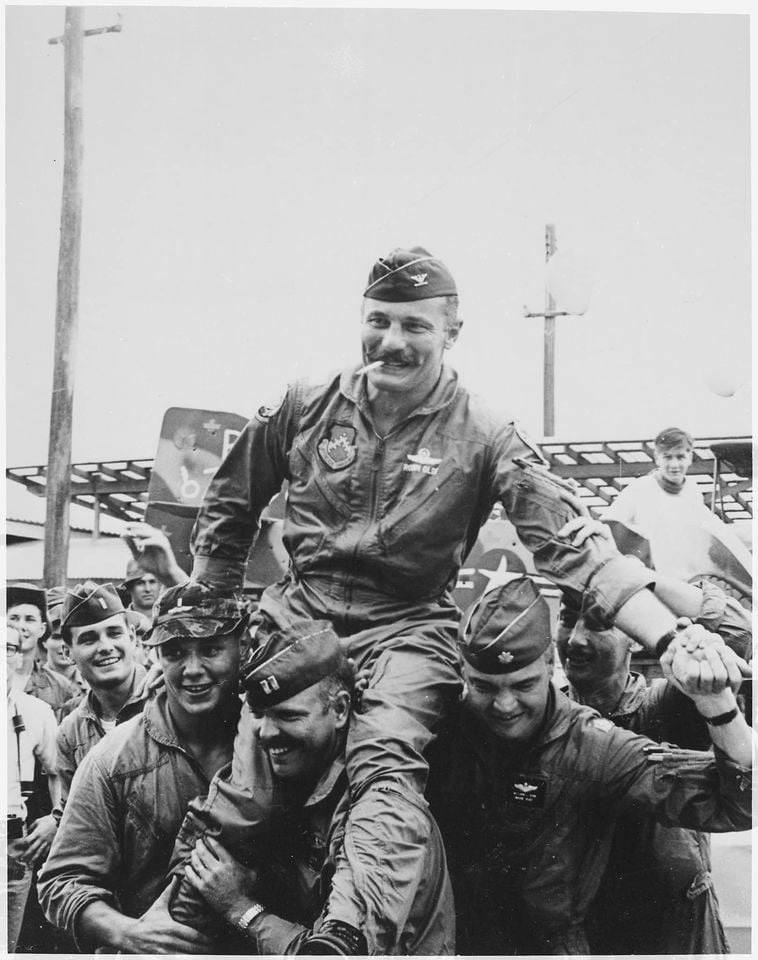
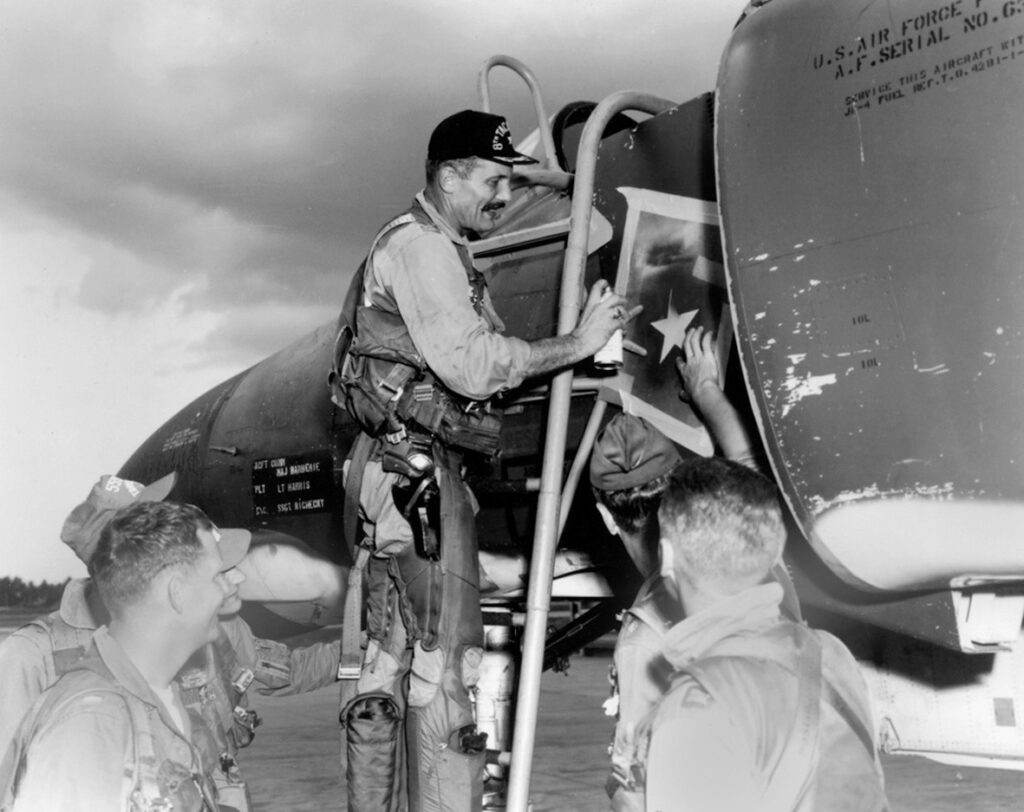
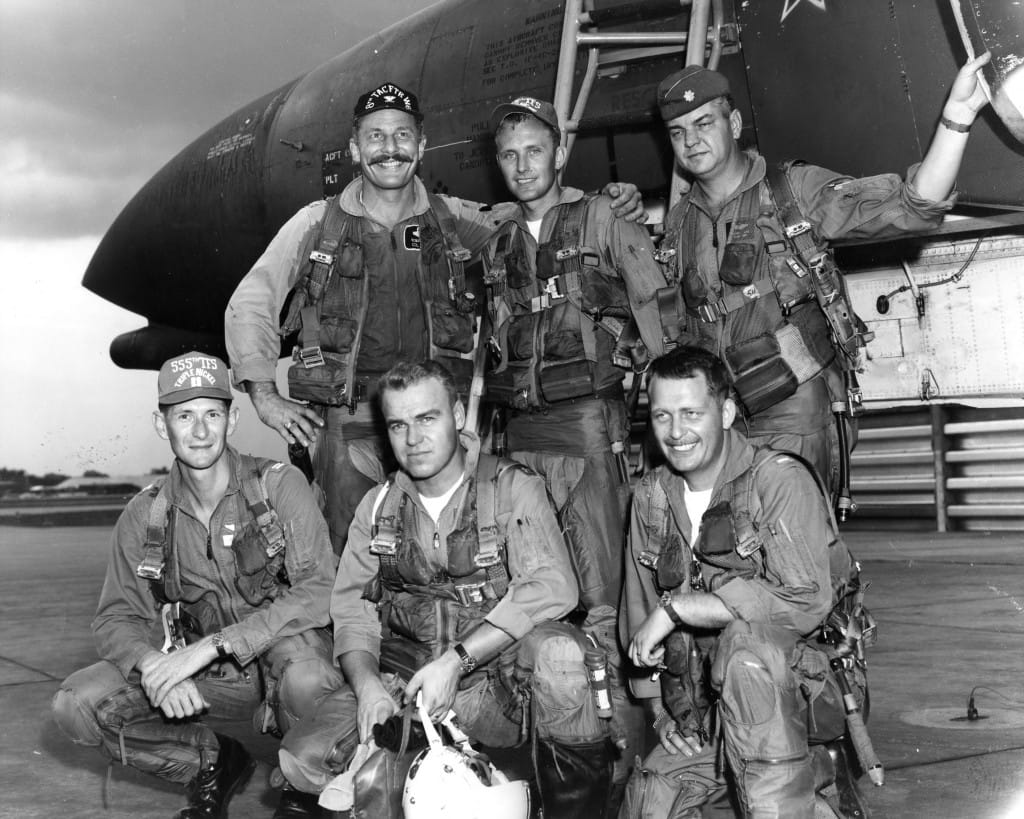
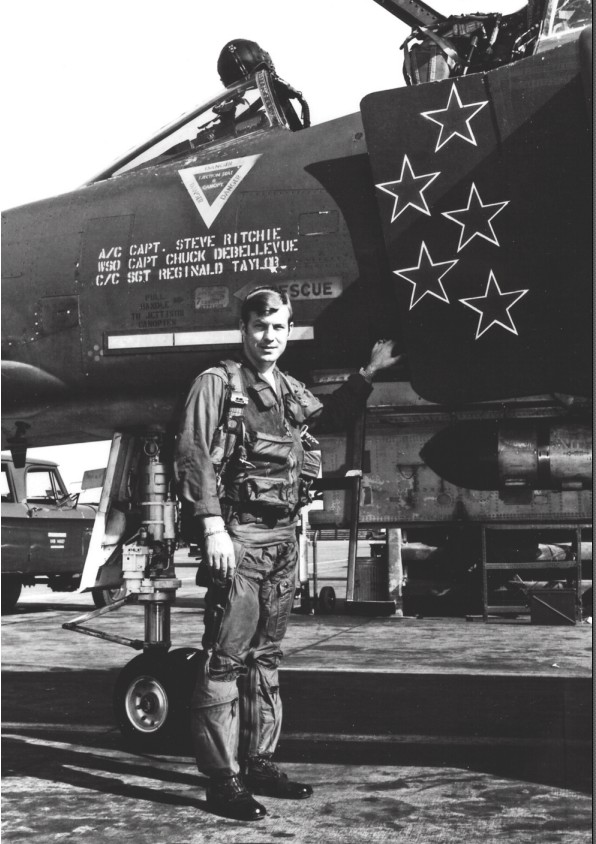
August 1972.
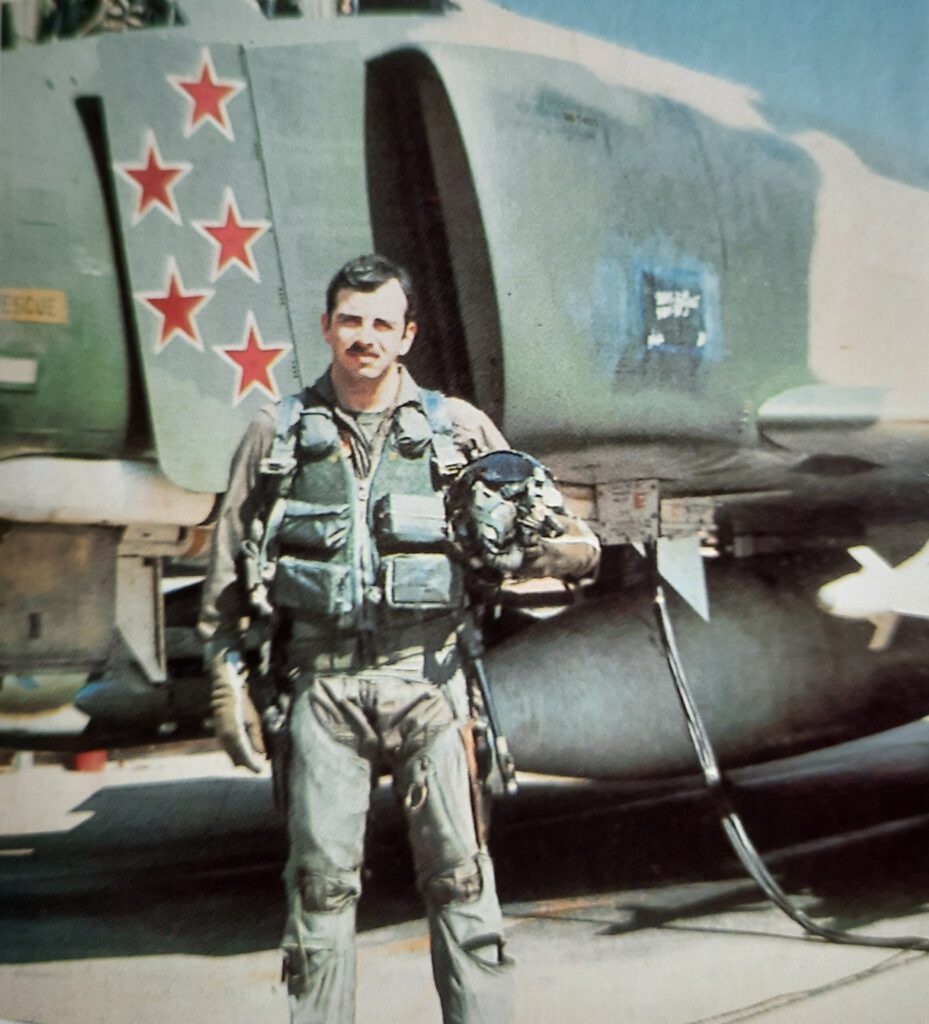
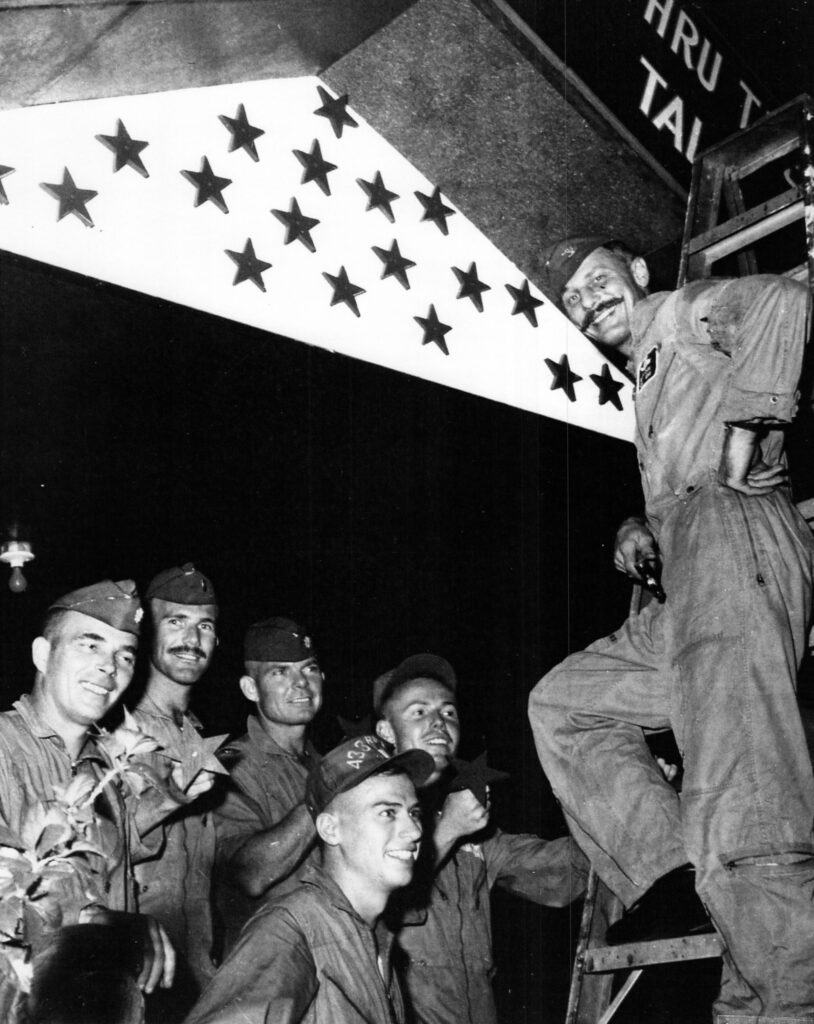
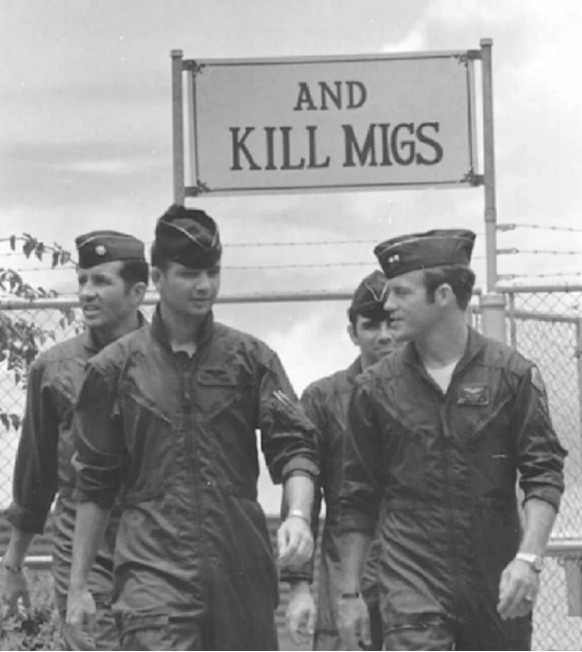
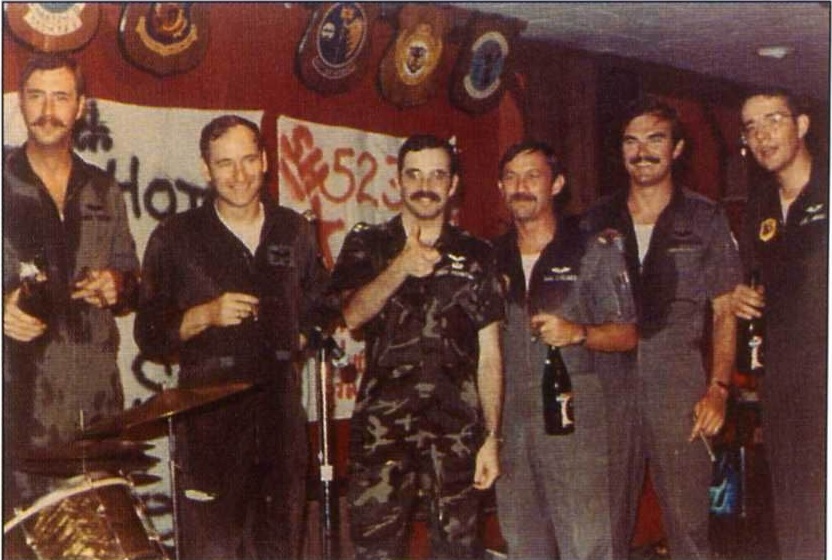
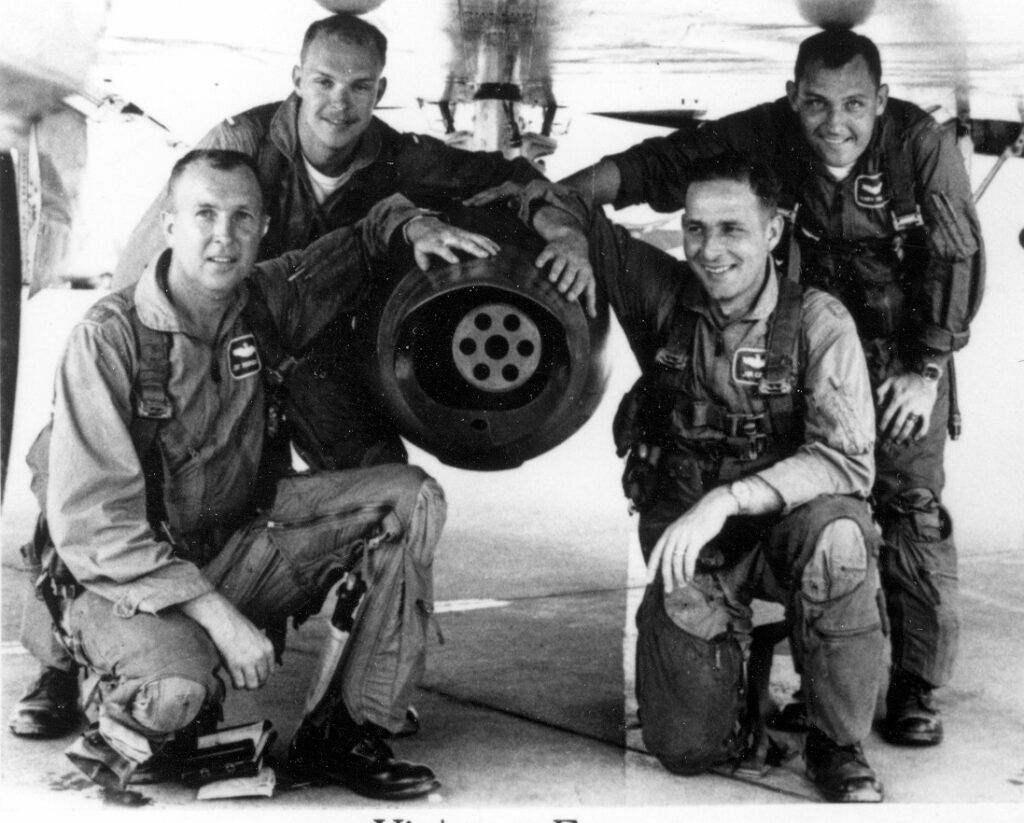
The MiG Killers
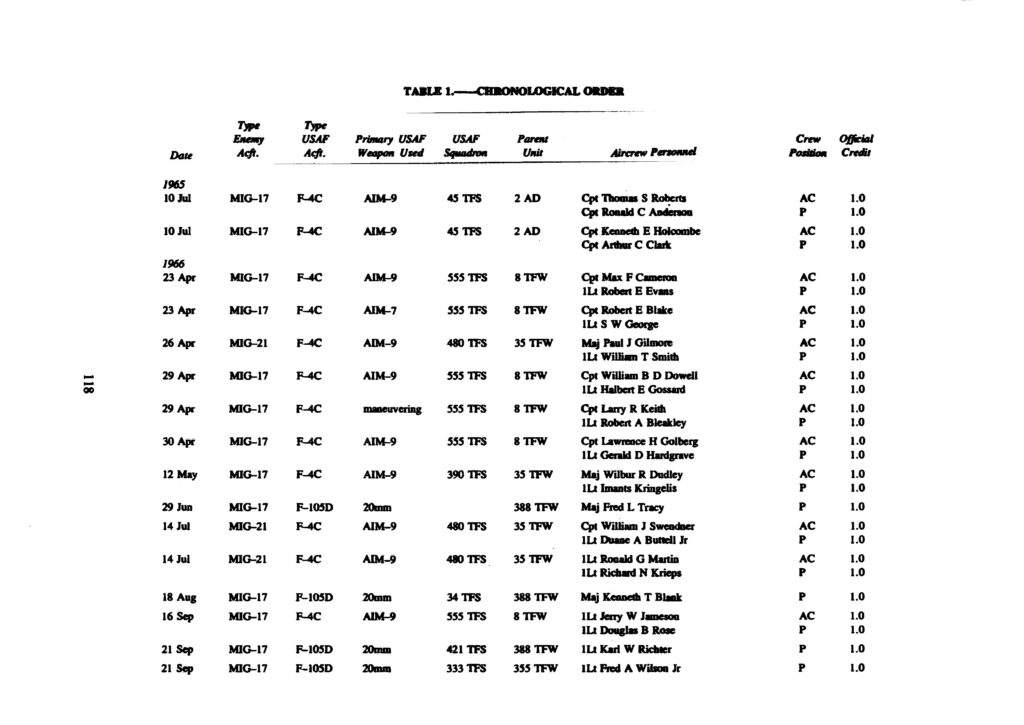
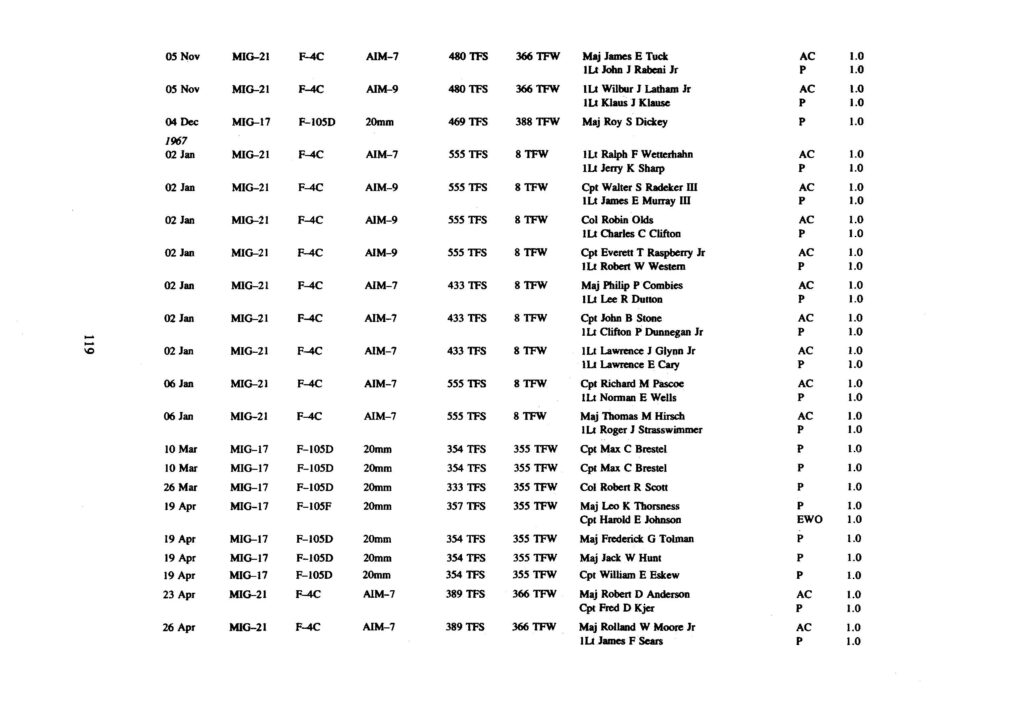
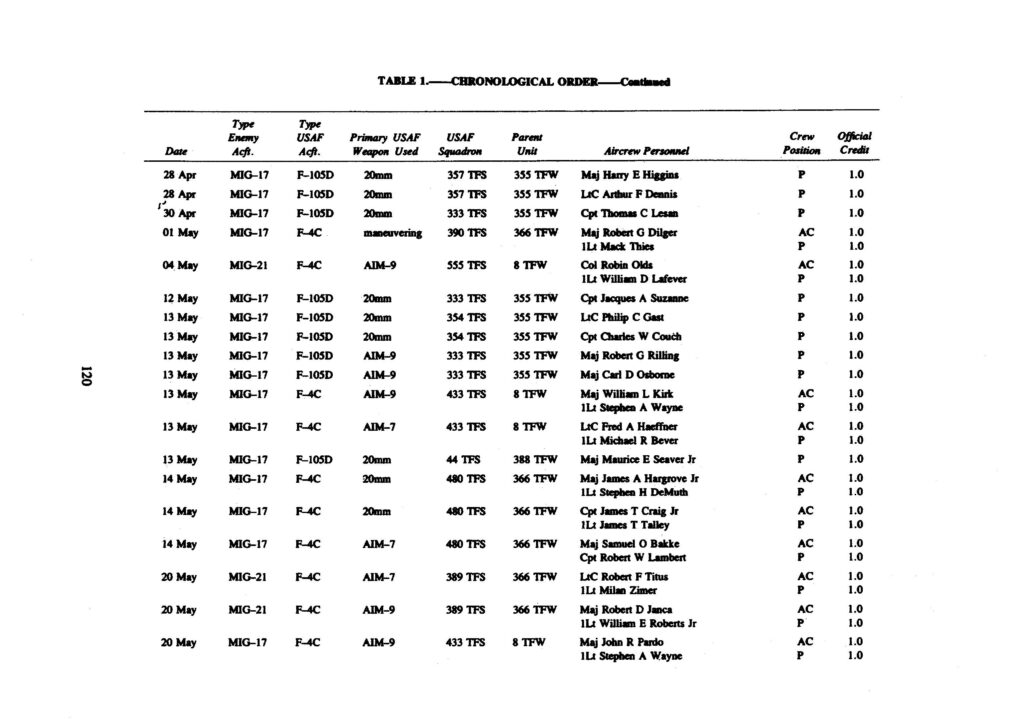
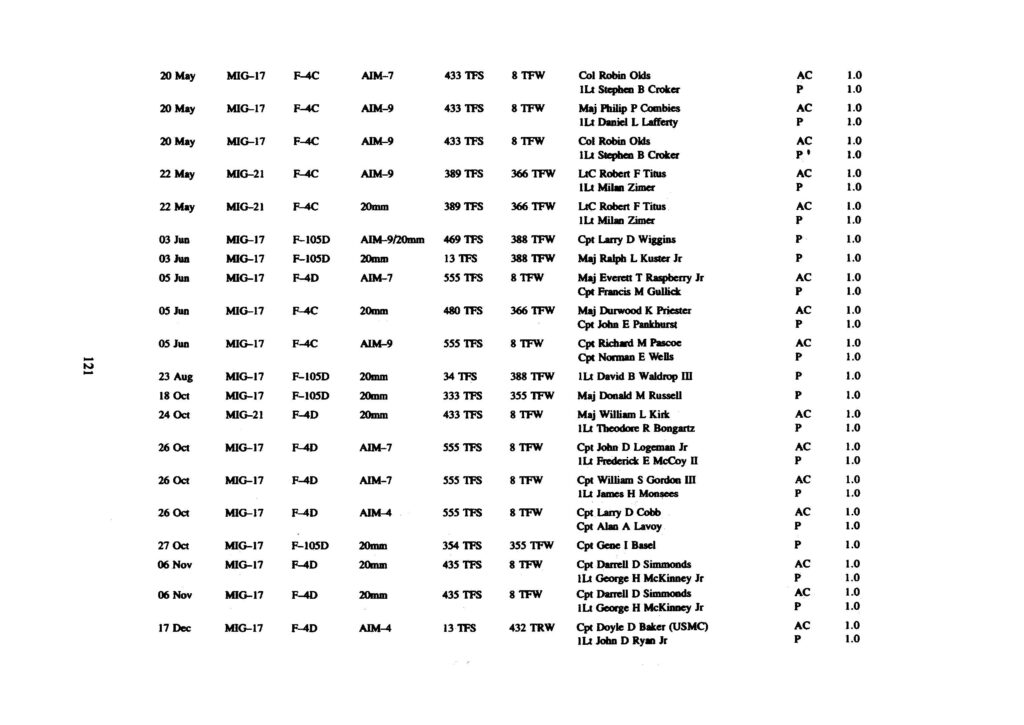
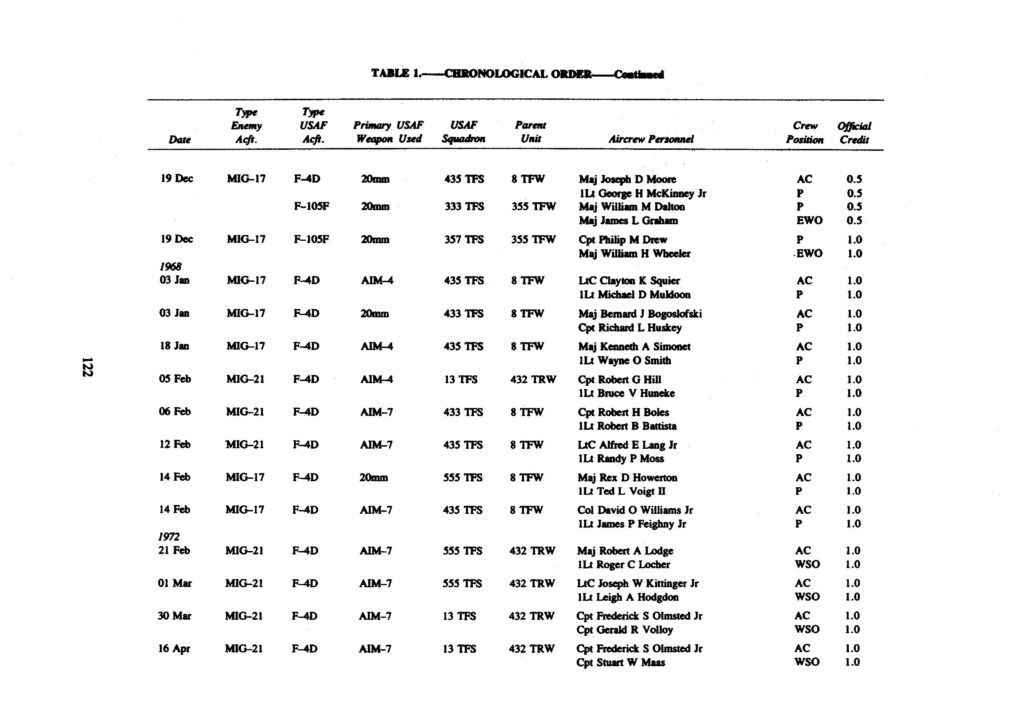
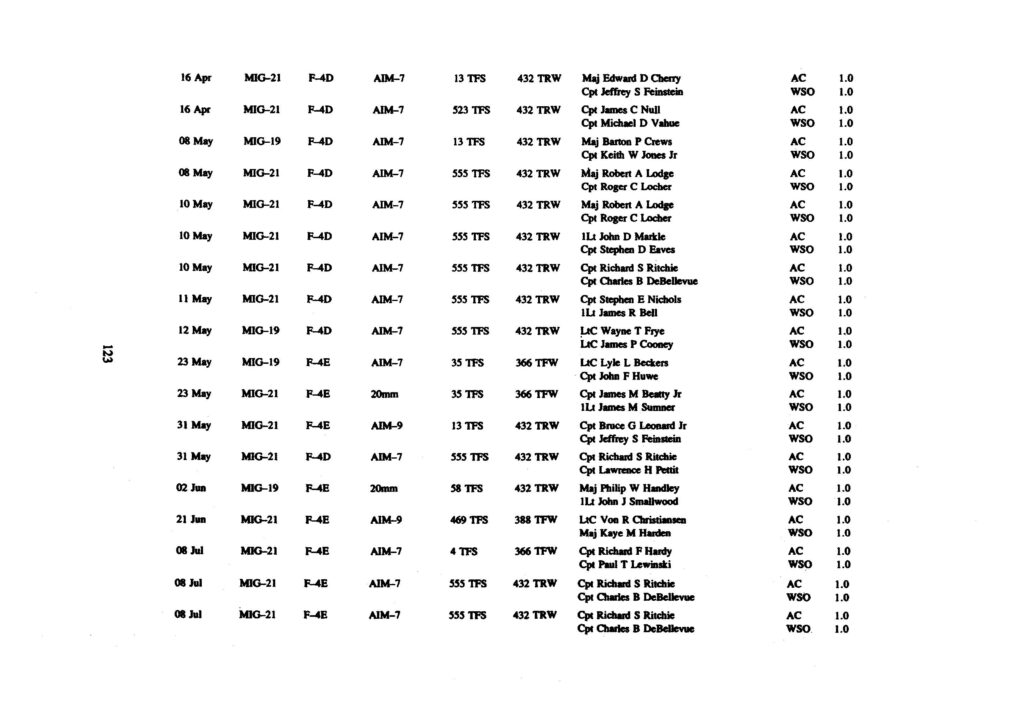
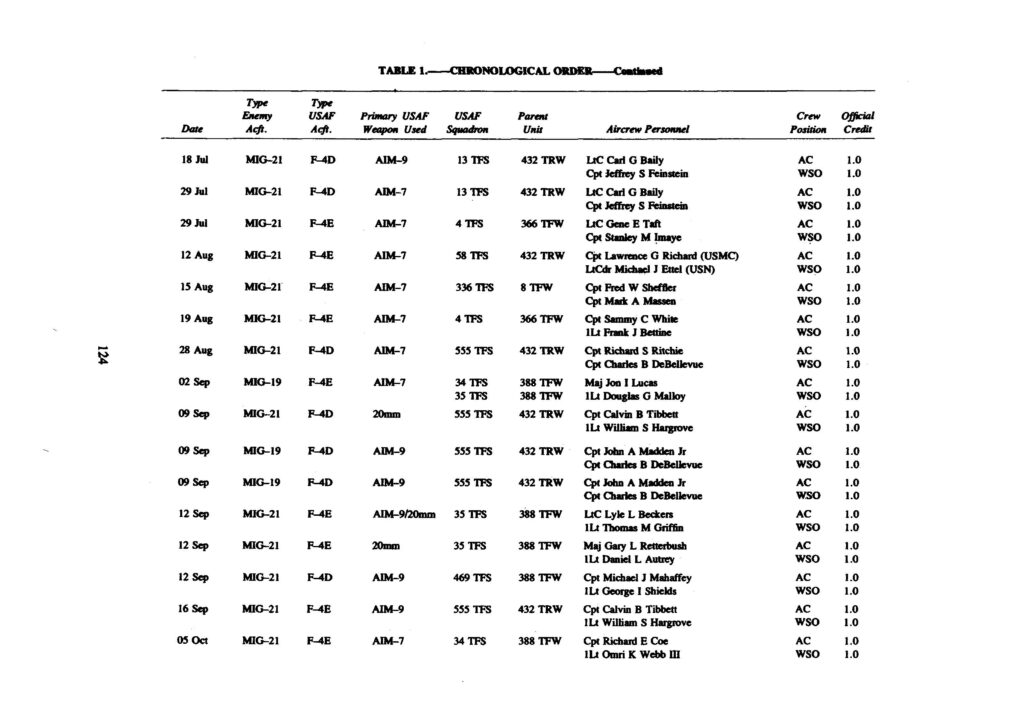
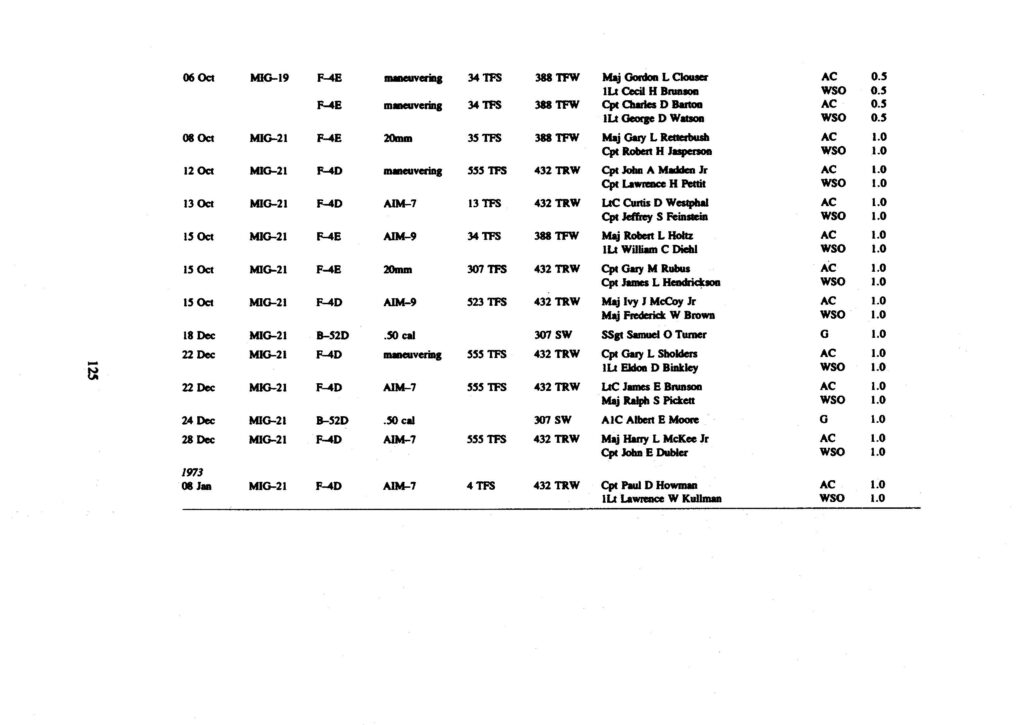
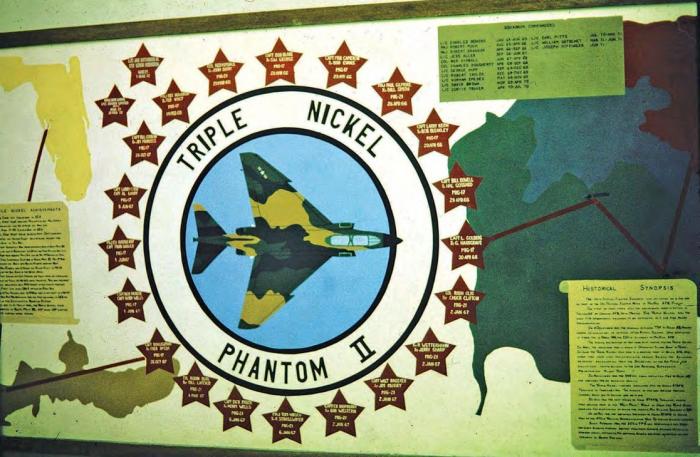
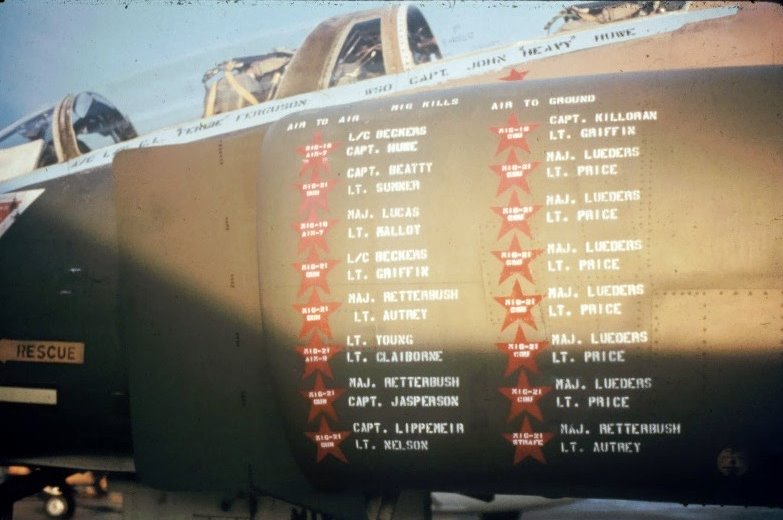
Of the confirmed total of 137 kills by USAF fliers official credit was awarded to 207 individuals. Pilots of single-place F-105D aircraft earned 25 victories; two-man aircrews of F-4D, F-4E, and F-105F aircraft earned 108. One victory credit was shared by F-105F and F4D aircrews, and one by two F-4E’s. Gunners aboard B-52D heavy bombers earned two aerial victories in the last stages of the war.
The 137 victories have been compiled and are presented below. The numerous claims for the destruction of enemy aircraft which were never confirmed are not included in the lists. The first presents all USAF aerial victories in chronological order.