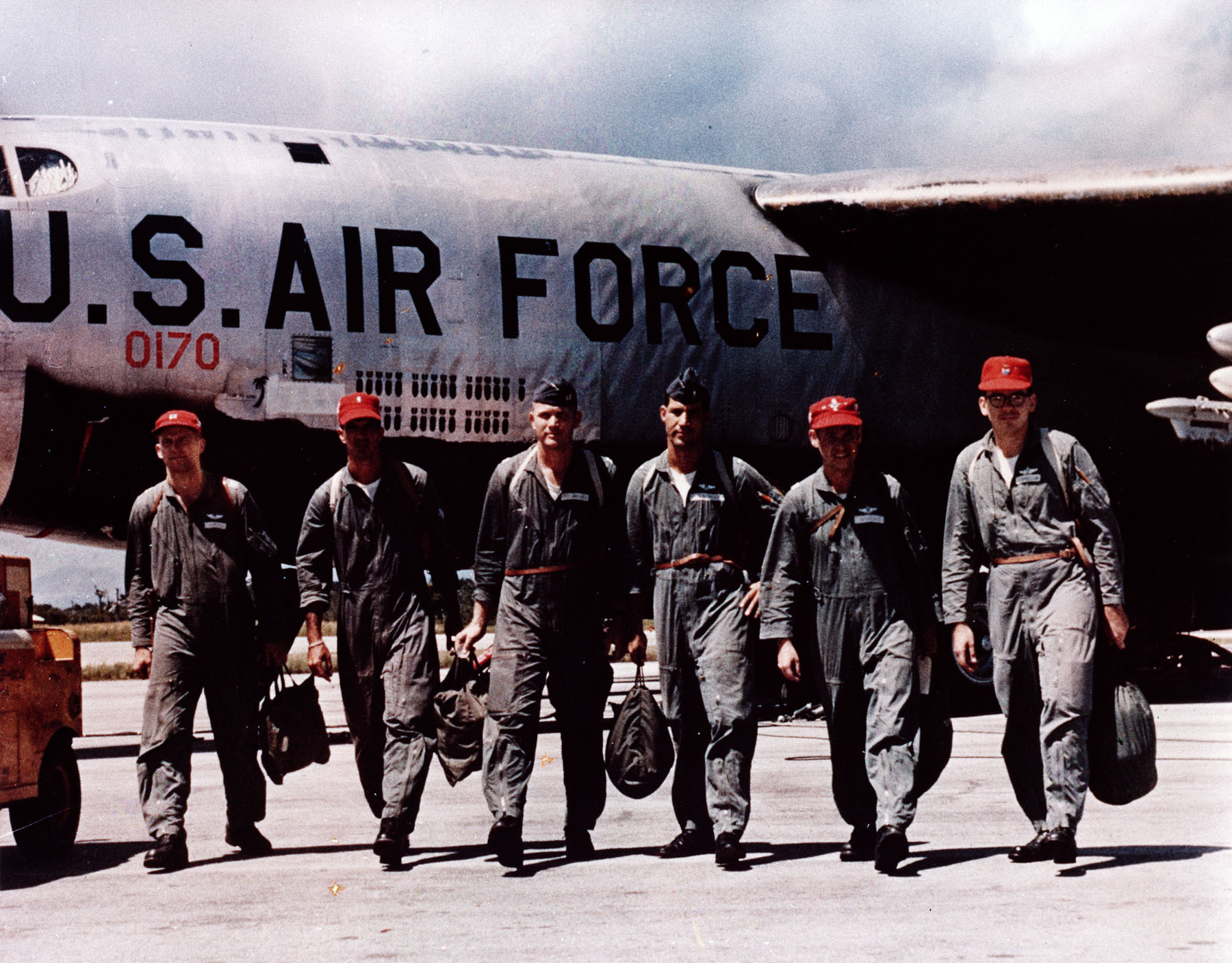
At Andersen Air Force Base on Guam, a camouflaged B-52D Stratofortress stands as the centerpiece of the Arc Light Memorial. Painted in its Vietnam-era jungle scheme, the aircraft honors the crews who never returned from combat missions over Southeast Asia. Their names are engraved on a bronze plaque nearby, a lasting reminder of one of the longest and most demanding bomber campaigns in U.S. Air Force history.
Yet the memorial represents far more than individual sacrifice. It commemorates Operation Arc Light, the sustained B-52 combat effort that flew more than 126,000 sorties between 1965 and 1973, becoming a defining chapter in the evolution of strategic airpower.
From Nuclear Deterrent to Conventional War
When the Vietnam War escalated in 1965, the Boeing B-52 was primarily a nuclear deterrent. Designed for long-range strategic missions against Soviet targets, the bomber was not originally intended for the type of conventional warfare unfolding in Southeast Asia.
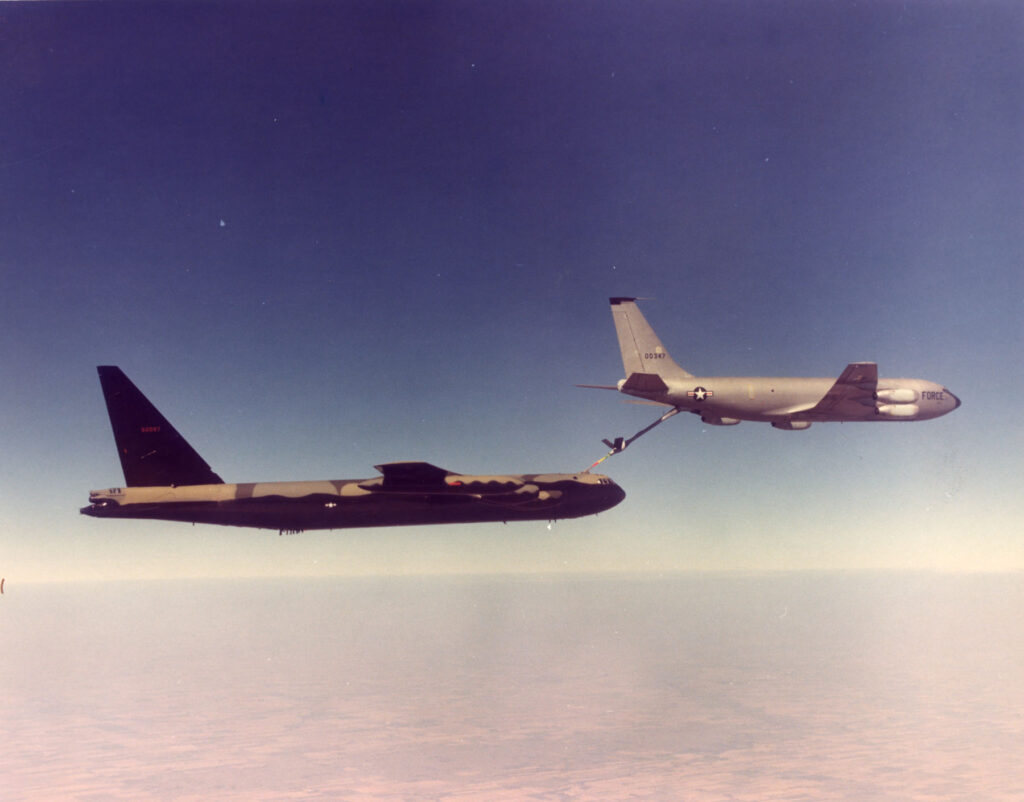
In February 1965, the Strategic Air Command (SAC) deployed 30 B-52s to Andersen AFB, Guam, supported by KC-135 tankers based at Kadena Air Base, Okinawa. Initial proposals to employ the bombers against North Vietnam were rejected by Washington over fears of escalating the conflict.
Instead, General William C. Westmoreland, commander of Military Assistance Command, Vietnam (MACV), successfully argued for their use against Viet Cong strongholds in South Vietnam. Tactical aircraft had struggled to neutralize dispersed jungle targets, while the B-52 could blanket large areas with unprecedented firepower.
The first Arc Light mission launched from Guam on 18 June 1965. It proved inauspicious. Two B-52s collided during aerial refueling after arriving early due to unexpected tailwinds, and the intended Viet Cong target had dispersed before the bombing began. Despite the setbacks, the mission marked the beginning of a campaign that would reshape the use of strategic bombers in conventional warfare.
Guam: The Heart of Arc Light
Andersen AFB quickly became the operational center of the campaign. Known to generations of Airmen simply as “The Rock,” Guam’s strategic location placed it within striking distance of Southeast Asia while remaining beyond the reach of enemy attack.
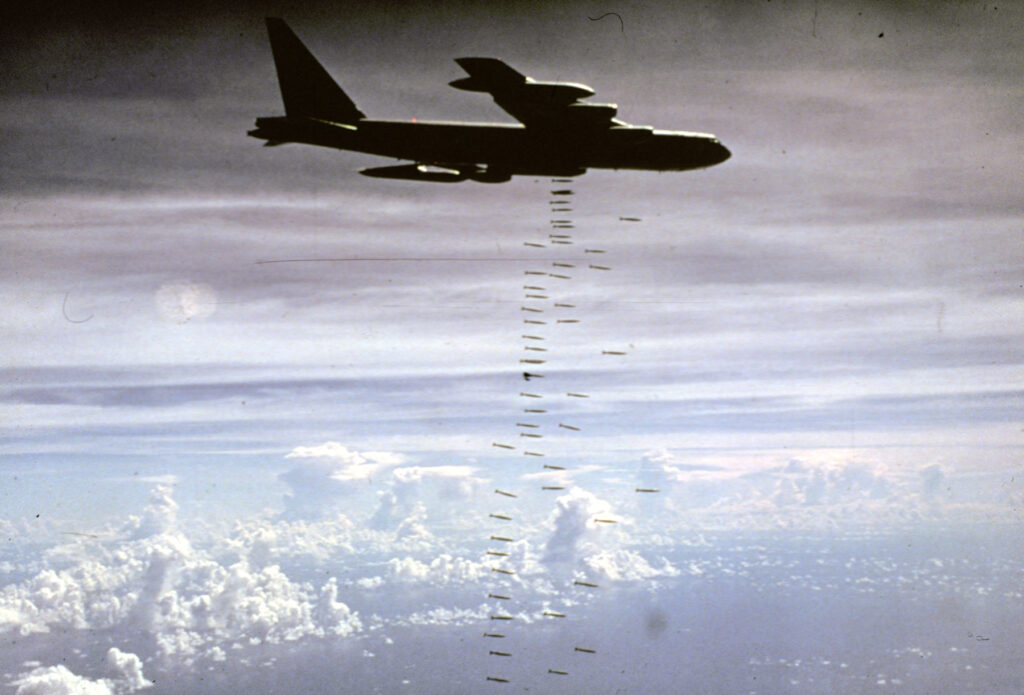
The scale of operations was immense. A typical mission from Andersen to targets in Vietnam covered roughly 5,200 miles round trip and lasted between 12 and 14 hours. Bombers launched in three-aircraft formations, refueled over the South China Sea, struck their targets, and returned to Guam.
As demand for sorties increased, additional operating locations were established. U Tapao Royal Thai Navy Airfield in Thailand became a major B-52 hub in 1967 and eventually the primary operating base because of its proximity to targets. Kadena Air Base also supported surge operations during periods of intense combat.
Throughout the war, however, strategic control remained firmly with SAC rather than the theater air command. Arc Light crews and maintenance personnel rotated from SAC bases in the United States, often serving multiple temporary deployments without receiving credit for a formal Southeast Asia combat tour.
The Rise of the “Big Belly” B-52
While early missions employed the B-52F, the campaign soon became synonymous with the B-52D.
The aircraft’s famous “Big Belly” modification dramatically increased bomb capacity. Instead of carrying 51 bombs, the upgraded D model could carry as many as 108 conventional bombs, transforming it into the most powerful conventional bomber of the conflict.
One aircraft, serial number 55-0100, became legendary. Nicknamed “Old 100,” it accumulated approximately 5,000 combat flying hours and became a symbol of the Arc Light campaign. Its markings were later preserved on the B-52 displayed at Andersen’s memorial.
The jungle camouflage introduced on B-52Ds also became an iconic image of the Vietnam air war, replacing the bright anti-flash finish originally designed for nuclear operations.
Strategic Firepower in Tactical Battles
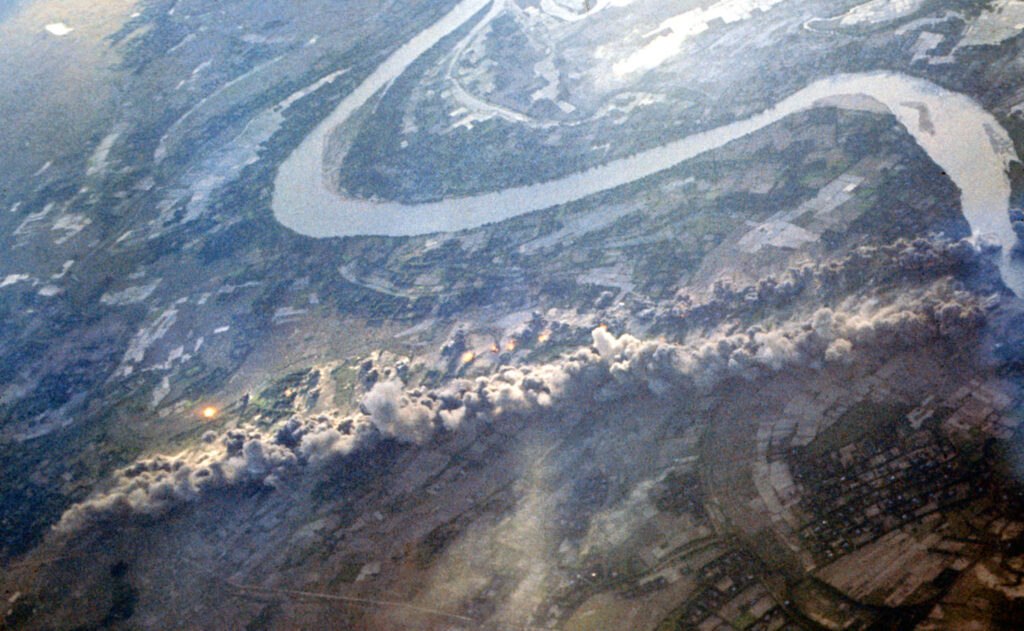
Although critics often questioned the effectiveness of employing strategic bombers against dispersed guerrilla forces, Arc Light demonstrated its value whenever North Vietnamese or Viet Cong units concentrated in large formations.
Nowhere was this more evident than during the Battle of Khe Sanh in 1968.
As approximately 20,000 North Vietnamese troops besieged the Marine combat base, B-52s delivered relentless strikes around enemy positions. Flying in three-aircraft “cells,” the bombers saturated target boxes measuring roughly 1.2 miles by 0.6 miles with high explosives.
Combined with tactical airpower and airlift support, the bombardment helped blunt the siege and ultimately contributed to the defenders’ survival. Westmoreland later stated that B-52 strikes were decisive in breaking the enemy’s offensive momentum.
By 1968, Arc Light sortie rates had surged to roughly 1,800 missions per month, reflecting the growing reliance on strategic bombing as a battlefield tool.
The Easter Offensive and the B-52 Surge
A new phase began in 1972 when North Vietnam launched the Easter Offensive, a large-scale conventional invasion supported by armor and massed formations.
In response, SAC initiated Operation Bullet Shot, deploying additional bombers to the Pacific. Andersen AFB became home to 155 B-52s, the largest concentration of the aircraft ever assembled.
The bomber buildup transformed Guam into a bustling wartime air hub. Maintenance operations expanded dramatically, thousands of personnel arrived on temporary duty assignments, and aircraft occupied miles of ramp space.
For perhaps the first time in the war, the B-52 was employed against exactly the kind of large-scale military concentrations for which strategic airpower was ideally suited.
Linebacker II: The Campaign That Changed the War
Arc Light reached its climax during Operation Linebacker II, conducted from 18 to 29 December 1972.
Often referred to as the “Christmas Bombing,” the campaign involved 729 B-52 sorties launched from Guam and Thailand against targets in North Vietnam, primarily around Hanoi and Haiphong.
The opening night saw 129 Stratofortresses attack simultaneously, one of the largest bomber formations assembled since World War II. Andersen’s contribution alone required nearly two hours to launch, producing the legendary “Elephant Walk” of B-52s taxiing for takeoff.
Initially, losses were significant. Predictable routing and restrictive tactics exposed bombers to North Vietnamese SA-2 surface-to-air missiles. Six B-52s were lost on the third night alone.
After tactics were revised—allowing greater flexibility in routing and defensive maneuvering—losses declined sharply. Over the 11-day campaign, 15 B-52s were lost, but the bombers inflicted severe damage on transportation networks, power infrastructure, airfields, supply depots, and military command facilities.
The campaign demonstrated what strategic airpower could achieve when applied directly against an adversary’s critical infrastructure and war-making capacity.
The End of Arc Light
Following Linebacker II, North Vietnam returned to negotiations, leading to the Paris Peace Accords, signed on 27 January 1973.
Combat operations over Vietnam ended, but Arc Light missions continued briefly in Cambodia. The final sortie was flown on 15 August 1973, concluding more than eight years of sustained B-52 combat operations.
By then, Arc Light had become the longest and most extensive conventional bomber campaign ever conducted by the Stratofortress.
A Lasting Legacy
Operation Arc Light remains a landmark in aviation history. It transformed the B-52 from a purely nuclear deterrent into an adaptable conventional strike platform and demonstrated the enduring value of long-range strategic bombers in regional conflicts.
From the jungles of South Vietnam to the skies over Hanoi, Arc Light showcased both the strengths and limitations of airpower. Its legacy continues to influence bomber doctrine today, while the B-52—still in active service more than seven decades after its introduction—stands as a testament to the aircraft’s remarkable versatility and endurance.
The memorial at Andersen AFB serves as a reminder that behind the statistics, sorties, and strategy were thousands of airmen who sustained one of the most ambitious air campaigns in military aviation history.