The Art of Air Force Heraldry: Why Military Emblems Matter More Than Ever
From medieval knights charging across European battlefields to modern airmen serving around the globe, symbols have always played a critical role in military identity. While aircraft, technology, and tactics have changed dramatically over the centuries, one tradition remains remarkably resilient: heraldry. The United States Air Force continues this legacy through a carefully managed system of organizational emblems that preserve history, communicate mission, and build esprit de corps.
A Tradition Born on the Battlefield
Heraldry traces its roots to the early twelfth century, when armored knights needed a way to distinguish friend from foe. Personal devices painted on shields and banners evolved into hereditary coats of arms, creating a visual language that identified individuals, families, and organizations. Over time, heralds compiled official records of these symbols, establishing the rules and traditions that still influence heraldic design today.
The U.S. Air Force inherited this centuries-old tradition and adapted it for the aviation age. Modern military emblems serve the same essential purpose as their medieval predecessors: they provide an instantly recognizable identity while embodying an organization’s heritage, mission, and values.
From World War I Aircraft to Modern Air Force Patches
The American military aviation heraldry program began during World War I. In 1918, Brigadier General Benjamin D. Foulois directed that each aerial squadron design and display its own insignia on aircraft fuselages. The guidance was simple but enduring: the design must be distinctive and easily recognizable at a distance.
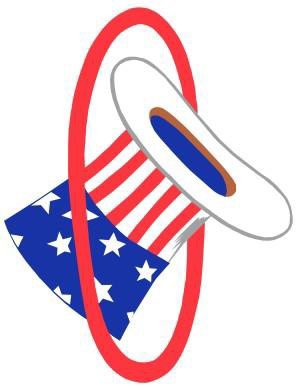
One of the most famous examples emerged from the 94th Aero Squadron. Its iconic “Hat-in-the-Ring” emblem depicted Uncle Sam’s top hat passing through a ring, symbolizing America’s entry into the war alongside Allied forces. More than a century later, the design remains associated with the lineage of today’s 94th Fighter Squadron, demonstrating the enduring power of heraldic symbolism.
As military aviation expanded through World War II and into the Cold War, hundreds of new emblems were created. The Air Force eventually developed formal procedures to ensure consistency, historical continuity, and professional design standards across the service.
the 94th emblem details; Within a red circle in perspective, long axis vertical, Uncle Sam’s top hat, upper portion, blue background with white stars; middle portion, red and white stripes; brim, white; sweat band, brown; inside of hat, dark blue. (approved 15 Nov 1919 as World War I emblem; canceled 6 May 1924; reinstated 9 Jul 1942.)
Symbolism Over Illustration
One of the defining principles of Air Force heraldry is that emblems should be symbolic rather than literal. An emblem is not intended to be a picture of an aircraft, weapon system, or piece of equipment. Instead, it communicates an organization’s mission and character through visual symbolism.
For example, a security organization might employ a lock, chain, portcullis, or scales of justice rather than depicting firearms or security badges. These symbols convey concepts rather than objects, producing a timeless design that remains meaningful even as technology changes.
The guide also emphasizes simplicity. Effective heraldry relies on bold, memorable imagery rather than complex artwork. Designers are encouraged to use no more than three principal elements, avoid clutter, and create strong visual contrasts. These principles help ensure emblems remain recognizable when reduced to patch size or viewed from a distance.
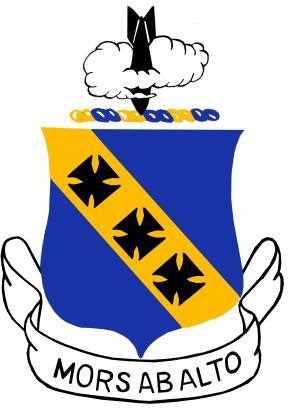
Emblem, 7th Bombardment Group
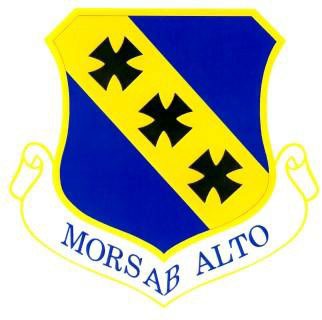
7th Bomb Wing
Figure 1 provides a historical example of a shield, crest, and scroll. The crest is any device displayed above the shield, and it is placed over a wreath of six skeins or twists composed of the principal metals (gold and silver) and colors of the shield. The metals and colors appear alternately in the order named in the blazon. The scroll is the third element in a military coat of arms and is usually inscribed with a motto and placed beneath the shield
Figure 2 shows the current, approved emblem for the 7th Bomb Wing. Notice the difference between this emblem and the historical one in Figure 1a, which shows a crest, a differently shaped shield, and a different type of scroll.
The Language of Color
Color plays an important role in heraldic design. Air Force emblems traditionally incorporate Air Force Yellow and Ultramarine Blue, symbolizing the sun, excellence, and the sky—the service’s primary operating domain.
Beyond official colors, heraldry assigns traditional meanings to various hues:
- Red symbolizes courage, strength, and valor.
- Gold represents honor, wisdom, and majesty.
- Green conveys hope, growth, and prosperity.
- Blue stands for loyalty, justice, and truth.
- Black suggests determination, dignity, and constancy.
The guide also follows a classic heraldic rule: never place a metal color such as gold or silver upon another metal, nor a color upon another color. Strong contrast is essential for visual clarity.
Simplification for the Modern Era
A significant turning point in Air Force heraldry occurred during the early 1990s when Air Force Chief of Staff General Merrill McPeak initiated a comprehensive review of organizational emblems. The review focused on three principles: simplification, standardization, and stability. More than 1,300 emblems were examined, with many revised to eliminate unnecessary complexity and strengthen heraldic integrity.
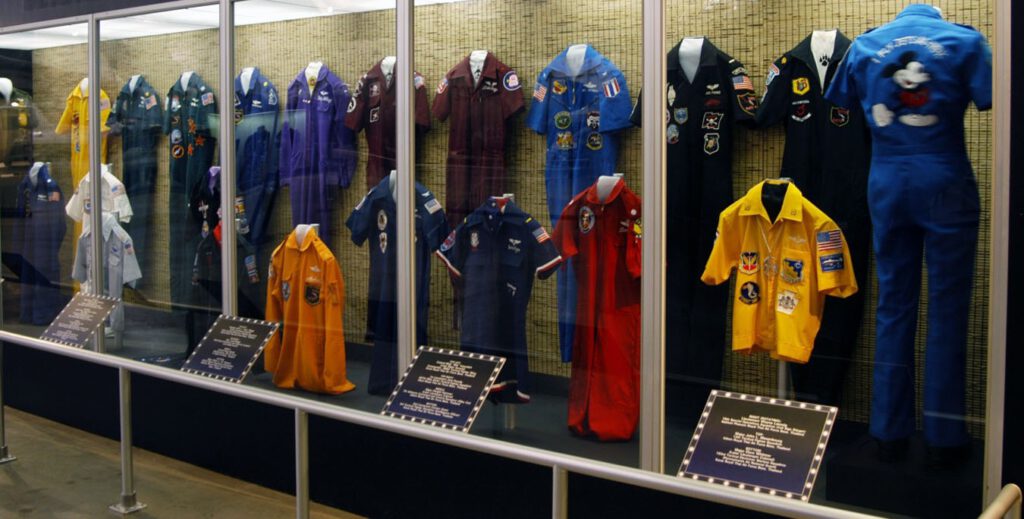
For a lot of communities within the USAF especially the Fighter community this was a sad era saw many cool designs and heritage go, especially the unofficial patches like the Party suit patches, Friday party patch was gone. Squadron designs that hadn’t been through the official Air Force route to be approved were ordered to be removed or designed back to the original version.
The results can still be seen today. Many modern Air Force patches feature clean geometric designs, limited color palettes, and concise symbolism. While some vintage emblems remain grandfathered because of their historical importance, contemporary designs are expected to meet stricter standards.
Preserving Identity Across Generations
Perhaps the most important function of heraldry is continuity. Aircraft are retired, bases close, and units may be redesignated or temporarily inactivated. Yet an approved emblem remains part of an organization’s permanent identity. When a unit returns to active status, it resumes using its historic heraldry, maintaining a tangible connection to previous generations of airmen.
In this way, an Air Force emblem is far more than artwork on a patch or flag. It is a visual summary of heritage, mission, and accomplishments. Every color, shape, and symbol tells part of a unit’s story.
My goal is to collect, preserve and display the great USAF patch history and heritage through the Air Force years.